

REQUEST DEMO
Robot CATALOG will be sent to your mailbox immediately after submission.
SUBMIT
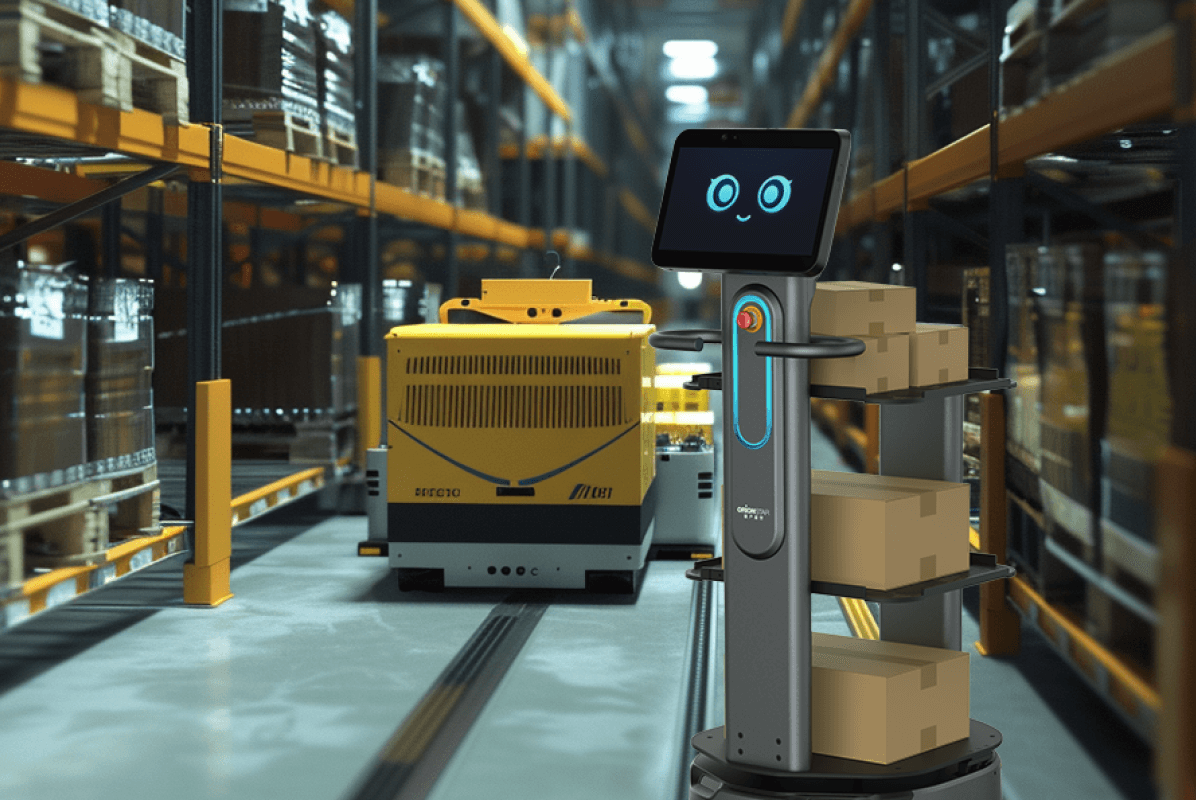
In discrete manufacturing, kitting areas face persistent material handling bottlenecks driven by chronic labor shortages, rising operational costs, and the increasing need for auditable safety and compliance. To resolve these friction points, operations teams are increasingly turning to factory transport robots as a highly effective solution to automate internal logistics, stabilize line-side replenishment, and minimize non-value-added manual tasks.
The OrionStar CarryBot D150 translates these advanced transport capabilities into a robust, high-capacity platform tailored for heavy-duty intralogistics tasks. Utilizing a comprehensive sensor suite that includes LiDAR and multiple depth cameras, the system navigates dynamically using VSLAM+ technology without the need for preset floor markers. According to manufacturer data, it handles a maximum net payload of up to 150 kg while maintaining a minimum passage clearance of just 65 cm, making it highly adaptable for tight factory aisles. Furthermore, the platform supports extended operations with a battery life of up to 12 hours on a single charge, ensuring reliable, continuous material flow across demanding production shifts.
Sub-assembly zones often suffer from cluttered aisles and unpredictable component demands that disrupt the flow of base parts. Factory transport robots seamlessly navigate these constrained spaces to deliver exactly what is needed just-in-time. By automating this transfer, operators can stay stationed at their workbenches rather than walking to fetch materials.
In parts staging areas, heavy containers and bulky raw materials must be continuously organized and moved out to the main production floor. Automated platforms with high payload capacities take over the strenuous task of hauling these heavy batches, significantly reducing manual lifting risks. This ensures that kits are staged and dispatched at a consistent, trackable pace.
Workers at kitting tables require a steady, uninterrupted supply of empty totes and raw components to maintain high throughput. Transport robots can execute multi-point delivery routes to drop off empty bins and collect completed kits without interrupting the worker's rhythm. This eliminates the non-value-added time kitting staff previously spent pushing finished carts to the next zone.
Delivering materials directly to lineside points is often delayed by congested factory traffic and unavailable transport staff, leading to costly machine downtime. Factory transport robots communicate with central systems to prioritize critical deliveries, autonomously avoiding obstacles to reach the line on schedule. This digital precision keeps automated assembly equipment running at peak overall equipment effectiveness.
Factory transport robots operate as a connected intralogistics layer fully integrated with existing Manufacturing Execution Systems (MES) and Warehouse Management Systems (WMS). Missions are typically triggered automatically by material requirements generated in the MES, prompting the central fleet management software to assign the task, coordinate traffic patterns, and report delivery completion back to the database via API connections. This seamless integration extends to physical infrastructure like automated doors, elevators, and conveyor handoffs, ensuring that materials move fluidly across distinct production zones without manual intervention.
Factory transport robots are fundamentally changing how the discrete manufacturing industry manages material flow within kitting areas, turning a reactive manual bottleneck into a predictable, automated process. By bridging the gap between automated production lines and traditional warehousing, these platforms enhance safety, lower costs, and ensure consistent manufacturing output. For operations teams evaluating how to scale these benefits across diverse facility layouts and payload requirements, the OrionStar CarryBot series provides multiple configurations to accommodate different intralogistics demands.