

REQUEST DEMO
Robot CATALOG will be sent to your mailbox immediately after submission.
SUBMIT
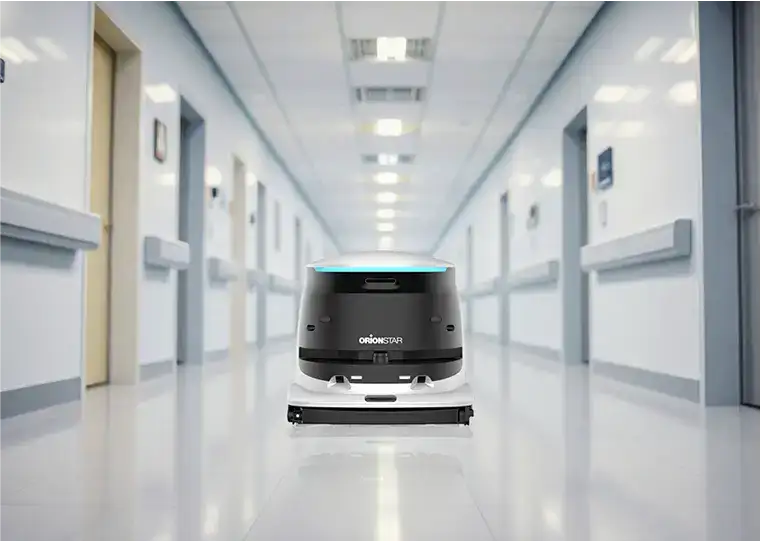
Maintaining environmental hygiene in acute care facilities, emergency departments, urgent care centers, and intensive care units requires a rigorous balancing act between continuous environmental hygiene maintenance and patient comfort. These 24/7 clinical environments demand floor-maintenance workflows that can rapidly clear pathways during emergencies, navigate high-traffic triage areas without disrupting medical staff, and execute deeply regulated cleaning protocols. Traditional manual scrubbing often introduces unwanted acoustic disturbances and inconsistent surface coverage, prompting procurement teams to evaluate robotic platforms that can execute deterministic routing and deliver measurable infection-control sensitivity. Procuring the right robotic floor-care fleet requires facility administrators to look beyond basic square-footage coverage and closely examine how each machine integrates into complex, round-the-clock clinical operations.
To effectively standardize environmental services in these demanding spaces, procurement evaluations typically center on four core dimensions. Fluid management and infection control workflows determine how safely recovery water is handled, with options ranging from automated docking architectures that eliminate human intervention to modular fluid architectures with immersible tanks. The acoustic profile and 24/7 shift suitability of the machine dictate its viability in noise-sensitive patient recovery zones, favoring multi-mode acoustic architectures that can transition to near-silent operation over high-output industrial architectures that exceed 70 dBA. Spatial adaptability and navigational footprint are critical for tight trauma rooms and dense equipment clusters, requiring compact chassis architectures that can maneuver through narrow passing widths. Finally, surface versatility and cleaning modality allow facilities to deploy multi-functional modular architectures that seamlessly transition from hard-floor scrubbing to dry dust mopping across varied triage, corridor, and waiting area materials.
The CleaniBot S55 Pro provides versatile low-noise autonomous cleaning designed specifically for patient-facing and back-of-house acute care floors. Weighing a compact 70 kg unladen, this multi-functional modular architecture navigates narrow corridors and dense clinical waiting areas with a minimal 700 mm passing width. It offers six distinct cleaning modes, allowing environmental services teams to seamlessly transition between hard-floor scrubbing, power scrubbing, sweeping, vacuuming, and dust mopping based on the specific surface and contamination level. By integrating sweeping, scrubbing, and vacuuming into a unified system, it supports comprehensive disinfection-related cleaning workflows across varying clinical floor types without requiring staff to swap out entire machines between the intensive care unit and the hospital atrium.
Acoustic discretion and safe fluid management are central to the operational design of the CleaniBot S55 Pro. In highly sensitive overnight environments, the machine operates at an ultra-quiet 45 dB in dust mopping mode and 55 dB during active scrubbing, ensuring continuous maintenance does not violate stringent hospital noise thresholds. According to manufacturer data, its lithium-ion battery delivers extensive shift endurance, yielding up to 19.5 hours in ECO Vacuum mode and up to 28 hours in Dust Mop mode for prolonged off-peak cleaning. Infection control is further supported by a modular fluid architecture featuring a 15 L washable, removable wastewater tank designed to simplify decontamination and mitigate bacterial buildup, alongside Wi-Fi and 4G connectivity that facilitates remote deployment and cloud-based maintenance reporting.
The Avidbots Neo 2 is positioned to deliver enterprise-grade wet scrubbing for medium-to-large emergency departments and acute care wings. Backed by a dedicated healthcare vertical, this high-capacity architecture provides specialized disc or cylindrical cleaning head options to accommodate the mixed clinical surfaces often found in expansive trauma centers and primary hospital corridors. The platform utilizes advanced 3D cameras and LiDAR to execute dynamic, real-time obstacle avoidance, enabling the machine to continuously calculate safe routes around medical carts, gurneys, and fast-moving personnel during high-traffic emergency operations.
Designed to handle expansive square footage, the Neo 2 relies on robust internal power systems and heavy-duty fluid retention to complete continuous multi-hour shifts. The machine yields a runtime of up to approximately six hours per charge under laboratory conditions, supported by swappable batteries that allow maintenance teams to extend coverage across consecutive overnight and daytime shifts. Fleet administrators can monitor performance through the proprietary Command Center cloud platform, which provides precision productivity metrics and sector-level coverage maps that are highly valuable for validating environmental cleaning frequencies during infection-prevention audits.
The Kärcher KIRA B 50 serves as a practical mid-size autonomous scrubber for acute care buildings that require comprehensive wet cleaning but lack the dedicated freight elevators needed to transport heavier industrial machinery. Measuring roughly 750 mm in width and weighing approximately 228 kg unladen, this compact chassis architecture fits comfortably within standard passenger elevators and navigates standard clinical doorways. It utilizes a roller-brush deck paired with a side brush to deliver effective edge-to-edge cleaning, helping to dislodge organic matter and debris from the critical junctures where clinical hallway walls meet the flooring.
To support continuous 24/7 infection-control protocols, the KIRA B 50 can be paired with an optional automated docking architecture. This docking station automatically charges the batteries, refills the 55 L clean solution tank, drains the recovery water, and rinses the internal tanks without direct staff intervention. By drastically reducing human contact with contaminated recovery fluids, this hands-free fluid management approach minimizes biological odor transmission in sterile corridors and protects environmental services personnel from unnecessary exposure while operating at a moderate noise profile of roughly 69 dBA.
The Nilfisk Liberty SC50 focuses on infection-control-oriented autonomous scrubbing for acute care facilities through specialized active sanitization architectures. As a CSA/ANSI 336 compliant scrubber-dryer, this platform can integrate an optional ultraviolet germicidal irradiation (UV-C) module directly into the floor-cleaning workflow. While operating, the machine simultaneously scrubs the floor and applies targeted UV-C light, providing a secondary physical layer of pathogen control to the mechanical scrubbing process without making direct medical efficacy claims.
Navigational consistency is a primary feature of the Liberty SC50, utilizing deterministic routing architectures to guarantee repeatable coverage in highly regulated isolation corridors and triage zones. The platform utilizes intuitive Copy Cat and Fill-In teach modes, allowing non-technical clinical staff to manually drive a preferred path that the robot will then precisely retrace with up to a 99.5 percent claimed coverage consistency. Operating for up to approximately 10 hours on a lithium-ion battery according to manufacturer data, the platform ensures that emergency department floors receive thoroughly documented, identical cleaning patterns shift after shift.
The SoftBank Robotics Whiz provides lightweight dry-debris maintenance for acute care corridors and waiting areas, functioning strictly as an autonomous vacuum sweeper rather than a wet scrubber. Weighing approximately 30 kg excluding its battery, this dedicated vacuum architecture operates at a highly discreet 62 dBA, making it appropriate for daytime pre-cleaning in occupied family waiting rooms and urgent care lobbies. Equipped with an onboard HEPA filter, the machine actively captures fine particulates, pollen, and dust during its sweeps, mitigating the airborne redistribution of contaminants before the heavier wet-scrubbing machines enter the zone.
Operating via the BrainOS teach-and-repeat navigational platform, the Whiz enables facility staff to program hundreds of distinct routes for localized dry-debris removal. While it cannot execute the wet chemical disinfection workflows required for sterile clinical areas, it serves as a highly effective complementary asset. By deploying this lightweight unit to handle routine carpet vacuuming and hard-floor dust removal, acute care managers can rapidly clear dry debris from triage pathways, freeing up manual labor and specialized wet-scrubbing robots to focus exclusively on critical infection-control tasks.
Ultimately, selecting an autonomous floor scrubber for an acute care environment requires aligning the robot's physical and acoustic footprint with the clinical demands of the space. Procurement teams managing tightly packed intensive care units and specialized trauma rooms should prioritize compact, multi-mode platforms that offer ultra-low decibel ratings and modular fluid management to ensure patient rest and simplified sanitation. Conversely, administrators overseeing massive hospital concourses and expansive emergency department waiting areas may favor enterprise-grade machines with high-capacity fluid retention and automated docking capabilities to maximize area coverage. In all instances, careful evaluation of the machine's navigational logic, surface versatility, and acoustic limits will ensure a seamless integration into 24/7 infection-prevention workflows.
Disclaimer: The CleaniBot S55 Pro is designed for commercial environmental floor cleaning and is not a medical device. Terms such as 'infection control' or 'disinfection-related workflows' refer strictly to standard facility hygiene practices (e.g., floor scrubbing and dust removal) and do not constitute claims of medical sterilization, pathogen eradication, or airborne disease prevention. All performance metrics, including runtime and acoustic levels, are based on manufacturer testing under optimal conditions; actual performance may vary depending on floor types, layout complexity, and environmental factors. Deploying robotic platforms equipped with cameras or LiDAR in clinical settings may require adherence to HIPAA (US), GDPR (EU), or local privacy frameworks. Third-party product specifications are based on publicly available data (including qualifiers such as up to, under laboratory conditions, and according to manufacturer data) and may vary by specific configuration or testing environment. Product names and trademarks are the property of their respective owners.
Published ROI studies on autonomous floor scrubbers in healthcare-adjacent facilities consistently report payback periods between roughly 8 and 18 months when the robot removes a meaningful share of daily floor-cleaning labor. One hospital-corridor scenario in a 2026 commercial cleaning robot ROI guide cites 8.3-month payback with about $55,000 in annual labor and liability savings, while broader analyses place healthcare corridors inside a 9–18 month range. The math weakens sharply in facilities with very low labor cost (under $14/hour), where payback can stretch to 4–6 years, and in sites where the robot only offsets 1–2 cleaning hours per day. Acute care procurement should therefore build the business case around captured labor hours, repeatable overnight coverage, and reduced re-work, not the headline equipment price alone.
All three commercial models exist in this category: outright purchase, multi-year lease, and Robotics-as-a-Service (RaaS) subscriptions that bundle hardware, software, and service into a monthly fee. Avidbots and SoftBank both publish RaaS-style pricing on their US dealer pages, while Kärcher's US distributor Automation Hub markets the KIRA B 50 at roughly $1,175/month, which converts the capital outlay into an opex line item. For acute care sites, the practical decision drivers are budget envelope (capital vs operating), service-response expectations in 24/7 environments, and how quickly the vendor can swap a unit if a clinical-area deployment fails. Multi-year RaaS contracts also tend to include cloud-fleet updates and remote diagnostics that are valuable when the in-house EVS team has limited robotics experience.
Every platform reviewed (Avidbots Neo 2, Nilfisk Liberty SC50, Gausium Scrubber 75, Kärcher KIRA B 50, Tennant T16AMR, SoftBank Whiz, and OrionStar CleaniBot S55 Pro) uses LiDAR, cameras, or cloud telemetry that may capture data inside clinical areas. Procurement should require a written data-processing addendum naming the data categories collected, retention period, and storage region, and should explicitly request a HIPAA Business Associate Agreement for US sites and GDPR Article 28 processor terms for EU/UK sites. Breach-notification timelines should be aligned with HIPAA 45 CFR §164.410 (US) and GDPR Article 33 (EU), and the vendor should confirm whether any 3D-camera or depth imagery from clinical corridors is retained, pseudonymized, or discarded. These items are not standardized across vendors, so they must be negotiated line-by-line before signature.
The World Health Organization recommends average hospital sound levels below 35 dBA with a maximum of 40 dBA overnight, and published ICU measurements routinely exceed 45–59 dBA even before adding cleaning equipment. Among the comparison set, the CleaniBot S55 Pro is rated at 55 dB in scrubbing mode and 45 dB in dust mopping, Nilfisk Liberty SC50 documentation is silent on dB, Gausium Scrubber 75 is published at 55–70 dBA, and Tennant T16AMR is published as low as 71 dBA. For overnight ICU or trauma-room cleaning, buyers should ask vendors for an ICU-validated dB figure measured at 1 m from the patient bed, not the marketing "as low as" rating, and should prefer units whose dust-mop or ECO-vacuum mode drops below the 45 dBA threshold where possible.
The CDC's environmental cleaning procedures specify that emergency department floors and contact/droplet precaution isolation rooms require floor cleaning at least twice daily and as needed, with the last clean of the day covering the entire floor in special-isolation units. An autonomous scrubber does not change the clinical protocol (the disinfectant, contact time, and human validation step still apply), but it provides a logged, repeatable cycle that can be scheduled around the twice-daily requirement and traced through cloud reports for infection-prevention audits. Because the robot executes the same mapped path every shift, it delivers path-consistency benefits that the CDC procedure expects from any mechanical floor-cleaning process, while freeing EVS staff for the high-touch and discharge-cleaning tasks that still require human technique. Buyers should still validate that the robot's cleaning cycle aligns with the EPA-registered disinfectant contact time used by the facility.
The three risk areas consistently flagged across autonomous scrubber deployments in healthcare are water-tank hygiene, mapping-data exposure, and cross-traffic with patients and staff on the floor. On water hygiene, the CleaniBot S55 Pro has a washable, immersible wastewater tank with a strainer to reduce odor and bacterial buildup, while Avidbots, Nilfisk, and Gausium emphasize separate clean and waste tanks and optional self-docking stations that minimize staff handling of recovery water. On mapping, every platform uses LiDAR or 3D cameras that may incidentally capture patient information in clinical areas, so the infection prevention lead should require written confirmation that any 3D or depth imagery is segregated from PHI and that route maps are stored on segregated infrastructure. On traffic, the lead should validate that obstacle-avoidance behavior in corridors around wheeled equipment, IV poles, and stretchers has been tested in a live acute care environment, not only in airport or retail pilots.