

REQUEST DEMO
Robot CATALOG will be sent to your mailbox immediately after submission.
SUBMIT
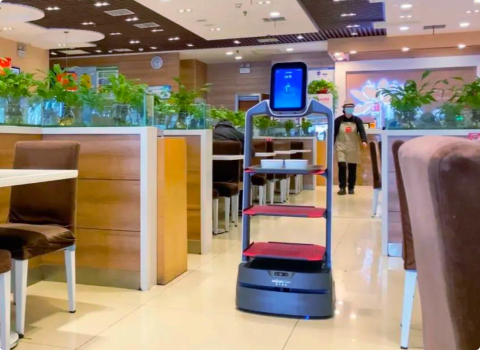
In fine dining restaurants, private dining rooms demand an unparalleled level of discreet, precise service—from orchestrating multi-course tasting menus to coordinating with sommeliers for seamless wine pairings—all while upholding strict privacy standards for high-net-worth guests. Yet these spaces face mounting pressures, including severe front-of-house labor shortages, exorbitant costs for premium talent, and the risk of service errors when staff are overstretched. Robot waiters emerge as a strategic solution, addressing these pain points by handling repetitive, logistical tasks with consistency, allowing skilled staff to focus on the personalized, relationship-driven interactions that define fine dining excellence.
The OrionStar LuckiBot Pro embodies the core capabilities of robot waiters tailored for fine dining private rooms. Equipped with advanced visual SLAM navigation (per manufacturer data), it navigates tight spaces and uneven floors with its quasi-circular chassis and torsion bar suspension, ensuring discreet, stable movement during multi-course deliveries. Its multi-tray configuration, supporting up to 60 kg total payload (under defined test conditions), allows it to transport multiple courses or heavy wine bottles in a single trip, aligning with the needs of sommelier coordination and multi-course menu execution. Additionally, its auto-charging feature provides up to 12 hours of cruising time (typical cruising scene), ensuring uninterrupted service throughout extended private dining events. The robot’s 240-degree 3D obstacle recognition, powered by triple RGBD cameras and LiDAR, enables it to detect guests and small obstacles with precision, maintaining the discreet service standards expected in private rooms.
VIP private dining rooms cater to high-profile guests who demand minimal service intrusion and flawless execution. The primary challenge is balancing discreet logistical support with personalized guest interaction, as overstretched staff often struggle to maintain both. Robot waiters address this by handling plate drops, glassware refills, and amenity deliveries quietly and precisely, leaving maître d’s and captains free to focus on building relationships and addressing guest preferences.
Chef's table rooms offer intimate, immersive dining experiences centered around the chef’s multi-course tasting menu, requiring precise coordination between kitchen and front-of-house staff to maintain pacing and presentation. Human servers often face pressure to juggle multiple tasks, leading to timing errors that disrupt the chef’s intended flow. Robot waiters integrate with KDS systems to receive automatic dispatch signals when each course is ready, delivering plates to the table at the exact moment, ensuring the chef’s vision is preserved and guests enjoy a seamless experience.
Wine cellar rooms combine private dining with curated wine experiences, requiring frequent trips between the cellar, kitchen, and table to deliver bottles, glasses, and courses. Sommeliers often spend excessive time transporting wine, taking them away from guest interactions and storytelling. Robot waiters with multi-tray configurations can transport multiple wine bottles and glasses in a single trip, reducing transit time and allowing sommeliers to remain at the table to guide guests through pairings and share wine insights.
Banquet-style private rooms host large groups for events like corporate dinners or celebrations, requiring simultaneous delivery of courses to multiple tables while maintaining consistent service standards. Human staff often struggle to coordinate large-scale deliveries, leading to uneven pacing and service delays. Robot waiters use visual SLAM navigation to efficiently navigate between tables, delivering courses in batches with precision, ensuring all guests receive their meals at the same time and maintaining the event’s flow.
Robot waiters in fine dining private dining rooms integrate seamlessly with existing restaurant tech stacks to create a cohesive smart service ecosystem. When connected to POS and KDS systems, robots receive automatic dispatch signals as each course is marked ready by the kitchen, eliminating manual requests and ensuring precise timing for multi-course menus. Integration with reservation and CRM systems allows robots to access guest profiles, including dietary preferences and occasion details, enabling targeted deliveries like personalized welcome amenities or pre-ordered wines. For sommelier teams, robots connect to wine cellar management software to retrieve and deliver specific bottles, reducing transit time and freeing sommeliers to focus on guest engagement. Additionally, integration with building IoT systems can trigger lighting or audio adjustments when a robot enters a private room, enhancing the choreographed, immersive experience expected in fine dining. This interconnected approach ensures robots operate as an extension of the existing staff, rather than standalone devices.
These sustainability benefits, combined with GDPR-compliant data handling and HACCP-aligned food safety practices, make robot waiters a valuable tool for fine dining restaurants looking to meet ESG targets while maintaining premium service standards.
Robot waiters are transforming how fine dining restaurants deliver service in private dining rooms, addressing critical pain points like labor shortages, high talent costs, and the need for discreet, precise multi-course execution. By handling logistical tasks with consistency and integrating seamlessly with existing restaurant systems, these robots enable skilled front-of-house staff to focus on the personalized, relationship-driven interactions that define fine dining excellence. The OrionStar LuckiBot series offers multiple models tailored to different venue sizes and needs, providing operators with flexible options to enhance their private dining service capabilities.