

REQUEST DEMO
Robot CATALOG will be sent to your mailbox immediately after submission.
SUBMIT
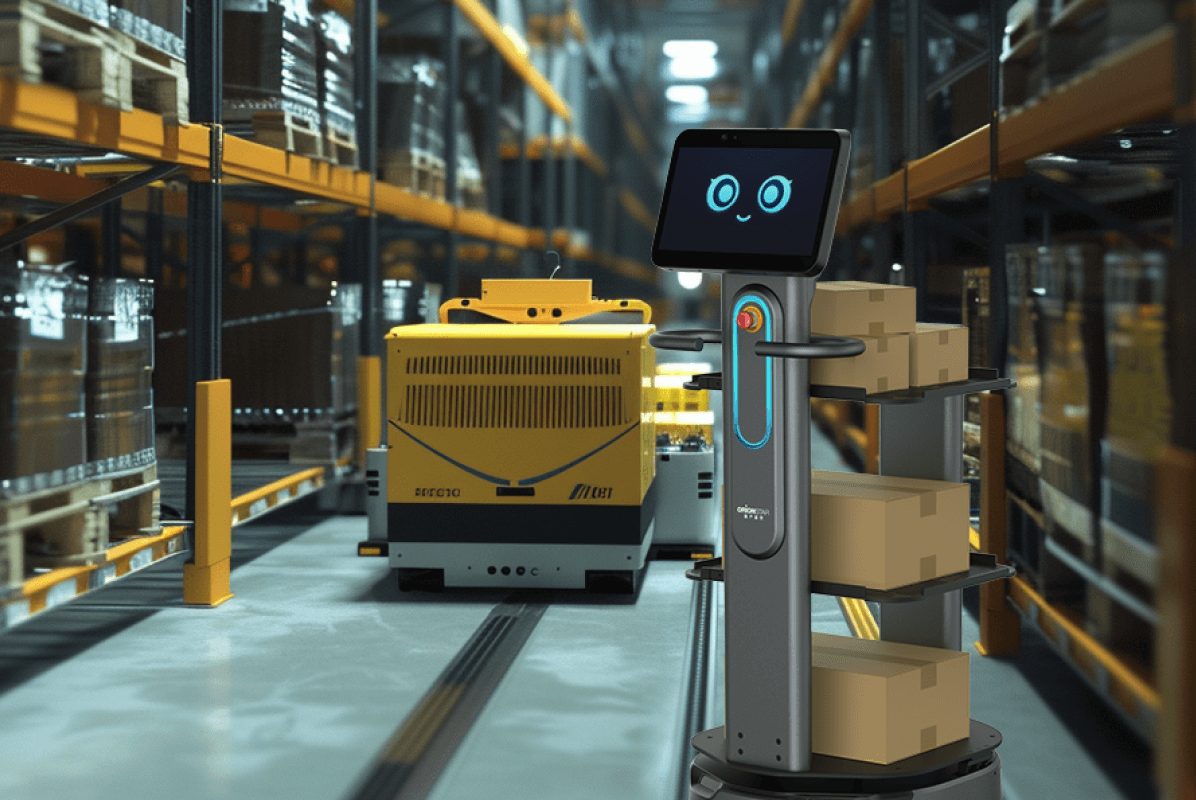
Kitting operations operate at the intersection of order accuracy, labor productivity, and demand volatility. For warehouse operations managers and kitting leads, the challenge is clear: individual components must be gathered, consolidated, and prepared for assembly without stalling downstream workflows.
Industry data indicates that a typical warehouse worker walks 8 to 10 miles per shift, with much of that time spent moving between inventory locations and packing stations—activity that does not directly contribute to the kitting process. Coupled with annual labor turnover frequently exceeding 40 percent and rising wages, manual material transport in kitting areas has become a critical bottleneck.
Deploying an autonomous mobile robot can significantly optimize this workflow by shifting the physical transport burden away from human operators. This guide examines how the OrionStar CarryBot D150 addresses specific pain points in kitting areas, based on its payload capacities, navigation systems, and digital integration capabilities.
In manual operations, moving materials from parts staging zones through replenishment aisles involves significant physical strain. Repetitive lifting and pushing contribute heavily to warehouse injury rates. When dealing with metal components, motors, or bulk electronics, standard carts quickly reach ergonomic limits.
The OrionStar CarryBot D150 is designed to absorb this heavy transport work. As a material handling robot, it features a maximum net payload of up to 150 kg. To match the specific layout of different kitting sub-spaces, the D150 is available in distinct hardware configurations:
By automating the transfer of heavy, consolidated kits from staging zones to assembly lines, human workers can remain stationed at high-value picking and packing tasks. Industry deployments indicate that when travel time is reduced by 80 percent, the same workforce can often handle more than double the volume during demand spikes.
A frequent point of friction in warehouse automation projects is the time and cost of facility modifications. Some traditional automated guided vehicle (AGV) systems that rely on magnetic tape or QR-code grids typically require facility modifications and longer implementation timelines before they become operational.
The CarryBot D150 operates using VSLAM+ (Visual Simultaneous Localization and Mapping 2.0) combined with LiDAR, depth vision sensors, and fisheye cameras. This allows the robot to map and navigate single or multi-robot environments without pre-set markers. According to manufacturer data, initial deployment can be completed in as fast as one day.
For dense kitting areas where floor space is at a premium, the D150 requires a minimum passage clearance of just 65 cm. It is capable of crossing 10 mm thresholds and 30 mm grooves, ensuring that it can transition smoothly between different flooring types often found between warehouse floors and dedicated sub-assembly rooms. Furthermore, multiple units operate under a smart scheduling system, allowing them to autonomously yield to one another at intersections following priority rules without manual intervention.
To be viable, a warehouse AMR must sustain operations throughout standard warehouse shifts and communicate seamlessly with existing software.
The CarryBot D150 utilizes a 34 Ah, 25.2 V battery, delivering a runtime of up to 12 hours (under defined test conditions with a 100 kg load on a marble floor). When battery levels drop, the robot autonomously returns to its charging dock, requiring 4.5 hours for a full charge.
On the software side, kitting leads require robots that integrate into their Warehouse Management Systems (WMS) rather than operating as isolated islands. The CarryBot D150 runs on a customized RobotOS (based on Android 9.0) and offers over 500 free APIs. This facilitates integration with WMS, ERP, and MES layers, allowing the central system to dispatch the robot for multi-point cruise routes or point-to-point delivery based on real-time inventory pulls. Additionally, the software supports offline control, ensuring that robots do not stall in warehouse zones with unstable Wi-Fi connectivity.
Introducing autonomous mobile robots equipped with cameras, LiDAR, and continuous mapping capabilities into shared workspaces necessitates strict attention to data privacy.
Because the CarryBot D150 uses visual data to navigate pick-and-pack stations alongside human workers, the equipment acts as a technical device objectively capable of capturing employee movements and routes. Warehouse operations managers must ensure deployment complies with the GDPR and local labor laws.
Before deployment, operators should conduct a Data Protection Impact Assessment (DPIA). It is essential to configure the fleet management systems to process navigation data locally (at the edge) where possible, utilizing ring buffers rather than permanent cloud storage to prevent incidental employee surveillance. In jurisdictions like Germany, works councils must be consulted prior to implementation to establish clear rules on data purpose, retention, and access.
Transitioning from manual cart pushing to automated transport is a highly effective strategy to mitigate labor shortages and stabilize kitting throughput. By bridging the physical gap between parts staging zones and final assembly without requiring facility overhauls, the OrionStar CarryBot D150 allows operations to scale up during peak seasons without linearly scaling their temporary labor force.
For operations assessing different payload and footprint requirements across varying facility types, the broader OrionStar CarryBot series offers multiple configurations, including the D100 model for lighter (up to 100 kg) transport needs, ensuring that logistics coordinators can match the precise robotic specifications to their unique operational workflows.