

REQUEST DEMO
Robot CATALOG will be sent to your mailbox immediately after submission.
SUBMIT
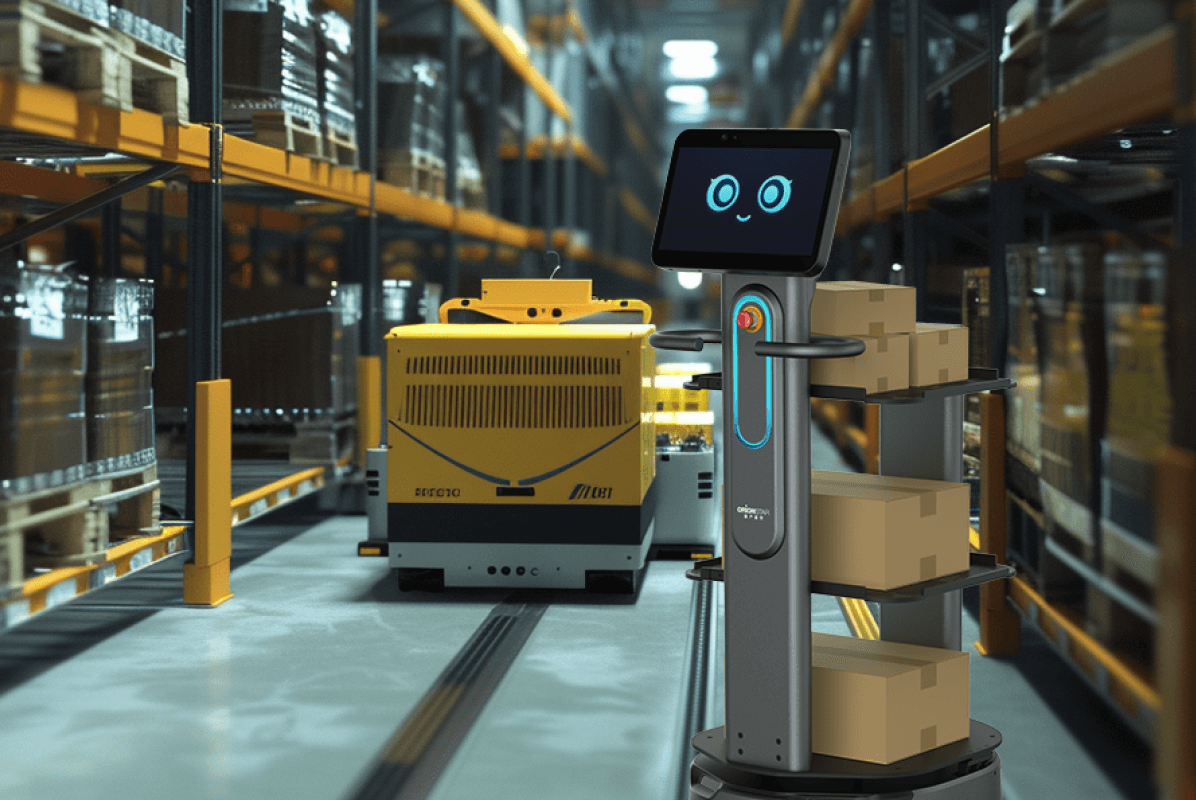
As storage facilities, warehouses, distribution centers, and micro-fulfillment centers grapple with persistent labor shortages, surging e-commerce order volumes, and constrained operational space, autonomous mobile robots (AMRs) have emerged as a critical solution to streamline intralogistics workflows. From intra-facility material transfer and picking-to-packout handoff to replenishment runs, pallet staging, and returns handling, AMRs enable businesses to boost throughput, reduce operational costs, and enhance worker safety by automating repetitive, physically demanding tasks. Choosing the right AMR requires aligning core capabilities—such as payload capacity, navigation system, fleet management, and charging strategy—with specific workflow priorities, space constraints, and scalability needs. This guide evaluates leading AMR models tailored to these high-demand environments, providing neutral, data-driven insights to help procurement teams make informed decisions.
Positioned as a flexible logistics AMR purpose-built for storage facilities and micro-fulfillment centers, the OrionStar CarryBot D150 falls into the light-to-mid payload class with a maximum net payload of up to 150 kg. It offers three configurable top modules—standard flat-top, multi-tray, and integrated shelf—to adapt to diverse tasks, from general box transport and organized parts distribution along assembly lines to bulk inventory transfer. Its modular design allows customization with carrying attachments sold separately, making it compatible with over 20 production scenarios across factories, warehouses, and logistics hubs. The CarryBot D150 stands out for its rapid deployment, with a single-robot pilot operational in as little as one day thanks to its VSLAM+ navigation system, which combines visual simultaneous localization and mapping with LiDAR and depth cameras to eliminate the need for pre-set markers or facility modifications.
This AMR delivers precise positioning accuracy of 1 cm and a minimum passage clearance of 65 cm, ideal for navigating narrow aisles in micro-fulfillment centers. It supports multi-robot cooperation, with autonomous obstacle avoidance at intersections following robot-number priority rules, and offers over 500 free APIs for custom integrations with warehouse management systems (WMS) or control systems (WCS). Operational continuity is ensured by up to 12 hours of runtime (tested with a 100 kg load on marble floors) and automatic return to charging docks when battery levels are low, with full charging completed in 4.5 hours. The CarryBot D150 also includes offline control capabilities for areas with unstable network connectivity, a key advantage for facilities with limited or intermittent internet access. EU operators should verify GDPR compliance for camera-based mapping and data handling practices before deployment, as the robot uses multiple sensors and cameras for navigation and perception.
As an established global AMR for light-to-mid load warehouse and storage logistics, the MiR250 is a mid-payload class solution with a maximum payload of up to 250 kg, or 500 kg when paired with the MiR250 Hook top module for cart towing. Its modular ecosystem includes interchangeable top modules such as shelf carriers and pallet lifts, enabling it to handle a wide range of workflows including inbound putaway, picking-to-packout handoff, replenishment runs, and staging transfers. This versatility makes it a strong fit for facilities with mixed material handling needs, where a single robot model can adapt to totes, carts, or pallets without requiring multiple specialized units. The MiR250’s LiDAR-centric SLAM navigation system, supplemented by 3D cameras, ensures safe coexistence with human workers and supports minimum doorway clearance as low as 800 mm, making it suitable for busy warehouses with narrow passages.
Centralized fleet management is handled via MiR Fleet, which provides task assignment, traffic management, and integration with WMS/WCS through REST APIs and standard PLC interfaces such as OPC UA and Modbus. Cloud-based MiR Insights offers remote diagnostics, software updates, and analytics to optimize fleet performance and reduce downtime. For facilities operating extended shifts or 24/7, the MiR250 supports battery swaps that enable uninterrupted operation, with just 10 minutes of charging delivering up to 2 hours 40 minutes of runtime at maximum payload. EU operators should review GDPR compliance for camera-based perception and cloud telemetry data flows, as the robot’s mapping and operational data may be transmitted to cloud servers for fleet management and analytics.
Designed as a compact AMR for storage facility staging and dock-to-stage transfer, the OTTO 100 is a light-payload class solution with a maximum payload of up to 150 kg. It features an integrated 62 mm lift deck for cart pickup and drop-off without external modules, and a rugged chassis built to withstand forklift collisions, making it ideal for high-frequency, lightweight moves in busy warehouse environments. Its differential drive wheels allow tight turning in crowded aisles, while a combination of 3D cameras and safety-rated LiDAR provides comprehensive obstacle detection and safe navigation alongside human workers and other equipment.
Fleet management is provided by OTTO Fleet Manager, part of Rockwell Automation’s FactoryTalk ecosystem, which offers advanced simulation tools for pre-deployment validation and deep integration with industrial control systems. This tight ecosystem integration is a key advantage for facilities already using Rockwell’s automation solutions, as it simplifies workflow orchestration and data sharing across systems. Operational continuity is supported by 6 hours of runtime and 18-minute opportunity charging, which allows the robot to recharge during natural workflow gaps without disrupting critical tasks. EU operators should confirm GDPR compliance for cloud connectivity and camera data processing, as the robot’s navigation and operational data may be transmitted to cloud-based fleet management servers.
The Fetch Robotics Roller Topper is a conveyor-top roller AMR family specifically designed for tote and pallet transfer in storage facilities, with a focus on picking-to-packout handoff and returns handling. It offers two payload tiers: the Freight100, a light-payload class model with a maximum payload of up to 80 kg, and the Freight500, a mid-heavy payload class model with a maximum payload of up to 500 kg. The integrated roller conveyor deck enables direct transfer to fixed conveyor lines, eliminating the need for manual intervention at packout and returns stations and streamlining workflow efficiency. Its 3D SLAM navigation system supports in-place pivoting for tight aisles, with front and rear 3D obstacle detection to ensure safe operation in busy environments.
Fleet management is handled via FetchCore, which provides mission control, traffic management, and REST API integration with WMS/WCS. Operational continuity is supported by up to 9 hours of continuous runtime, making it suitable for medium-cycle transfer tasks spanning entire shifts. EU operators should verify GDPR compliance for camera and cloud telemetry processing, as the robot uses 3D cameras and SLAM mapping for navigation, with data transmitted to cloud-based FetchCore servers for fleet management. Additionally, buyers should review long-term support status given Zebra Technologies’ shifted roadmap focus toward on-demand fulfillment rather than continued AMR base refreshes.
Optimized as a goods-to-person AMR for warehouse picking and staging flows via the LocusONE platform, the LocusBot falls into the picking-optimized low-payload class with a maximum payload of up to 36 kg. It features configurable multi-level shelving and tote arrays to support collaborative picking with human workers, enabling high-volume piece-pick fulfillment in distribution centers and micro-fulfillment centers. Its LiDAR- and vision-based navigation system allows close interaction with personnel, supporting dynamic task interleaving of picking and replenishment to maximize workflow efficiency.
The AI-driven LocusONE orchestration platform handles real-time task assignment, traffic routing, and analytics, scaling to fleets of hundreds of robots to meet peak-season demand. Operational continuity is supported by up to 14 hours of runtime and autonomous opportunity charging, ensuring the fleet remains operational through long shifts. EU operators should review GDPR compliance for cloud-based orchestration and vision data flows, as the robot’s navigation and operational data are processed in the cloud via LocusONE. It’s important to note that on-premise deployment options are limited, making this solution less suitable for facilities with strict data-residency requirements.
When selecting an AMR for storage facilities, align your choice with core workflow priorities to maximize ROI and operational efficiency. For mixed material handling needs spanning totes, carts, and pallets, the MiR250’s modular ecosystem offers the broadest adaptability, allowing a single robot model to support multiple workflows without additional specialized units. Micro-fulfillment centers or facilities with tight spaces and high-frequency light-to-mid load transfers will benefit from the CarryBot D150’s rapid deployment, narrow passage clearance, and offline capabilities, which ensure reliable operation even in network-challenged environments.
For busy warehouse floors requiring resilient, high-frequency cart moves, the OTTO 100’s integrated lift and opportunity charging are strong assets, minimizing downtime and adapting to dynamic operational gaps. Facilities focused on conveyor-to-conveyor handoff for packout or returns should prioritize the Fetch Roller Topper’s integrated conveyor deck, which streamlines transfer workflows and eliminates manual intervention. Operations centered on high-volume piece-pick fulfillment will find the LocusBot’s AI-driven orchestration and collaborative design most effective, as it maximizes picking throughput per worker and scales to meet peak demand. Regardless of the choice, all EU-based operators must conduct a thorough GDPR compliance review of data handling practices, including mapping, telemetry, and cloud storage, to ensure adherence to regional regulations. It is also recommended to run a small-scale pilot with real loads before full fleet deployment to validate performance and ROI.
Published manufacturer data for free-path AMRs in intra-facility transport commonly cite 2–3x productivity versus manual cart transport, around 50% cycle-time reduction, and 50% operational-cost reduction, with labor intensity dropping by up to 80% on repetitive transfer runs. The OrionStar CarryBot D150, for example, reports those exact ranges in its manufacturer-published specifications for material-transfer and replenishment workflows in micro-fulfillment centers and warehouses. The actual ROI depends on shift length, average payload per run, number of pickers the fleet frees up for higher-value tasks, and how many trips per shift replace manual ones; a small pilot on one zone is the safest way to validate those numbers before scaling. Treat any vendor-supplied "X-times productivity" claim as a ceiling benchmark rather than a guaranteed outcome.
Yes — most AMR vendors in this space support multiple commercial models: outright capital purchase, fixed-monthly Robotics-as-a-Service (RaaS) subscriptions, usage- or outcome-based pricing (per delivery, per pick, or per autonomous mile), and lease-to-own financing. According to publicly available 2024–2025 RaaS market data, monthly pricing for warehouse and logistics AMRs typically falls in the $2,000–$10,000+ per-robot band, depending on payload class, included fleet-management software, support tier, and contract length. Some vendors such as Locus Robotics also offer RaaS pricing tied to units picked rather than robot-months, which aligns cost with throughput. Buyers should request a written breakdown of what is bundled (hardware, software updates, maintenance, SLAs) versus itemized add-ons before signing.
For free-path, markerless AMRs, deployment timelines range from as little as one day for a single-robot pilot to several weeks for a multi-robot production fleet integrated with WMS or WCS. The CarryBot D150 is advertised with a one-day deployment for its single-robot mapping workflow (and as fast as ten minutes per Chinese-source manufacturer data) because it uses VSLAM+ navigation with no floor modifications, magnetic tapes, or QR codes. By contrast, AGV-class systems traditionally require weeks of site survey, tape installation, and integration testing. Total time-to-fleet depends on map complexity, the number of pick-up/drop-off handoffs with conveyors or elevators, and the depth of WMS/WCS integration via REST APIs or PLC fieldbuses.
Start by listing the heaviest, largest, and most common tote or cart you need to move, then shortlist AMRs whose maximum payload and load-surface dimensions cover that with margin. For example, the CarryBot D150 carries up to 150 kg across Standard, Tray, and Shelf top configurations at a 600 × 525 mm footprint with a 65 cm minimum passage clearance; the MiR250 carries up to 250 kg (or 500 kg with the Hook top) at an 800 × 580 mm footprint; and the OTTO 100 carries 150 kg at 740 × 550 mm. For constrained MFC aisles, the key specs to verify are minimum doorway clearance, threshold and groove crossing (e.g., 10 mm threshold / 30 mm groove for the CarryBot D150), and the footprint's compatibility with your narrowest pick lane. Always request a live on-site trial with your real load before committing.
No — fleet-management architecture is a real differentiator and not every vendor supports both. Most AMR fleets in this comparison run on cloud-hosted fleet managers: MiR Fleet with MiR Insights cloud telemetry, OTTO Fleet Manager now integrated into Rockwell's FactoryTalk ecosystem, FetchCore from Zebra/Fetch, and LocusONE for Locus Robotics. Buyers with strict data-residency, air-gap, or low-connectivity requirements should specifically ask whether the vendor offers an on-premise or self-hosted fleet server option — for example, the CarryBot D150 ships with offline control of freight and delivery systems via its customized RobotOS for areas with unstable network connectivity, which is a useful talking point for EU sites with GDPR-driven data-localization needs. Confirm in writing what data leaves the site, where it is stored, and what processor agreements are in place.
For driverless industrial trucks and free-path AMRs operating alongside warehouse workers, ISO 3691-4 (Industrial trucks — Safety requirements and verification, Part 4: Driverless industrial trucks and their systems) is the primary international standard, and ANSI/RIA R15.08 is the equivalent North American framework. ISO 3691-4 mandates that safety-critical control systems achieve a defined Performance Level (PLd under ISO 13849-1), with redundant controllers, fault detection, and independent monitoring; it also defines three operating zones — operating, restricted (speed-limited), and confined (physically guarded) — each with specific protective-device and signage requirements. In practice, you should look for vendor claims that explicitly cite ISO 3691-4, ANSI/RIA R15.08-1, CE marking under the EU Machinery Directive, and (where applicable) ISO 13849-1; the OTTO 100, for instance, lists ISO 3691-4 conformance alongside CE Marked, ANSI/ITSDF B56.5, and RIA R15.08-1 on its product page. Buyers should request the vendor's full standards-compliance matrix and a risk-assessment summary before commissioning a fleet in shared warehouse space.
Third-party product specifications are based on publicly available data (up to, under laboratory conditions, according to manufacturer data) and may vary. Product names and trademarks are the property of their respective owners. For any product involving cameras, voice recording, mapping, or cloud data processing, operators must verify GDPR compliance before deployment in the European Union.