

REQUEST DEMO
Robot CATALOG will be sent to your mailbox immediately after submission.
SUBMIT
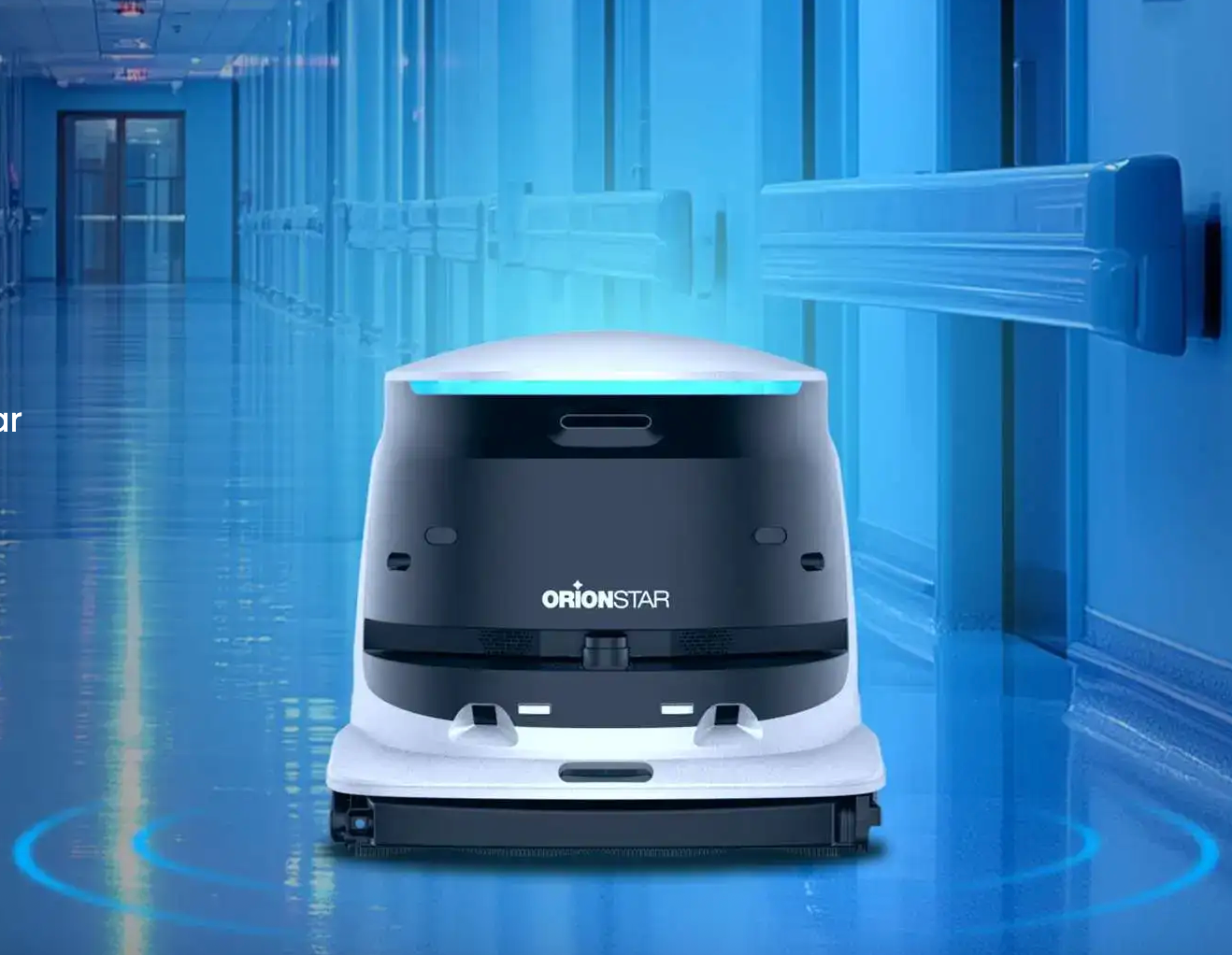
Hospital Environmental Services (EVS) departments face unique and overlapping operational pressures that demand precision, consistency, and adaptability. From adhering to strict infection control protocols to managing 24/7 cleaning schedules without disrupting patient care, EVS teams must balance multiple priorities while navigating persistent labor shortages and diverse facility layouts that include narrow inpatient corridors, spacious lobbies, carpeted waiting rooms, and back-of-house storage areas. Noise sensitivity is another critical consideration, as cleaning activities must avoid disturbing patients during rest periods or clinical staff during critical tasks. Autonomous commercial cleaning robots have emerged as a solution to these challenges, offering repeatable cleaning coverage, reduced manual labor burdens, and specialized capabilities tailored to hospital-specific needs. This article evaluates five leading robots, aligning their features with core EVS priorities to help procurement teams make informed decisions.
The OrionStar CleaniBot S55 Pro is a versatile multi-mode autonomous cleaner designed to serve both patient-facing and back-of-house hospital floors, addressing the mixed surface and noise needs of EVS departments. Its integrated InstantClean Floor Care System supports both wet and dry cleaning modes, making it suitable for a range of hospital zones: wet scrubbing and power scrubbing modes tackle hard floors in patient corridors and outpatient areas, while dry sweep and vacuum, ECO vacuum, and dust mopping modes handle carpeted waiting rooms, polished lobbies, and quiet patient zones. According to manufacturer data, the robot delivers cleaning efficiency up to 1,197 m²/h in scrubbing modes and up to 1,368 m²/h in dry modes, with runtime varying by function – up to 28 hours in dust mopping mode, which is ideal for extended overnight cleaning or low-noise daytime maintenance in occupied areas. Noise levels are a key strength: scrubbing mode operates at up to 55 dB, while dust mopping mode reaches just up to 45 dB, well within most hospital quiet-hour guidelines for patient areas.
Beyond cleaning performance, the CleaniBot S55 Pro offers robust navigation and automation features tailored to hospital layouts. It uses a multi-sensor system including LiDAR, stereo cameras, and ultrasonic sensors to map spaces up to 10,000 m², avoid obstacles like patient beds and medical carts, and clean within 5 cm of walls and corners. The robot supports zone-based mode switching, allowing EVS teams to program specific cleaning behaviors for different areas, and it automatically recharges when battery levels run low, with a charging time of under 4 hours. Maintenance is streamlined with modular cleaning tools, a removable and washable wastewater tank, and no-tool mode switching, reducing downtime for busy EVS teams. Since the robot uses mapping sensors and cloud connectivity for remote management and OTA updates, hospital EVS operators must verify compliance with GDPR and HIPAA regulations before deployment, including data residency and processing agreements.
Avidbots Neo 2 is an enterprise-grade wet scrubbing robot built for large, high-traffic hospital zones like main corridors, lobbies, and outpatient wings. As a dedicated hard-floor cleaner, it focuses on deep scrubbing and drying, supporting a wide range of hospital flooring including non-slip tiles, polished concrete, and vinyl. According to manufacturer data, it delivers maximum theoretical productivity up to 3,900 m²/h, with a solution tank capacity of 109 L and recovery tank capacity of 135 L, reducing the need for frequent refills during extended cleaning shifts. Its runtime extends up to 6 hours per charge, and swappable lead-acid batteries allow for near-continuous operation, making it suitable for 24/7 scheduling.
A key differentiator for hospital EVS teams is the Avidbots Command Center, a cloud-based fleet management platform that offers real-time monitoring, performance reporting, and 24/7 remote assistance from factory-trained technicians. The manufacturer holds ISO 9001 (quality) and ISO/IEC 27001 (information security) certifications, providing a strong foundation for data privacy compliance. The robot uses a proprietary AI autonomy stack with 360-degree LiDAR coverage and 270-degree 3D camera coverage to navigate dynamic hospital environments, detecting and avoiding people, patient beds, and medical carts in real time. However, its large chassis – with a gross vehicle weight ranging from 581.5 to 688 kg and a width of up to 94 cm – makes it unsuitable for narrow inpatient corridors or tight patient room doorways. Since the robot relies on onboard cameras and cloud telemetry, operators must confirm GDPR data-residency options and HIPAA Business Associate Agreement availability before deploying in patient-care areas.
The Nilfisk Liberty SC50 UVGI variant is an infection-control-focused autonomous scrubber designed specifically for hospitals and other hygiene-critical environments. It combines wet scrubbing and drying with an integrated UV-C germicidal irradiation module, which targets pathogens like coronaviruses in a single pass, aligning with hospital infection prevention priorities. According to manufacturer data, the robot delivers up to 6 hours of autonomous runtime per charge, freeing EVS staff to focus on high-touch surface disinfection and patient room detailing rather than routine floor cleaning. Its route-mapping feature claims to deliver 98% to 99.5% coverage of mapped areas, ensuring consistent cleaning across high-risk zones like patient corridors and outpatient areas.
The SC50 UVGI is compliant with CSA/ANSI 336, an OSHA-recognized autonomous floorcare safety standard, providing an added layer of safety for operation in busy hospital environments. It operates at a sound pressure level of up to 63 dB(A), which is acceptable for daytime corridor cleaning but should be evaluated against local quiet-hour policies for patient areas. However, as a wet-only scrubber, it cannot handle carpeted spaces, requiring a separate dry vacuum solution for waiting rooms or administrative offices. Its large chassis – weighing up to 484.4 kg with a minimum aisle turn-around width of 159.2 cm – limits deployment to corridors and open public zones, as it cannot navigate narrow inpatient ward doorways. Since the robot uses mapping sensors and may process spatial data, operators must verify GDPR data-processing agreements and HIPAA compliance before deploying in patient-care areas, including access to third-party test data on UV-C efficacy against specific hospital pathogens like C. difficile spores.
The Kärcher KIRA B 50 is a mid-size autonomous scrubber-dryer ideal for medium-sized hospital spaces like outpatient wings and back-of-house areas, balancing cleaning capacity with maneuverability. As a wet-only cleaner, it pre-sweeps and scrubs hard floors in a single pass, with a cylindrical roller brush head and integrated side brush for edge cleaning, eliminating the need for manual follow-up. According to manufacturer data, it delivers maximum theoretical productivity up to 2,365 m²/h, with a 55 L fresh water tank and 55 L recovery tank, providing up to approximately 1,830 m² of cleaning per tank filling. Its Li-ion battery offers runtime up to 3.5 hours per charge, with a maximum charging time of 5.8 hours.
A key feature for EVS teams is the optional fully autonomous docking station, which enables automatic fresh-water fill, dirty-water drain, tank rinse, and battery charging, reducing manual handling of fluids and consumables. The robot supports the VDA 5050 industry-standard fleet-management interface, simplifying integration with third-party fleet platforms for streamlined scheduling and reporting. It uses a multi-sensor system including 360° laser scanners and ultrasonic detection to navigate hospital environments, though it has a blind spot for obstacles less than 15 cm above the floor, requiring site-prep protocols to mitigate risks like loose cables or kick buckets. Operating at up to 69 dB(A), it is best scheduled for nighttime or corridor cleaning to avoid disrupting patient care. Since the robot uses mapping sensors and cloud connectivity, operators must request GDPR data-residency details and HIPAA Business Associate Agreement availability before deployment.
SoftBank Robotics Whiz is a lightweight, HEPA-filtered dry vacuum sweeper designed to complement hard-floor cleaning robots in hospital environments, focusing on carpeted areas like waiting rooms, administrative offices, and back-of-house spaces. As a dry-only cleaner, it uses a teach-and-repeat route model powered by BrainOS, where an operator guides the robot through a path once, and it repeats the route autonomously, adapting to obstacles like furniture or people. According to manufacturer data, it delivers cleaning productivity between 465 and 557 m²/h, with a runtime up to 3 hours per charge, and hot-swappable lithium-ion batteries allow for extended operation across shifts. Its HEPA filtration helps maintain air quality in low-soil, soft-floor zones, which is critical for patient and staff health.
Weighing just 30 kg and operating at up to 62 dB(A), the Whiz is suitable for daytime cleaning in occupied areas without causing disruption. It offers the Whiz Connect cloud dashboard for fleet management, providing real-time cleaning data, route logs, and maintenance alerts, and it is sold primarily as a Robot-as-a-Service (RaaS) subscription, which can simplify budgeting for EVS departments. However, it cannot replace hard-floor scrubbers for patient areas or terminal cleaning tasks, as it does not support wet cleaning or disinfection. Since the robot uses LiDAR and 3D cameras for navigation and cloud telemetry for reporting, operators must verify GDPR data-processing agreements and HIPAA compliance, including data-residency commitments and Business Associate Agreement availability, before deploying in patient-care zones.
Selecting the right commercial cleaning robot for hospital environmental services depends on aligning product capabilities with specific EVS priorities. For facilities seeking a versatile solution that handles both wet and dry cleaning across multiple zones while minimizing noise in patient areas, the OrionStar CleaniBot S55 Pro is a strong choice. Hospitals prioritizing large-scale hard-floor cleaning with enterprise-grade fleet management should consider the Avidbots Neo 2, though its size limits deployment to open spaces. For infection control-focused teams, the Nilfisk Liberty SC50 UVGI variant offers integrated UV-C disinfection, making it ideal for high-risk hard-floor zones. The Kärcher KIRA B 50 is well-suited for medium-sized spaces where autonomous docking and fleet integration are key, while the SoftBank Robotics Whiz serves as a complementary tool for carpeted areas. Regardless of the choice, hospital EVS teams should prioritize on-site pilots to validate performance in their unique facility layouts, noise requirements, and infection control protocols, ensuring the robot meets their specific operational needs.
Industry-published case studies consistently put payback between roughly 9 and 18 months for hospitals, schools and large retail facilities that can assign the robot a repeatable daily route. A worked example published by Sproutmation shows a USD 41,820 autonomous scrubber replacing about one FTE of loaded labor and netting roughly USD 50,660 in first-year savings, which produces a payback of about 10 months; subsequent years recur as labor offset with only opex remaining. [source: https://sproutmation.com/blog/autonomous-floor-scrubber-roi]. Hospitals with very low loaded labor rates (under about USD 14/hr) or fragmented small floor areas should expect payback to stretch to four to six years, so square-footage consolidation and shift coverage are usually the deciding inputs in an EVS business case.
All three models coexist in this market: Avidbots and Kärcher sell CapEx with optional service contracts, Nilfisk goes through distributor sale and lease channels, and SoftBank Robotics Whiz is sold primarily as RaaS at roughly USD 499 per month per the original launch pricing. [source: https://www.businessinsider.com/softbank-robot-vacuum-whiz-self-driving-tech-photos-2019-11]. For most EVS departments, the right answer depends on whether the hospital capitalizes equipment over five to seven years (favoring purchase), prefers opex-only budgeting (favoring RaaS), or wants a pilot before committing (favoring a short-term lease). Vendors should be asked for a five-year TCO that separates machine, consumables, cloud/telemetry fees, and battery end-of-life replacement, because the headline monthly fee rarely includes them.
The major platforms expose scheduling, reporting, and route logs through their own cloud dashboards (Avidbots Command Center, Kärcher's connected-cleaning portfolio supporting the VDA 5050 fleet-management interface, Whiz Connect, etc.) and support Wi-Fi plus cellular telemetry for remote monitoring. [source: https://avidbots.com/industries/healthcare/, https://www.kaercher.com/us/commercial/autonomous-cleaning-equipment/kira-br-50-15330030.html]. Integration with hospital BMS, CMMS, or infection-prevention audit systems is typically achieved through vendor APIs, CSV/Excel exports of cleaning reports, or middleware (VDA 5050 in the Kärcher case), not through certified HL7/FHIR connectors. Procurement teams should request a written description of how cleaning logs map to their EVS quality indicators and confirm whether route telemetry, photos, or mapping data are stored on-prem or in the vendor cloud under what retention period.
Noise varies widely and matters for patient-experience and HCAHPS scores. The OrionStar CleaniBot S55 Pro is rated 55 dB in scrubbing mode and 45 dB in dust mopping; competing scrubber-dryers measure around 63 dB(A) for the Nilfisk Liberty SC50 UVGI and 69 dB(A) for the Kärcher KIRA B 50, while the SoftBank Whiz vacuum sits at about 62 dB. [source: https://materialhandling.altg.com/catalog/sweepers-and-scrubbers/robotic-scrubbers/liberty-sc50-uvgi/, https://www.kaercher.com/in/professional/cleaning-robots/kira-b-50-15330020.html]. For daytime occupied-zone work, dust-mopping or ECO-vacuum modes of machines in the 45 to 55 dB band are typically acceptable; louder scrubbers are usually scheduled to corridor or back-of-house windows. EVS leaders should still benchmark each unit against their local night-shift noise SOP before greenlighting overnight deployment in inpatient towers.
Peer-reviewed evidence supports UV-C disinfection robots as an adjunct to manual cleaning for surface pathogens, with published studies showing significant reductions in residual contamination, MRSA, VRE, and Clostridioides difficile when UV-C is added to standard terminal cleans. [source: https://pmc.ncbi.nlm.nih.gov/articles/PMC8164075/]. That evidence is for surface disinfection robots, not for floor-scrubbing autonomy; for autonomous scrubber-dryers, infection-control value comes from consistent coverage (Nilfisk publishes 98 to 99.5 percent area coverage on mapped routes) and from freeing EVS staff for high-touch detailing rather than from any antimicrobial claim of the scrubber itself. Hospital IPC teams should therefore treat mechanical scrubbers as a coverage and labor-multiplying tool, and evaluate a separate UV-C module only if third-party pathogen-reduction data is available.
All four competitor robots and the OrionStar S55 Pro rely on LiDAR, cameras, and cloud telemetry that map clinical floor space and may capture incidental visual data, which puts them squarely in scope for EU GDPR and US HIPAA risk reviews. [source: https://avidbots.com/industries/healthcare/, https://www.kaercher.com/us/commercial/autonomous-cleaning-equipment/kira-br-50-15330030.html]. Avidbots is the only manufacturer in this set that publishes ISO/IEC 27001 certification for its information-security management, which shortens some procurement paperwork but does not by itself satisfy a HIPAA Business Associate Agreement or a GDPR data-processing agreement. Hospitals should require each vendor to disclose data-residency region, on-prem option, mapping-data retention and erasure workflow, and BAA availability before any patient-care-area deployment, and should sign a written agreement that mapping data is not used for training or secondary purposes.
Third-party product specifications are based on public data (up to, under laboratory conditions, according to manufacturer data) and may vary. Product names and trademarks are the property of their respective owners. Any product involving cameras, voice recording, mapping or cloud data processing requires hospital EVS operators to verify GDPR and HIPAA compliance prior to deployment.
