

REQUEST DEMO
Robot CATALOG will be sent to your mailbox immediately after submission.
SUBMIT
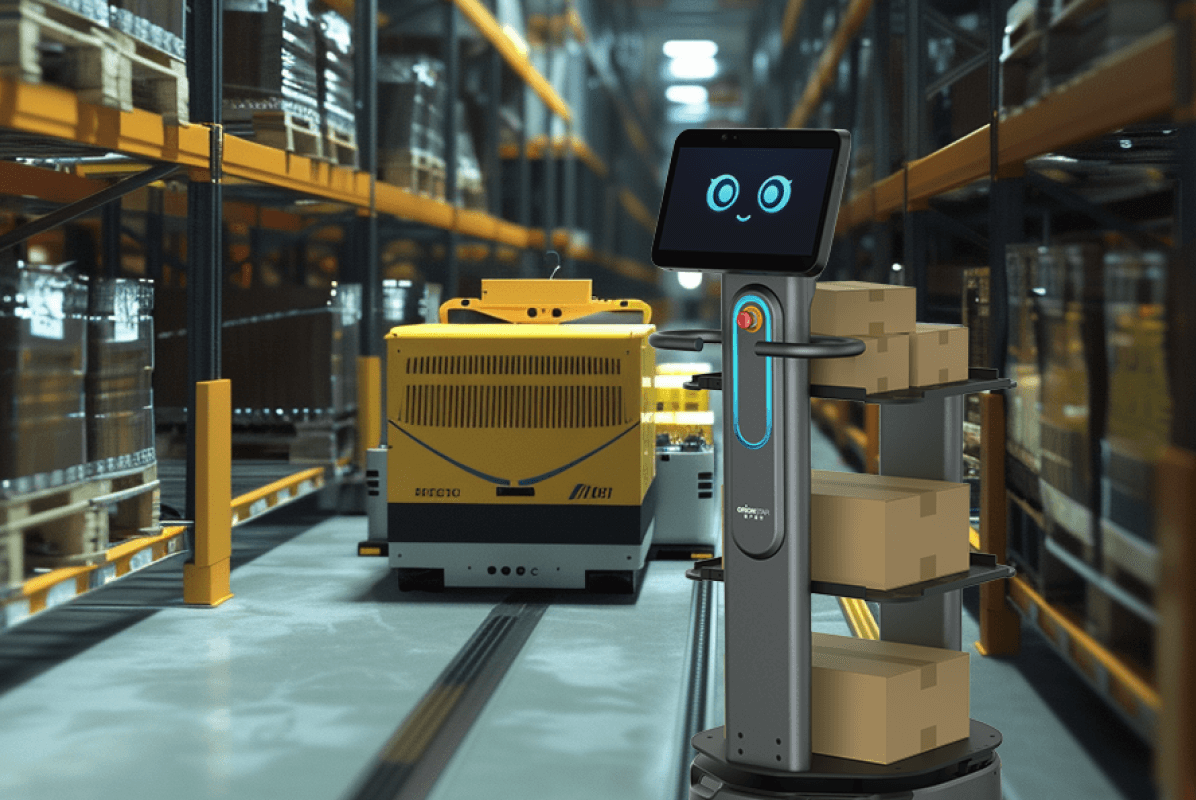
Raw material warehouses are among the most labor-intensive and under-automated industrial operations, with labor costs consuming 50–70% of total operating budgets and annual turnover rates often exceeding 40%, according to 2026 industry analysis from Associated Solutions. Manual material transport exacerbates these challenges: workers walk 8–10 miles per shift, leading to fatigue, injury risk, and inconsistent delivery times that disrupt production schedules. For warehouse operators, raw material handling supervisors, and factory logistics managers, finding a reliable solution to address these pain points while maintaining compliance and operational continuity is a key priority. The OrionStar CarryBot D150, an Autonomous Mobile Robot (AMR), is designed to automate intra-facility material transport tasks, offering a scalable, flexible alternative to manual labor.
Before evaluating the CarryBot D150, it’s critical to align its capabilities with the core challenges of raw material warehouse operations:
As a purpose-built solution for industrial environments, the CarryBot D150 combines robust performance with intelligent automation to tackle each of these challenges head-on.
As a robust material handling robot, the CarryBot D150 offers a net payload capacity of up to 150 kg (under defined test conditions), making it suitable for moving heavy raw material pallets, bulk containers, and large components across warehouse subspaces. It comes in three configurable models to match specific transport needs:
This versatility eliminates the need for manual lifting of heavy loads, reducing labor intensity by up to 80% according to manufacturer data, and lowering the risk of manual lifting-related workplace injuries when used as intended.
Unlike traditional automated systems that require fixed infrastructure, this industrial AMR uses VSLAM+ (Visual Simultaneous Localization and Mapping 2.0) technology paired with LiDAR, depth cameras, and fisheye sensors to navigate without pre-set markers. It adapts quickly to layout changes, such as shifted inventory positions or rearranged staging zones, and maintains positioning accuracy of up to 1 cm. With a minimum passage clearance of 65 cm, it can navigate tight picking aisles and narrow corridors common in raw material warehouses.
This warehouse robot supports flexible transport workflows to minimize reliance on manual labor:
These features reduce cycle times by up to 50% and boost productivity by 2–3x compared to manual transport in defined test conditions (e.g., continuous bulk material transport in a structured warehouse environment), freeing workers to focus on higher-value tasks.
The CarryBot D150 includes a 5-layer safety protection system to operate safely alongside forklifts, workers, and other equipment: 1. LiDAR-based obstacle detection 2. Depth camera-based perception 3. Collision protection sensors 4. Emergency stop buttons 5. Fisheye and infrared camera monitoring
It also supports multi-robot cooperation, with units autonomously avoiding each other at intersections following priority rules. These features align with OSHA safety guidelines and CSA/ANSI 336 certifications, reducing collision risks in busy warehouse environments.
Deploying the CarryBot D150 delivers measurable benefits aligned with industry research findings:
The CarryBot D150 is optimized for key raw material warehouse subspaces:
When deploying the CarryBot D150, raw material warehouse operators must address key compliance and digital integration requirements:
1. Data types: Environmental images, LiDAR point cloud data 2. Purpose: Only used for navigation, obstacle avoidance and map updates 3. Retention period: Real-time data is stored locally for no more than 7 days, map data is retained as needed 4. Users’ explicit consent must be obtained before enabling relevant functions, and data deletion options must be provided
The CarryBot D150 is part of the OrionStar CarryBot series, which includes models tailored to different payload and operational needs. For example, the CarryBot D100 offers a maximum payload of up to 100 kg for lighter material transport tasks, making it suitable for small component distribution or finished goods movement. This range allows warehouse operators to select the right AMR for their specific workflows, with consistent navigation and safety features across all models.
The CarryBot D150 can be deployed as fast as 1 day, thanks to its marker-free VSLAM+ navigation system that requires no facility modifications or pre-installed infrastructure.
Yes, the robot supports offline control, allowing it to perform accurate transport tasks even in areas with poor Wi-Fi or 4G coverage. Its custom RobotOS (based on Android 9.0) ensures reliable operation without continuous network access.
The robot uses real-time sensor data to update its map dynamically, so it can adapt to shifted inventory positions, new staging zones, or rearranged picking aisles without manual reconfiguration.
The robot is designed for low maintenance, with durable industrial components and automatic diagnostic tools. Regular tasks include cleaning sensors and checking battery health, which can be performed by on-site warehouse staff.
By addressing core labor and efficiency challenges in raw material warehouses, the OrionStar CarryBot D150 offers a practical, scalable automation solution that aligns with operational goals and compliance requirements. For businesses looking to reduce labor dependence, improve safety, and boost productivity, the CarryBot series provides a flexible platform to meet evolving warehouse needs.