

REQUEST DEMO
Robot CATALOG will be sent to your mailbox immediately after submission.
SUBMIT
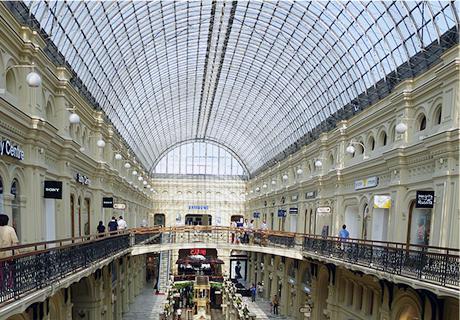
Supermarket floor cleaning combines conditions that are rarely found together in other commercial environments. Fresh produce zones may contain fruit stickers, soil, shrink-wrap, and juice. Checkout zones collect packaging fragments and heavy foot traffic, while deli and bakery back-of-house areas may require removal of grease, food residue, and dried spills. Store entrances introduce water and dirt from outside, and refrigerated aisles can include glass, reflective surfaces, tight clearances, and frequent shopper movement.
For purchasing teams and facility managers, choosing an automatic floor scrubber for supermarket chains therefore requires more than comparing cleaning width or theoretical productivity. A chain may operate convenience stores, standard supermarkets, hypermarkets, warehouse-club formats, and distribution-centre-adjacent retail sites. Each format can have different aisle widths, doorways, gondola spacing, checkout layouts, refrigerated islands, ramps, floor-loading limits, and back-of-house routes.
The evaluation should begin with the complete operating envelope. Buyers should measure the narrowest aisle, tightest autonomous turning area, smallest doorway, lift access, end-cap clearance, and perimeter route. They should also assess how each machine combines dry-debris collection, scrubbing, water recovery, drying, edge coverage, obstacle avoidance, and spill response. A machine that performs well on an open sales floor may not reach effectively around checkout counters or refrigerated cases.
Unattended shift continuity is another central consideration. Overnight cleaning may depend on automatic charging, clean-water refilling, wastewater drainage, tank rinsing, and fault notifications. Smaller stores may instead prefer route teaching and operator-assisted operation between missions. For larger stores, usable runtime, water consumption, battery charging, filtration, and the percentage of the planned route completed in one shift are more useful measures than headline capacity alone.
Multi-store deployment also changes the buying decision. Chain operators should examine route management, scheduling, alerts, reports, software updates, operator permissions, connectivity, subscription terms, service coverage, and integration with BMS, CMMS, AGV, or AMR fleets. Where cameras, three-dimensional sensing, mapping, or cloud processing are involved, operators in Europe and other regulated markets should verify what data is collected, how it is processed and retained, who can access it, where it is stored, and whether a privacy impact assessment is required before deployment.
The OrionStar CleaniBot C5 is positioned as a mid-size, industrial-grade autonomous scrubber for medium-to-large commercial floors. Within a supermarket chain, its operating profile can suit standard supermarket sales floors, larger grocery stores, high-traffic main aisles, store entrances, checkout areas, and deli or bakery back-of-house zones. It is particularly relevant where the chain wants a machine with substantial water capacity and heavy-duty scrubbing rather than a compact cobot designed mainly for short routes.
The C5 has an approximately 550 mm main-brush cleaning width and a manufacturer-reported cleaning capacity of up to approximately 1,980 m² per hour. Its dimensions are about 820 × 680 × 1,130 mm, with an approximate net weight of 170 kg. A minimum passing width of approximately 880 mm should allow access through many supermarket doorways and corridors, but each store should still be measured at the narrowest point, including fire doors, stockroom passages, gondola end caps, and routes between refrigerated islands.
Its combined tank capacity is approximately 90 L, divided into about 45 L of clean water and 45 L of wastewater. This arrangement can reduce refill frequency during a planned overnight route, although actual coverage depends on floor condition, water settings, brush pressure, route design, and the amount of manual intervention required. The scrubbing runtime is approximately three hours, while mopping runtime can reach up to approximately eight hours. The battery supports approximately 1.5 hours of fast charging according to manufacturer data.
The dual-rolling-brush system applies approximately 25 kg of downward scrubbing pressure. OrionStar reports a dirt-cleaning rate of about 95% according to manufacturer data, but supermarket operators should verify performance against their own milk, juice, oil, food residue, and tracked-in soil conditions. Any one-pass result for heavy oil, grime, or stubborn stains should be evaluated only under specified test conditions, including the contaminant, floor material, cleaning solution, brush configuration, speed, and number of passes. The machine provides scrubbing, dust-mopping, and water-absorption modes, and can pick up debris up to approximately 3 cm in height. Its 1.8 L dust bin is relevant to dry waste such as cardboard fragments, packaging debris, and other material found in checkout or receiving areas.
The C5 can map an area of up to approximately 10,000 m² and automatically dock for clean-water refilling, wastewater discharge, tank rinsing, self-cleaning, and charging. The wastewater tank can self-clean in roughly four minutes according to manufacturer data. Automatic docking may support planned multi-shift operation in larger grocery locations, but buyers should confirm the workstation footprint, plumbing or mobile-water-tank requirements, drainage arrangements, detergent procedures, and the handling process for unresolved faults.
The machine operates at approximately 1.2 m/s and is specified to manage obstacles up to approximately 15 mm and slopes of up to about 5 degrees when loaded and 8 degrees when unloaded. Its operating noise is under 68 dB(A), measured under the applicable manufacturer test conditions. Actual perceived noise varies by flooring, aisle acoustics, and operating mode. Multiple sensors and an obstacle-avoidance system are intended to reduce collision risk, but operators must still complete a site safety assessment and test low-profile obstacles, glass, reflective surfaces, entrance conditions, ramps, shoppers, and wet-floor communication.
The C5 does not have a specified edge-cleaning result in the manufacturer documentation. Operators should therefore validate its performance along gondola shelving, refrigerated-case perimeters, checkout counters, corners, and end caps rather than assuming that its 550 mm cleaning width will produce flush coverage. The pilot should also measure doorway access, turning performance, cleaning around produce displays, and the amount of manual finishing needed in deli and bakery back-of-house areas.
The Gausium Scrubber 50 is a strong fit for standard supermarkets, grocery chains, refrigerated-case perimeters, checkout zones, and stores with changing layouts. Public sources describe it as a dedicated retail solution and reports deployments across Europe, the United States, and Asia. Its approximately 810 × 700 × 1,070 mm dimensions and approximately 800 mm minimum passing width can suit many conventional supermarket routes, although the approximately 1,100 mm minimum U-turn width should be checked against narrow crossovers and congested end caps.
The machine is available with disc-brush and roller-brush configurations. The disc version has an approximately 460 mm cleaning width, while the roller configuration has cleaning-width options associated with a 406 mm roller and up to approximately 780 mm with side brushes. Net weight is approximately 157 kg for the disc-brush version and approximately 148 kg for the roller-brush version according to according to manufacturer data.
The roller-brush configuration is relevant where dry debris appears alongside wet contamination. It can sweep and scrub in the same workflow, helping address shrink-wrap, twist ties, fruit stickers, deli tissue, cardboard fragments, and shopper debris in fresh produce zones, bakery aisles, and checkout lanes. The chassis can also be used for scrubbing, sweeping, and dust mopping, allowing a chain to assign different modes to back-of-house deli and bakery areas, main aisles, and entrance zones.
Practical cleaning efficiency is approximately 500–1,300 m² per hour, while theoretical figures are higher and depend on configuration and operating conditions. The machine provides approximately three hours of scrubbing runtime and approximately six to eight hours of dust-mopping runtime depending on configuration. Its tanks hold approximately 30 L of clean water and 24 L of wastewater. For larger supermarkets and hypermarket formats, these capacities may require additional servicing, multiple units, or an optional automatic fill-and-drain workstation.
One of the model’s main scenario-specific features is the reported flush edge-cleaning capability of the roller-brush configuration with side brushes. Public sources describe 0 mm edge cleaning, which may help along gondola shelving, refrigerated island cases, and checkout counters. Operators should still test the result with their actual shelf feet, display bases, counter geometry, floor transitions, and debris patterns, because nominal edge reach does not by itself confirm pickup and drying quality.
The Scrubber 50 uses 2D LiDAR, a 3D depth camera, an RGB camera, and anti-collision sensing according to manufacturer data. SLAM-based mapping does not require fixed magnetic tape or QR codes, which may simplify remapping after seasonal gondola changes. The Gausium mobile app and cloud platform support monitoring, task scheduling, map editing, alerts, software updates, and potential BMS or CMMS integration.
The app interface is reported to support English, German, French, Spanish, Italian, Portuguese, Simplified and Traditional Chinese, Japanese, and Korean. Product-brochure language coverage and voice-prompt availability may differ by firmware and region, so chains should request written confirmation of the exact operator interface and voice languages for each market.
Because the Scrubber 50 uses cameras, mapping, and cloud-related functions, European and United Kingdom operators should review GDPR requirements before deployment. The review should address whether a data protection impact assessment is required, whether images, depth data, point clouds, maps, or device logs are transmitted or retained, where that data is stored, how long it is retained, who can access it, and how seasonal remapping is governed. Its compact supermarket access and edge-focused roller configuration are useful advantages, but its smaller tanks and approximately three-hour scrubbing runtime may make it less suitable as a single machine for large hypermarket floors.
The Kärcher KIRA BR 50 is a standard-width autonomous scrubber-dryer for retail and public spaces. It can suit supermarket aisles, entrances, checkout zones, and deli or bakery back-of-house areas, particularly for chains that value Kärcher’s regional service network or already operate compatible automation fleets. Its size places it between compact retail cobots and large-format industrial machines.
The KIRA BR 50 has an approximately 550 mm brush working width and an approximately 750 mm vacuum working width. Theoretical autonomous area performance reaches up to approximately 2,365 m² per hour, while approximately 1,830 m² per tank filling is reported according to manufacturer data. Its dimensions are approximately 1,100 × 750 × 1,200 mm. Published weight figures vary from approximately 228 kg unladen to approximately 243 kg with accessories or configured equipment, so buyers should request a confirmed transport and floor-loading figure for the exact configuration.
The machine combines pre-sweeping, scrubbing, and drying in one workflow. Its approximately 2 L integrated pre-sweeping drawer can collect dry product debris before cleaning solution is applied, which is relevant to cardboard fragments, packaging pieces, snack wrappers, and similar material in produce, bakery, checkout, and entrance zones. Manual driving is available as a fallback for targeted milk, oil, or deli spills that fall outside the scheduled autonomous route.
The fresh-water and dirty-water tanks each hold approximately 55 L. Runtime is approximately 3.5 hours in the international specification, while some regional or configured versions report approximately four hours. Buyers should confirm the applicable runtime, battery configuration, and test conditions for the sales region. The machine has an approximately 0.9 m minimum autonomous clearance and an approximately 1.5 m autonomous aisle-turning width. These dimensions may work in standard supermarket layouts, but the turning requirement can be restrictive in narrow convenience stores or irregular back-of-house passages. Buyers should test the entire route rather than assessing only the minimum clearance.
An optional docking station can support autonomous charging, fresh-water refilling, dirty-water drainage, and tank rinsing. This may enable lights-out operation from a back-of-house service bay, but the chain must confirm the required docking space, drainage connection, detergent handling, fault recovery, and access for service personnel. The symmetrical tank arrangement may simplify the planned fill-and-empty cycle, while the published runtime can align with some overnight cleaning windows depending on the regional configuration and route requirements.
The KIRA BR 50’s VDA 5050 communication interface is a relevant consideration for chains that already operate warehouse AMRs or AGVs, or that intend to connect cleaning robots to a common fleet-management environment. Operators should verify the practical integration scope, event and fault data, cybersecurity responsibilities, software-update controls, and compatibility with existing BMS or CMMS systems. Cloud and on-premise options should also be confirmed for the selected regional configuration.
Kärcher describes the machine as safety certified for public access, which may be relevant when cleaning during customer-present periods such as early-morning bakery replenishment. This statement should be distinguished from a complete site safety assessment. Operators still need to validate obstacle detection, low-profile objects, glass and reflective surfaces, entrance traffic, ramps, emergency-stop access, wet-floor warnings, and local certification requirements.
The exact sensor composition, mapping architecture, cloud arrangements, and data-residency terms should be requested from Kärcher before privacy-sensitive deployment. The KIRA BR 50 may be a practical choice for chains prioritising service coverage and VDA 5050 integration, but its published weight and turning requirements warrant particular attention in older stores, narrow convenience locations, and buildings with uncertain floor-loading or lift limits.
The Gaussian Robotics ECOBOT Scrubber 75 is a large-format, industrial-grade option for hypermarkets, warehouse clubs, flagship stores, and distribution-centre-adjacent retail areas. Its operating profile is more appropriate for open, large-area floors than for convenience stores or narrow standard-supermarket aisles. A chain with mixed formats may therefore assign this model to its largest sites while using smaller machines elsewhere.
The Scrubber 75 has an approximately 750 mm cleaning width and theoretical productivity of up to approximately 3,000 m² per hour. Its dimensions are approximately 1,370 × 962 × 1,417 mm. The approximately 450 kg figure is the gross weight when fully loaded, not the unladen weight, and the complete deployment must account for floor loading, lift access, doorway dimensions, turning areas, charging location, and separation from narrow customer-facing routes.
The machine has an approximately 75 L clean-water tank and an approximately 50 L wastewater tank. Its four-stage water filtration system is relevant to chains evaluating water-use controls and large-format operating costs. Runtime is approximately four to six hours according to manufacturer data. An optional workstation can support charging, water refilling, and wastewater discharge, potentially reducing manual intervention during overnight cleaning.
The larger body and wider cleaning path can improve coverage on open hypermarket floors, warehouse-club areas, and receiving zones. They can also make the machine unsuitable for narrow aisles, tight end caps, small lift cabins, or stores with constrained back-of-house access. Before a chain commits to this model, it should conduct a route simulation covering entrances, refrigerated islands, checkout areas, emergency routes, stockroom doors, ramps, and any transitions between the sales floor and receiving areas.
The Scrubber 75 uses a Turnado or offset-brush design intended to support edge-to-edge cleaning around corners, gondolas, refrigerated islands, and end caps. This may address visibly missed perimeter zones on large retail floors, but a site pilot should measure actual edge contact, water pickup, corner access, and performance around display bases. The approximately 55–70 dBA published noise range may permit some customer-present operation, subject to local conditions and store policy.
The machine uses LiDAR, a 3D camera, touch sensing, ultrasonic sensing, and a collision bumper according to according to manufacturer data. Its SLAM mapping coverage can reach up to approximately 100,000 m² per map. Alerts and cleaning reports support facility oversight, but the specific regional app, dashboard, integration arrangements, service model, subscription terms, and data-residency commitments should be confirmed before a multi-store rollout.
Because the Scrubber 75 uses 3D-camera sensing, mapping, reporting, and cloud-related functions, operators should complete the required privacy and data-governance review before deployment. This should include GDPR where relevant, as well as confirmation of data minimisation, retention, access control, residency, and the treatment of any sensor or map data. Its large tank capacity and extended runtime can suit hypermarket-scale missions, but the gross weight and physical envelope make site logistics decisive.
The ICE Co-Botics Cobi 18 is a compact cobot for convenience-format stores, small neighbourhood supermarkets, irregular floor plans, tight aisles, and targeted supermarket sub-zones. Its approximately 48 × 48 × 70 cm dimensions make it suitable for areas where larger machines cannot manoeuvre effectively, including deli areas, checkout zones, in-store cafés, refrigerated islands, entrances, perimeter routes, and narrow end-cap passages.
The Cobi 18 has an approximately 48 cm cleaning path and productivity of up to approximately 800 m² per hour. Its solution tank holds approximately 10 L and its recovery tank approximately 11 L. Runtime is approximately 90 minutes per charge, or approximately 60–90 minutes depending on ECO or MAX mode. Noise is approximately 66–68 dB in ECO mode and approximately 68–70 dB in MAX mode.
This operating profile favours short, repeatable missions rather than hypermarket-scale cleaning. A chain may use the Cobi 18 for a convenience-format store, a checkout and entrance route, a refrigerated-island perimeter, or a deli and bakery sub-zone. Larger supermarkets would generally need multiple units or a larger complementary scrubber if the entire sales floor must be cleaned within one shift.
The route-teaching model allows an operator to walk a route once and then deploy it on demand. Fill-in Mode can map a perimeter of an irregular store and allow the machine to cover the interior autonomously. Routes can be saved, with up to approximately 60 routes per unit according to manufacturer data, and shared across a Cobi fleet at the same site. These functions may help chain operators standardise repeatable routes across small-format locations, although route version control and local override permissions should be confirmed.
The Cobi 18 uses a point-cloud heat-map approach described by ICE Co-Botics as a combination of sensors. According to the supplier’s published information, the product is designed not to capture images, recognise faces, or record voice. Operators should verify that statement against the current hardware, firmware, configuration, cloud connection, and privacy documentation before deployment. The review should also confirm whether any operational, map, telemetry, or account data is transmitted or retained.
The i-SYNERGY fleet-management software supports performance tracking, route maps, completion confirmation, and ROI reporting. The publicly available US brochure describes a 36-month subscription bundled with the unit at a starting price of $15 per day. Buyers should confirm the current commercial terms, renewal conditions, connectivity requirements, regional support, and whether the data fields transmitted meet the chain’s governance rules.
The Cobi 18’s compact access is balanced by lower productivity, smaller tanks, and shorter runtime than standard-width or large-format machines. It may be an appropriate tool for convenience stores and defined supermarket sub-zones, but it should not be presented as a single-machine solution for hypermarket-scale cleaning without a multi-unit plan or a larger complementary machine.
A chain should begin by segmenting its estate by store format and route conditions. Convenience stores and small neighbourhood supermarkets may need compact route operation, tight turning capability, and manual support for short missions. Standard supermarkets generally require a balance between aisle access, mixed-debris handling, edge performance, water capacity, and overnight completion. Hypermarkets and warehouse clubs may benefit from wider cleaning paths, longer runtime, larger tanks, filtration, and docking infrastructure, provided the building can accommodate the machine.
Floor conditions should be evaluated by zone rather than treated as a single store-wide requirement. Fresh produce areas may require simultaneous debris collection and spill removal. Checkout zones may need frequent route repetition and careful operation around shoppers. Deli and bakery back-of-house areas may require greater scrubbing pressure and grease management. Entrances may need strong drying and safe operation around tracked-in water, while refrigerated aisles require assessment of glass, reflections, tight perimeter routes, and end-cap access.
Edge and perimeter performance should be demonstrated on the actual gondolas, refrigerated cases, checkout counters, and display fixtures used by the chain. Buyers should record missed strips, residual water, corner performance, debris pickup, and the manual finishing time required after the autonomous route. A paid pilot is preferable where edge geometry, floor transitions, or seasonal display changes are significant.
The overnight operating plan should define the planned route, cleaning sequence, battery reserve, water consumption, wastewater handling, charging time, docking location, and exception process. Operators should establish who responds to blocked routes, low water, full recovery tanks, displaced displays, emergency stops, or connectivity loss. Customer-present cleaning requires additional controls for wet-floor communication, staff awareness, shopper interaction, emergency access, ramps, reflective surfaces, and local safety certification.
Multi-store buyers should compare centralized fleet management with locally governed operation. Route-based systems can support repeatable layouts, shared routes, completion confirmation, performance reports, and return-on-investment reviews. Open fleet interfaces such as VDA 5050 may be useful where the chain already operates AMRs or AGVs. Self-contained or locally managed systems may be preferable where connectivity is restricted or cloud data residency is tightly controlled.
Total cost of ownership should include equipment purchase or subscription, docking infrastructure, water, detergent, electricity, maintenance, replacement parts, software, connectivity, service coverage, training, manual spot-cleaning, and the cost of privacy or systems integration. A five-year model should compare the expected labor reallocation and cleaning consistency against the actual store footprint, operating hours, route completion rate, and remaining human tasks. Vendor payback projections should be requested in writing and tested against a representative store rather than applied uniformly across the estate.
No single machine is suitable for every supermarket chain. The OrionStar CleaniBot C5 is oriented toward mid-size and larger commercial floors where tank capacity, industrial scrubbing, and autonomous docking are priorities. The Gausium Scrubber 50 is well suited to many standard supermarket layouts, particularly where roller-brush sweeping and reported flush edge cleaning are important. The Kärcher KIRA BR 50 may fit chains prioritising regional service support, standard-width operation, docking, and VDA 5050 compatibility. The Gaussian Robotics ECOBOT Scrubber 75 is directed toward hypermarkets and other large-format sites where its size and capacity can be used effectively. The ICE Co-Botics Cobi 18 is intended for compact stores and targeted sub-zones where manoeuvrability matters more than single-machine throughput.
Before signing a chain-wide contract, operators should request written confirmation of specifications, service coverage, software and subscription terms, integration requirements, privacy controls, data residency, language availability, docking requirements, and local compliance documentation. Route simulations and site pilots should verify aisle access, turning, edge coverage, drying, obstacle handling, customer-present safety, and the amount of manual intervention required.
Autonomous scrubbers may generate potential economic value through labor reallocation, water and chemical use, and cleaning consistency rather than direct revenue, but the result depends on site-specific operating data. The ICE Co-Botics Cobi 18 ships with a 36-month i-SYNERGY subscription at $15/day per the US brochure; buyers should confirm the region, contract scope, taxes, connectivity, service terms, and renewal conditions before using that figure in a comparison. The OrionStar CleaniBot C5’s docking station may reduce manual tank handling, while the effect of its dual-rolling-brush system on heavy soiling should be verified under specified test conditions rather than assumed from the brush pressure alone. The Kärcher KIRA BR 50’s detergent dosing module and the Gaussian Robotics ECOBOT Scrubber 75’s 4-stage water filtration may affect operating consumption, but any claimed savings require a defined baseline and controlled comparison. Chain operators typically build a 5-year TCO model that includes one-time integration costs (DPIA, map creation, BMS/CMMS integration) and ongoing cloud subscription fees, and should request a site-specific projection from each shortlisted vendor, because payback varies by store footprint, opening hours and whether the robot runs overnight or during opening hours.
TCO comprises acquisition or subscription cost, water, detergent, electricity, scheduled maintenance, fleet-management software and the residual cost of human spot-cleaning, and the published hardware designs in this category target specific cost lines. The OrionStar CleaniBot C5’s combined 90 L tank (45 L clean + 45 L waste) and ~1.5 h fast-charge window may affect refill and charging downtime per shift; the Kärcher KIRA BR 50’s symmetrical 55 L fresh/waste tanks and 2 L integrated pre-sweeping drawer may affect the tank cycle and dry-debris handling. The Gaussian Robotics ECOBOT Scrubber 75’s 75 L clean tank with 4-stage filtration and 4–6 h LiFePO₄ runtime is positioned for large-format operations, but any reduction in water or labor use should be confirmed through site-specific comparison testing. The Gausium Scrubber 50’s optional workstation does auto-fill, drain and rinse for chains that want lights-out overnight operation. Against outsourced janitorial contracts, the Cobi 18’s $15/day bundled subscription gives a starting-price reference rather than a guaranteed per-unit cost, and EU/UK chains should remember to add a one-time GDPR DPIA and any BMS/CMMS integration cost into the comparison.
Most vendors in this shortlist support multi-site rollouts through SLAM-based mapping with no magnetic tape or QR codes required, but mapping time and commissioning depend on the store layout, site preparation, network access, safety review, and acceptance process. The Gausium Scrubber 50 supports cloud-based map management with OTA software updates, the Kärcher KIRA BR 50 ships with VDA 5050 fleet-management compatibility for chains that already operate AGV/AMR fleets, and the ICE Co-Botics Cobi 18 supports up to 60 saved routes per unit that can be shared across a Cobi fleet at the same site. Subscription-based offerings like the Cobi 18’s 36-month plan may reduce upfront capex and bundle fleet software, while outright purchase models put the asset on the chain’s balance sheet; both structures require confirmation of the applicable vendor and regional terms. EU/UK chains should assess whether a GDPR DPIA is required before rollout for any camera-based mapping stack and confirm cloud data residency and the precise fields transmitted in writing.
Edge cleaning is the most visible gap in supermarket floor cleaning and is explicitly engineered around in this shortlist. The Gausium Scrubber 50 in roller-brush configuration offers 0 mm edge cleaning with side brushes under the stated configuration, but the result should be verified against the chain’s gondola shelving, refrigerated island cases and checkout counters rather than treated as a universal outcome. The Gaussian Robotics ECOBOT Scrubber 75 uses a “Turnado” edge-to-edge design with an offset brush head intended to reach corners and end-cap gondola perimeters. The OrionStar CleaniBot C5’s 550 mm cleaning width, 880 mm minimum passing width and dual-rolling 25 kg pressure system support evaluation on standard supermarket aisles, but operators should validate edge performance against their specific gondola geometry during a paid pilot before committing to a chain-wide rollout.
Safety and noise are explicit design constraints for retail-grade units, but published specifications and certification statements do not eliminate the need for a site-specific safety assessment. The OrionStar CleaniBot C5 publishes under 68 dB(A), runs at about 1.2 m/s and uses multiple sensors plus a smart obstacle-avoidance system intended to reduce collision risk around people and equipment. The Gaussian Robotics ECOBOT Scrubber 75’s published noise band is 55–70 dBA, with the lower end comparable with the ICE Co-Botics Cobi 18’s ECO mode at 66–68 dB, while the Kärcher KIRA BR 50 is described by Kärcher as “safety certified for public access”; the relevant certificate scope and local requirements should still be confirmed. According to the supplier’s published information, the Cobi 18’s mapping stack is designed not to capture images, recognise faces or record voice, but operators should verify the claim for the deployed hardware and firmware and review any cloud data processing. For after-hours overnight cleaning windows, noise is less of a constraint, but operators should still confirm local night-shift noise ordinances before deployment.
Different supermarket zones produce different cleaning challenges, and matching the right brush configuration and machine per zone is the typical chain strategy. The Gausium Scrubber 50’s roller-brush version sweeps and scrubs simultaneously, picking up shrink-wrap, twist ties, fruit stickers, deli tissue and shopper debris typical of fresh-produce, bakery and checkout lanes, and its 3-in-1 chassis can be redeployed between back-of-house deli/bakery (heavy scrub), main aisles (sweep + scrub) and storefront entrance mat (dust mop). The Kärcher KIRA BR 50’s 80 g/cm² brush pressure at 1,200 rpm is specified for cleaning applications that may include greasy back-of-house deli and bakery floors, and its 2 L pre-sweeping drawer handles dry debris before solution is laid down. The OrionStar CleaniBot C5 picks up debris up to about 3 cm in height, has a 1.8 L dust bin for dry waste, combines scrubbing, dust-mopping and water-absorption in a single cycle and is reported at a ~95% dirt-cleaning rate according to manufacturer data; the applicable test method and conditions should be confirmed. For most chains the practical answer is to assign dedicated brush configurations or machines per zone rather than expect one unit to handle every surface equally well.
Third-party product specifications are based on public information and may vary by configuration, firmware, region, operating conditions, or test method; figures should be treated as up to, under laboratory conditions, or according to manufacturer data where applicable. Product names and trademarks belong to their respective owners. If any product involves cameras, voice recording, mapping, or cloud data processing, operators must verify the data collected, processing purposes, retention, access controls, storage location, cross-border transfers, and applicable privacy requirements before deployment.