

REQUEST DEMO
Robot CATALOG will be sent to your mailbox immediately after submission.
SUBMIT
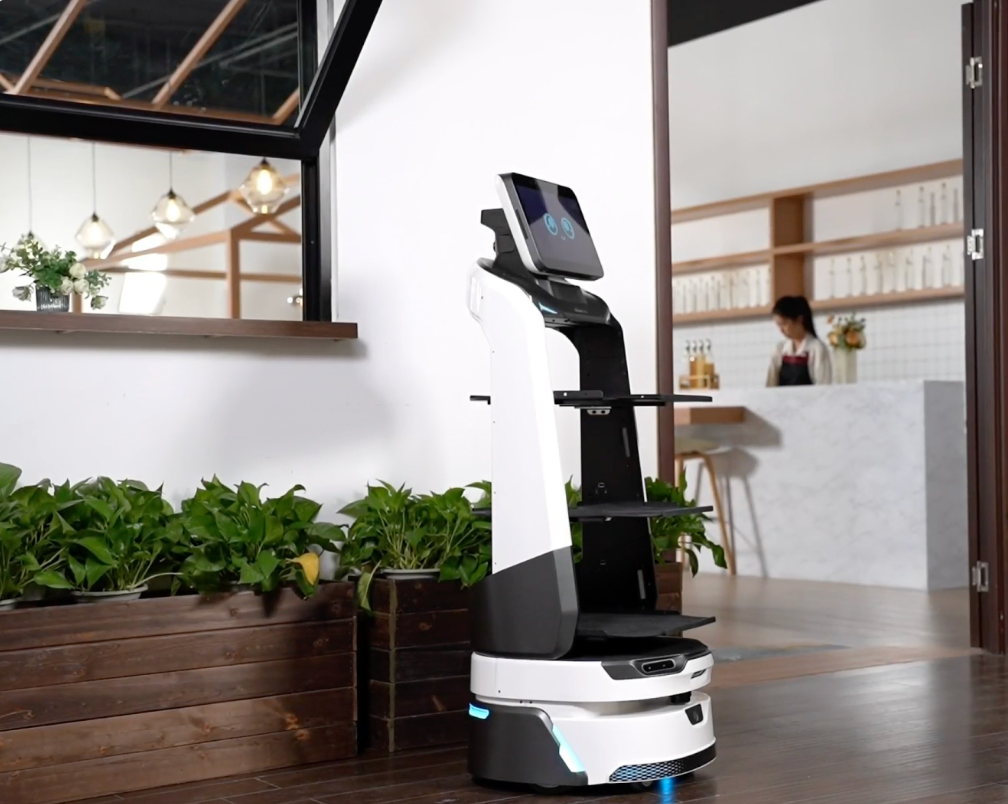
Restaurants face compounding pressures in their main dining rooms. The U.S. National Restaurant Association's 2025 State of the Restaurant Industry report shows that 77% of operators still describe recruitment and retention as a significant challenge, while NetSuite's 2025 restaurant-labor overview reports that 70% of operators have job openings that are difficult to fill. At the same time, post-COVID guest expectations around contactless and automated service have moved from novelty to baseline — a 2023 National Restaurant Association survey found that 46% of adults are likely to order food prepared by automated systems or robots. Serving robots are emerging as one practical answer: they take on the repetitive carrying work that has become harder to staff, they meet rising hygiene expectations, and they free servers to focus on the parts of the guest experience that benefit most from a human touch.
The OrionStar LuckiBot Pro embodies the capabilities above in a single platform. It carries up to 60 kg of payload across three standard trays (adjustable up to four layers), with each tray rated up to 15 kg, which lets it consolidate multiple dish drops into a single trip. Its 240-degree 3D all-around obstacle recognition — combining LiDAR with triple RGBD depth cameras and a fisheye camera — supports reliable navigation in dense seating layouts where guests, high-chairs, and pushed-back chairs are continuously moving (according to manufacturer data). A dedicated Soup Delivery Mode reduces vibration for liquid items, and cruising time reaches up to 12 hours on a single charge (under defined test conditions, typical cruising scene), turning the generic promise of "delivery automation" into something a busy main dining room can actually schedule around.
Table sections see the heaviest carry load — full plates out, cleared plates back. A serving robot consolidates multiple dish drops into a single trip and returns used tableware via a dedicated collection mode, so a server makes the greeting pass and the upsell pass rather than carrying each course individually.
Beverage runs between bar and table are frequent, low-variance trips that compete with food runs for the same server's legs. Assigning a multi-tray delivery loop to the bar allows servers to focus on food-stage presentation and guest interaction, while the robot handles stems, bottles, and refills with stable transport.
Open-kitchen pass-throughs create a steady stream of small, time-sensitive drops during peak hours. A serving robot stationed near the pass can stage trays, run a fast delivery mode during the rush, and switch to a soup or liquid mode for bowl-heavy service — reducing queuing at the pass and the spill risk that comes with hand-carrying liquids through a crowded dining room.
The host stand is the first point of contact. Robots equipped with a 14-inch display and AI voice interaction that recognizes commands in up to 75 dB of background noise (per manufacturer data) can greet arriving guests, guide them to their table, and signal the maître d' when a VIP or accessibility need is detected — without pulling a host off the floor.
Serving robots are no longer deployed as isolated devices. A documented five-step integration process — facility assessment, manual mapping of the space, marking stops and routes, live staff-led testing, and customization of welcome messages and routes — aligns the robot with existing POS-driven order flows and KDS workflows. POS integration is already commercial at scale: Bear Robotics has publicly partnered with Toast to flow orders directly into the robot's delivery queue. Robots with built-in kitchen display systems, refrigeration, and modular hardware interfaces extend the same principle to back-of-house orchestration. For new-build or remodel projects, architects are increasingly treating robot navigation as a building-program requirement — stairs, high doorsteps, and artificial plateau designs must be designed out during the initial construction or remodel phase, otherwise retrofit costs erode the financial case.
Together, these three dimensions make serving robots not only an operational tool but also a measurable contributor to a restaurant's social, governance, and sustainability disclosures — a useful frame for operators reporting under GRI, CSRD, or local ESG programs. The OrionStar LuckiBot series offers multiple models for different venue sizes, so readers evaluating a rollout can match capacity, tray configuration, and integration depth to the footprint of their own dining room.