

REQUEST DEMO
Robot CATALOG will be sent to your mailbox immediately after submission.
SUBMIT
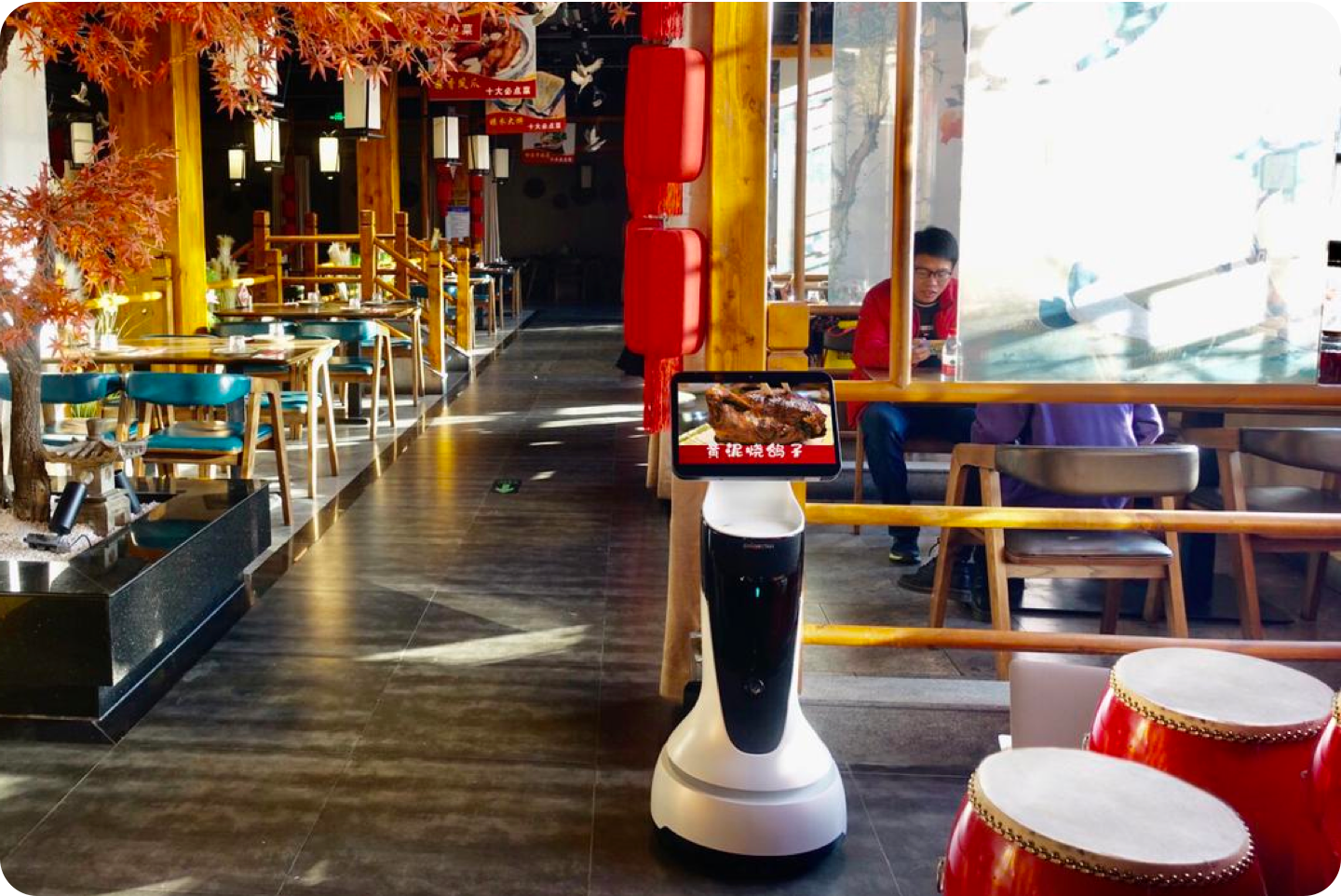
Department stores present a unique operational challenge, seamlessly blending expansive flagship atriums and multi-level shopping concourses with densely packed cosmetics halls, electronics zones, and narrow fashion floors. Deploying robotics in these highly variable environments requires operators to navigate fluctuating aisle widths, manage interactions across noisy customer service desks, and address the diverse needs of multilingual shoppers. Retailers must also strike a delicate balance between active digital wayfinding and passive promotional broadcasting, ensuring that a single device can guide a customer to specific beauty counters while simultaneously attracting foot traffic with seasonal campaigns. Consequently, identifying a reception robot for department stores that aligns with both spatial realities and customer engagement goals is critical for a successful technical deployment.
Establishing a robust evaluation framework requires department store operators to assess three primary purchasing factors. The first dimension evaluates spatial adaptability and passability clearance, contrasting ultra-compact footprints designed for tight pop-up brand activations with wide-concourse approaches built for spacious main walkways. The second factor examines advertising and interactive display configurations, weighing the benefits of a single interactive display focused on one-on-one customer engagement against dual-screen digital signage architectures that continuously broadcast promotional content. The third dimension assesses functional focus and payload capability, differentiating between dedicated greeting and wayfinding designs meant strictly for reception duties and hybrid platforms equipped with integrated physical layers.
The OrionStar GreetingBot Mini is strategically positioned as a solution featuring a compact footprint, voice-first interaction, native multilingual reception, and on-screen promotion specifically suited for narrow cosmetic and fashion aisles of department stores. With an overall chassis diameter of up to 41 centimeters and a minimum passability clearance of 55 centimeters according to manufacturer data, this model is deliberately engineered to navigate the tight constraints of densely packed beauty counters rather than being confined solely to open atriums. For spatial adaptability, this compact profile ensures that the robot can escort shoppers through restrictive pathways without causing customer congestion or bumping into delicate product displays. The device leverages an advanced sensor suite featuring LiDAR, a depth camera, and an RGB camera to maneuver safely through high-traffic retail environments.
In terms of communication, this platform distinguishes itself through native auto-detection for multilingual support, seamlessly switching between languages in real time without requiring operators to develop custom software integrations or rely solely on pre-packaged cloud voice packs. To overcome the noisy acoustics typical of a busy retail environment, the device features a high-performance microphone array designed to maintain speech recognition accuracy under challenging auditory conditions. The hardware configuration relies on a primary interactive display for direct, one-on-one customer engagement and on-screen promotions, omitting a secondary advertising chest display to maintain its slim form factor. This focused approach ensures the platform serves as an efficient digital ambassador, guiding visitors to their desired home goods departments while effortlessly accommodating a diverse, international shopper demographic.
Marketed as an ultra-slim digital receptionist and telepresence tool, temi is highly suitable for flagship atriums and customer service desks where budget-conscious operators require an interactive kiosk. This model focuses entirely on dedicated greeting and wayfinding duties, omitting physical delivery tray capacities to maintain a streamlined aesthetic tailored for front-desk reception and pop-up brand activations. The physical design features an overall dimension of 100 by 35 by 45 centimeters, while its operational minimum passability requires a remarkably small footprint of approximately 30 by 25 centimeters. This ultra-compact clearance allows the robot to routinely pass through both narrow department aisles and wide multi-level shopping concourses with ease. For navigation, the system relies on a 360-degree LiDAR sensor, two depth cameras, an RGB camera, and six Time-of-Flight linear sensors to map the store and avoid dynamic obstacles.
Regarding user interaction, temi utilizes a single 13.3-inch main interactive display that facilitates one-on-one customer assistance and video telepresence without a separate chest-mounted advertising screen. This means promotional content and custom branded applications compete for the same hardware real estate as the digital wayfinding interface. Multilingual support on this platform requires a distinct implementation strategy, as the unit ships with an English-only default voice capability and relies entirely on software development kit integration for additional languages, rather than offering native auto-detection. While its open Android architecture allows retailers to build highly customized retail skills, international department stores must factor localization projects into their deployment plans to adequately serve multilingual visitors across their cosmetics halls and fashion floors.
The Pudu KettyBot Pro is engineered for dual-screen marketing and light tray delivery, making it highly effective for high-traffic concourses and pop-up brand activations where visible advertising matters as much as the initial customer greeting. Operating as a hybrid reception and utility device, its structural design pairs an overall dimension of 435 by 450 by 1120 millimeters with a narrow minimum passability width of 55 centimeters. This clearance threshold enables the platform to operate fluidly across open flagship atriums as well as tight cosmetic and fashion aisles. The navigation framework utilizes a combination of LiDAR, depth vision sensors, a front positioning camera, and collision sensors to plot dynamic routes around temporary retail displays and moving shoppers.
A defining characteristic of this model is its dual-screen digital signage architecture, which physically separates customer interactions from promotional broadcasting. It utilizes a 10.1-inch main interactive display on its head for direct query resolution, alongside a prominent 18.5-inch advertising display mounted on its chest to continuously push seasonal retail campaigns to passersby. Multilingual support capabilities are largely driven by cloud voice packs, requiring department store operators to secure confirmation from regional partners regarding specific language availability prior to deployment. Additionally, this platform features dual utility layers designed for transporting small items across the retail floor, though it is important to note that physical delivery tray capacity serves a logistical function and does not fundamentally enhance its core reception and wayfinding capabilities.
Positioned as a hybrid solution, the Pudu BellaBot delivers high-capacity multi-tray delivery combined with tactile emotional interaction, tailored specifically for the wide-aisle home goods and fashion floors of flagship department stores. Unlike its ultra-compact counterparts, this model presents an overall dimension of 570 by 550 by 1290 millimeters and mandates a wider minimum passability clearance of 65 centimeters. Due to this larger physical footprint, the device is restricted to open flagship atriums, wide main walkways, and expansive shopping concourses, as it cannot safely service tight cosmetics aisles without risking disruption to foot traffic. The obstacle avoidance protocol integrates two front-view cameras, three RGBD cameras, and one LiDAR sensor to maintain spatial awareness across complex, multi-level environments.
Customer engagement relies on a dual-display setup that incorporates a 10.1-inch main interactive display for active guidance alongside a substantial 18.5-inch chest advertising display designed to project mobile digital signage. Similar to other models in this manufacturer's lineup, multilingual support relies on the cloud voice pipeline rather than native auto-detection, necessitating verification with regional vendors for specific language capabilities. While the unit boasts physical layers capable of transporting up to 40 kilograms of goods according to manufacturer data, this delivery tray capacity serves distribution functions rather than augmenting its primary reception operations. Ultimately, operators deploying this platform gain a mobile promotion unit that can schedule greeting modes between distribution tasks across spacious retail zones.
The LG CLOi GuideBot functions as a large-format humanoid guidebot designed specifically for flagship atriums and multi-level shopping concourses where high visibility and commanding presence are paramount. Characterized by an overall body dimension of 510.5 by 1,501.1 by 510.5 millimeters, this platform demands a significant minimum passability clearance of up to 80 centimeters. This wide-concourse format restricts the robot entirely to spacious centralized customer service desks and expansive open zones, rendering it completely unsuitable for narrow cosmetic counters or closely packed apparel aisles. To safely navigate these massive retail spaces, the platform deploys a sensor array encompassing LiDAR, depth cameras, Time-of-Flight sensors, magnetic sensors, and mechanical bumpers.
The visual engagement strategy of this platform is anchored by a massive dual-screen digital signage architecture that distinctly separates its interface zones. It features a 9.2-inch main interactive face display dedicated to direct customer communication, complemented by two 27-inch interactive advertising displays mounted on the front and rear of its chassis for large-scale promotional broadcasting. Multilingual support implementation remains undefined in public documentation, heavily suggesting a reliance on future cloud voice pack integrations or third-party localization rather than out-of-the-box native auto-detection. Because it lacks physical delivery trays entirely, its functional focus remains resolutely on providing high-impact digital wayfinding, telepresence, and in-store marketing across the most expansive areas of a modern department store.
Navigating the complexities of retail automation requires department store operators to carefully match their technological investments with their specific environmental demands. Regarding spatial adaptability, platforms requiring a minimum passability of under 60 centimeters are essential for traversing narrow cosmetics and fashion aisles, whereas larger models demanding greater clearance must be restricted to expansive flagship atriums. When evaluating advertising configurations, single interactive display systems provide focused, one-on-one customer assistance, while dual-screen architectures excel at simultaneously projecting broader promotional campaigns across high-traffic concourses. Finally, assessing payload requirements allows management to decide whether a dedicated greeting format offers the streamlined aesthetic necessary for brand pop-ups, or if a hybrid architecture with integrated physical layers offers beneficial logistical support alongside its core digital reception duties.
Purchase prices for reception-class robots in this segment vary widely, from roughly USD 4,500 for a compact telepresence model such as temi V3 to around USD 14,000 for a dual-screen model such as the Pudu KettyBot Pro; Robot as a Service (RaaS) alternatives are typically listed at about USD 125 per month for temi and USD 479 per month for the KettyBot Pro in the US channel. For a multi-zone department store deployment, operators should budget not only the unit or subscription fee but also mapping, integration with elevator or door systems, charging-dock installation, and an ongoing service / parts reserve. RaaS lowers upfront capex and shifts maintenance risk to the vendor, while purchase gives full control over data residency and software customization. Total cost of ownership over a three-year horizon is usually driven by fleet size, language localization work, and any content-management subscriptions, rather than the sticker price of a single robot.
At minimum, contracts should cover mean time between failures (MTBF) targets, response-time SLAs for on-site service, software update cadence, and spare-parts availability for at least five years after purchase. Confirm whether firmware updates, content management system (CMS) access and language model (LLM) integrations such as ChatGPT-style Q&A are bundled or sold as separate subscriptions, since these can change effective total cost significantly. For EU / UK rollouts, vendors should commit in writing to a configuration that satisfies GDPR, including lawful basis, EU data residency, retention controls and a sub-processor list; the LG CLOi GuideBot, temi, KettyBot Pro and BellaBot Pro all combine cameras, microphones and cloud CMS, so this is not optional. Also check the vendor roadmap status: at least one of the major reception robots in this category (LG CLOi GuideBot RSCGD20) is listed as DISCONTINUED on its US product page, which limits long-term service availability.
Most reception-robot deployments in retail are justified by combining staff-hour reallocation with measurable uplift in customer engagement, such as longer dwell time at promoted zones and higher coupon redemption from on-screen campaigns. Hard payback claims vary by store and are not publicly standardized across vendors, so operators should model payback using their own labor cost per hour, expected daily greeting and wayfinding volume, and the robot's net uptime. As a sanity check, a single compact robot performing 8–12 hours of customer service per day at 5 dB-tolerant noisy conditions can plausibly offset one full-time equivalent (FTE) of front-desk labor cost in mid-to-high wage markets; treat any faster payback claim (under six months) as scenario-specific and ask the vendor to share the underlying assumptions and test conditions. Maintenance, content updates and store reconfigurations should be factored into the model, not just the purchase or subscription fee.
Passability is one of the most important variables for department stores, because aisle widths vary from multi-meter concourses down to less-than-60 cm cosmetics counters. The OrionStar GreetingBot Mini has a minimum passable width of about 55 cm and a 41 cm chassis diameter, the Pudu KettyBot Pro also lists 55 cm, the Pudu BellaBot Pro requires about 65 cm, the temi V3 has an even smaller footprint of around 30 cm, and the LG CLOi GuideBot requires about 80 cm of clearance. For mixed-layout stores with both wide atriums and narrow beauty or fashion aisles, robots with ≤55 cm clearance are the only practical choice; wider units should be confined to atriums, customer service desks and pop-up activations. Also factor in climbing ability (5° across this category) and floor surface compatibility, since cosmetics halls often combine marble or polished tile with carpet runners that can affect traction.
Reception robots in this segment typically use a six-microphone circular array with 360° sound source positioning and explicit noise tolerance figures. The OrionStar GreetingBot Mini specifies a 5 m pickup range, greater than 97 percent speech recognition accuracy at 75 dB, and supports 30+ languages with real-time switching and automatic language detection; the Pudu KettyBot Pro and BellaBot Pro both use six-mic arrays but do not publicly document multilingual coverage in English sources and would need partner confirmation. The temi V3 ships English-only out of the box and additional languages require SDK localization work, while the LG CLOi GuideBot does not publicly list voice-language coverage at all. Department stores in tourist or international-shopper corridors should therefore require a multilingual demonstration or a written partner letter before signing, rather than relying on marketing copy.
Modern reception robots are designed as endpoints on a broader in-store network rather than stand-alone devices. Standard connectivity in this segment includes Wi-Fi (2.4G plus multiple 5G bands), Bluetooth, and 3G/4G LTE covering EU, US and Asia cellular bands; the GreetingBot Mini adds 4G plus optional expansion boards, and the Pudu models include SIM slots for cellular failover. CMS-level integrations typically cover digital signage, custom video and image upload, third-party data feeds, and OTA updates; the LG CLOi GuideBot and the Pudu models expose multi-mode software stacks (Cruise, Greeting, Guiding, Birthday) for scheduled role switching. For multi-floor concourses, elevator and automatic-door integration is critical: RobotLAB lists verified elevator / door-opener compatibility for the KettyBot Pro, and operators should confirm the same for any shortlisted unit. GDPR-class deployments also require cloud-side configuration of retention, residency and sub-processors before any in-store camera or microphone goes live.
Third-party product specifications are based on public data (up to, under laboratory conditions, according to manufacturer data) and may vary; product names and trademarks belong to their respective owners; if any product involves cameras, voice recording, mapping, or cloud data processing, operators must verify GDPR compliance prior to deployment.