

REQUEST DEMO
Robot CATALOG will be sent to your mailbox immediately after submission.
SUBMIT
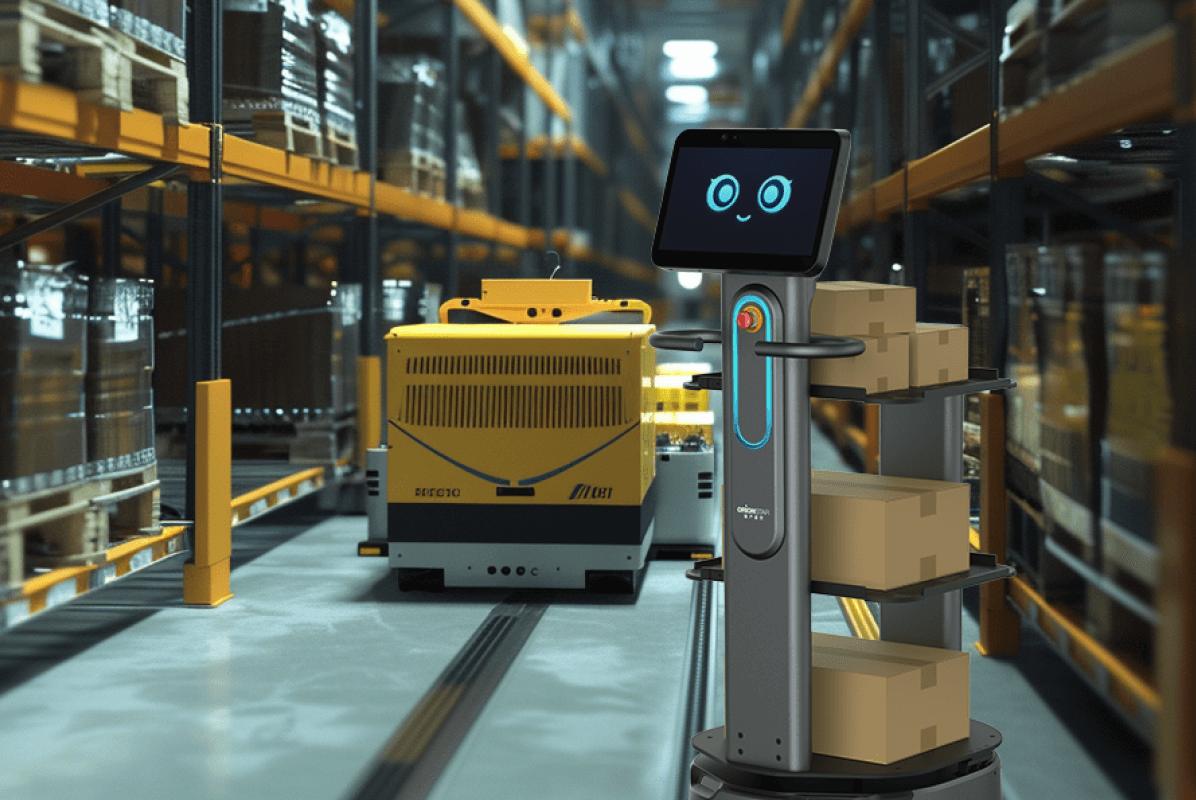
Industrial Manufacturing is reaching a critical inflection point inside industrial plants worldwide. A structural labor shortage is fundamentally altering how factories operate, shifting from temporary disruptions to a permanent reality. Right now, a convergence of factors makes automation unavoidable. Global manufacturing faces millions in projected worker shortfalls by 2030, while wage inflation steadily outpaces the ability to raise selling prices. Simultaneously, hardware costs for robotic solutions are declining as their navigational intelligence matures. Customer expectations for higher mix flexibility and shorter lead times remain uncompromising. Therefore, plant managers and intralogistics planners can no longer rely on adding temporary headcount to solve material handling bottlenecks. Instead, the Autonomous Mobile Robot has emerged as a proven, industry-level solution. These systems decouple material movement from human labor availability. As a result, factories can maintain throughput, stabilize operational costs, and build a resilient intralogistics framework that scales independently of local labor market constraints.
These pressures point to a single, unavoidable conclusion—the traditional manual operating model is simply unsustainable.
The OrionStar CarryBot series directly addresses intralogistics bottlenecks in industrial plants through the CarryBot D150. This specific model is engineered to handle heavy material flows across diverse facility zones. In raw material staging areas, the unit utilizes VSLAM+ navigation and 1 cm positioning accuracy to maneuver through tight corridors without requiring pre-set markers. Plant managers can orchestrate remote deployment and rely on cloud scheduling to continuously feed materials to the line. Furthermore, the robot offers a net payload capacity of up to 150 kg, according to manufacturer data, making it highly effective for distributing bulk components into active assembly zones. To sustain continuous shifts, the system delivers a battery life of up to 12 hours, ensuring uninterrupted transport from final assembly to finished-goods staging areas.
Operational continuity is further supported by robust digital management capabilities. Intralogistics planners can access real-time data and monitor fleet performance via reliable 4G or Wi-Fi networks. Moreover, the integration process is streamlined by an open system featuring over 500 APIs, allowing seamless communication with existing warehouse execution software. Because the CarryBot D150 relies on a 5-layer safety system that includes depth cameras and visual perception, the robot collects environmental data strictly for navigation, utilizing edge-computing to process visual inputs locally without storing personal identifiable information (PII), aligning with GDPR standards. Above all, this singular model unifies fragmented transport workflows within the plant, providing a digital, predictable material handling foundation that stabilizes production.
These results are not theoretical projections; they are the measurable realities that plant managers, line supervisors, and intralogistics planners are already validating on the floor.
The integration of robotics in industrial plants represents an augmentation of the workforce rather than a replacement strategy. Autonomous systems naturally absorb the dull, dirty, and physically demanding tasks that characterize intralogistics operations. Long material hauls and repetitive transfers are shifted to machines. Consequently, human workers transition into roles that require judgment, adaptability, and complex problem-solving. This shift allows line supervisors to focus their teams on high-value activities, such as quality supervision, exception handling, and continuous workflow improvement.
As manual pushing and pulling decline, new technical skill paths emerge on the factory floor. Industrial operations are increasingly establishing roles dedicated to robot fleet management, traffic orchestration, and preventive maintenance. Workers who previously spent hours moving carts are reskilling to analyze throughput data and monitor overall equipment effectiveness. Ultimately, the collaborative human-robot operating model stabilizes production capacity while elevating the daily working experience of the industrial workforce.
The Autonomous Mobile Robot is rapidly transitioning from a pilot project to foundational infrastructure within industrial plants. As labor constraints tighten and production demands accelerate, decoupled material handling will dictate a facility's overall competitiveness. To address varying spatial and weight requirements across different sectors, the OrionStar CarryBot series provides multiple models designed to adapt to specific intralogistics scenarios, allowing operations to scale their automation gradually. Moving forward, the most resilient manufacturing environments will be those that view automated transport as a core utility, much like power or connectivity. The industry is moving toward a standard where intelligent, autonomous logistics form the very backbone of modern manufacturing.