

REQUEST DEMO
Robot CATALOG will be sent to your mailbox immediately after submission.
SUBMIT
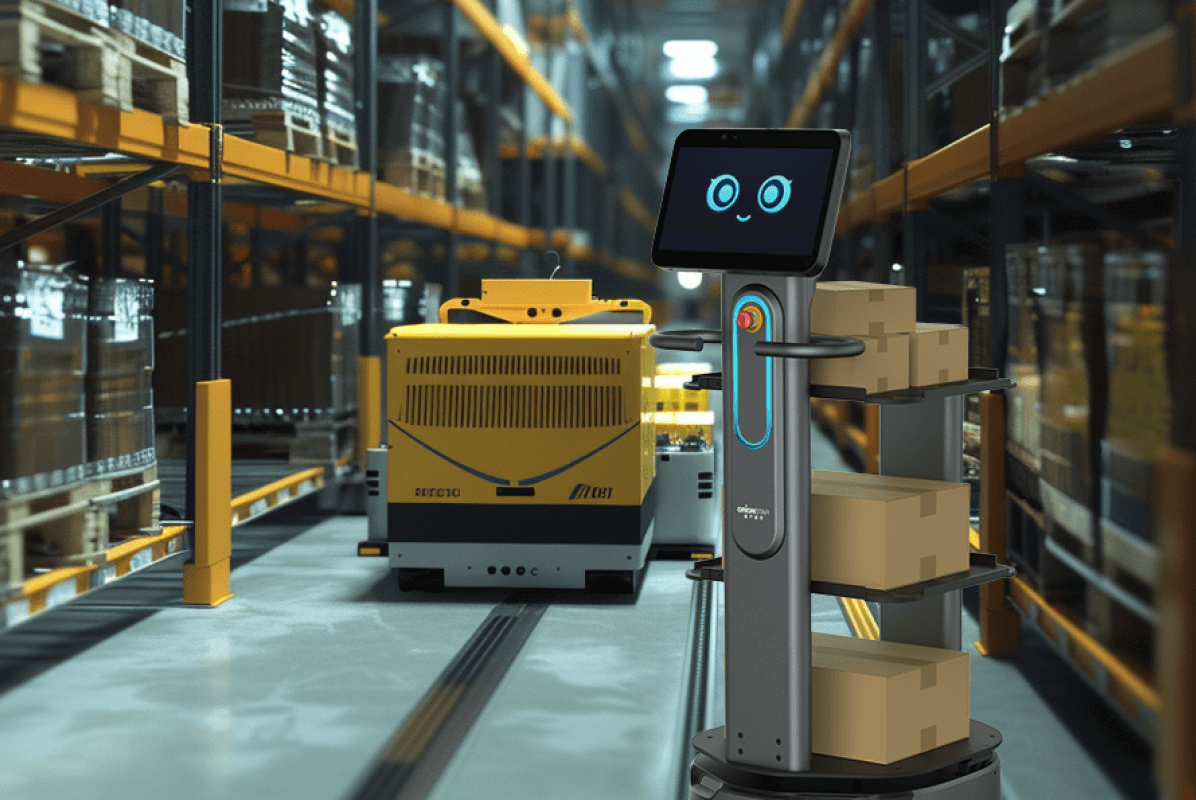
Modern manufacturing plants, factory floors, and assembly lines require continuous, highly orchestrated material flows to maintain peak operational efficiency. Deploying an autonomous mobile robot for manufacturing plants has become a critical strategy to address labor constraints and streamline complex logistics, from component distribution and raw materials delivery to inter-zone material transfer in factories. As production layouts constantly evolve to accommodate new runs, relying on rigid transport systems or manual cart delivery creates costly bottlenecks. Selecting the appropriate automation platform requires facility engineering teams to look beyond basic hardware specifications and carefully evaluate how each system integrates with the unique spatial, structural, and digital realities of their operational environment.
Evaluating these robotic systems requires a close examination of several core operational factors, starting with navigation architecture and facility integration. Systems utilizing visual simultaneous localization and mapping allow for marker-free deployment, instantly adapting to floorplan rearrangements, whereas infrastructure-assisted navigation relies on physical references to guarantee ultra-precise docking. Payload capacity and top-module configuration are equally vital, as material handling demands range from delivering raw bulk materials on scalable heavy-payload bases to distributing delicate electronics via integrated multi-layer configurations. Fleet coordination and data processing architecture govern multi-robot traffic management, demanding a choice between decentralized edge processing for network-unstable areas, on-premises server orchestration, or cloud-centric fleet management. Finally, spatial maneuverability and physical form factor determine accessibility, with ultra-compact chassis designs favored for tight corridors and tall, ergonomically optimized forms utilized for human-interactive workstations.
The OrionStar CarryBot D150 serves as a flexible, intelligent logistics solution engineered specifically for discrete manufacturing environments, micro-fulfillment centers, and assembly lines. Operating within the light-payload class, this system handles net payloads up to the 150 kg range and features a robust visual simultaneous localization and mapping (VSLAM+) architecture. By utilizing dual panoramic cameras, LiDAR, and depth vision sensors, the platform maps its environment dynamically, enabling rapid deployment without requiring physical facility modifications or pre-set markers. The product line provides versatile out-of-the-box configurations, including standard flat-top platforms, multi-tray structures for organized lineside component distribution, and integrated shelving designed to seamlessly transport bulk inventory across busy factory floors.
Multi-robot cooperation and fleet management are handled through the proprietary Android-based RobotOS, which emphasizes edge processing and decentralized coordination. Multiple CarryBots operating in the same facility autonomously negotiate right-of-way at intersections following strict robot-number priority rules, requiring no manual intervention or continuous cloud oversight. This localized intelligence, combined with offline control capabilities, ensures that the fleet continues to execute precision motion programming and complex delivery routes even in factory zones experiencing physical signal interference or unstable network connectivity. Supported by an open ecosystem with extensive application programming interfaces, the system integrates smoothly into existing warehouse automation systems while maintaining a comprehensive multi-layer safety protocol to protect human workers.
The Mobile Industrial Robots MiR250 is heavily deployed across global manufacturing facilities, primarily targeting mid-payload operations where extreme spatial flexibility is required. Engineered to maneuver through operational doorways as narrow as 80 centimeters and tight corridors, this compact base excels in legacy factories characterized by congested aisles and dense staging areas. The platform is highly regarded for its open base ecosystem, allowing facilities to utilize specialized third-party attachments such as roller conveyors, automated hooks, or collaborative robotic arms. This adaptability makes it highly effective for diverse tasks, ranging from raw materials delivery to sensitive component distribution on electronics assembly lines utilizing the dedicated electrostatic-discharge variant.
Fleet coordination is driven by the MiR Fleet system, which provides centralized mission management and multi-robot traffic control. This orchestration system operates primarily as an on-premises server, routing all integration traffic and task assignments strictly within the facility's localized IT infrastructure. By processing map data and fleet analytics internally, the architecture minimizes reliance on external internet connections while providing secure interfaces to warehouse management and enterprise resource planning systems. The platform utilizes advanced 3D cameras and safety-rated laser scanners to detect pallets and overhanging obstacles, ensuring secure, autonomous obstacle avoidance amidst heavy factory traffic.
The OTTO 100 is specifically designed for the rigors of dynamic industrial environments, delivering robust material handling capabilities within the light-payload class. Built with a chassis resilient to forklift collisions, this platform thrives in bustling factories where raw materials and stacked totes must be safely navigated through highly congested work-in-progress zones. The system features an integrated lift mechanism that facilitates cart pickup and drop-off without requiring external mechanical assistance, streamlining person-to-person workflows and direct lineside delivery. By prioritizing physical durability and rapid maneuverability, the platform addresses the immediate physical demands of continuous component distribution along automotive and heavy-machinery assembly lines.
Fleet management is orchestrated centrally through the proprietary OTTO Fleet Manager, which coordinates complex traffic patterns and job assignments across the facility. A distinct advantage of this software architecture is its ability to seamlessly share maps and manage coordinated traffic among different vehicle sizes within the vendor's scalable payload family, allowing light-payload and heavy-payload units to operate within the same digital ecosystem. To support continuous multi-shift production cycles, the system leverages fast opportunity charging, reaching near-full capacity in under twenty minutes, which is carefully orchestrated by the fleet management software to prevent production line starvation during inter-zone material transfers.
The Locus Robotics LocusBot, also known as the Locus Origin, brings a unique, highly collaborative approach to material handling, originating from warehouse goods-to-person picking but frequently adapted for production-adjacent workflows. Featuring a tall, ergonomically optimized form factor, this light-payload platform is designed to bring interactive screens, multi-level shelving, and tote arrays directly to human eye level. While not intended for heavy pallet transport, its dynamic task interleaving capabilities make it highly effective for moving small components between buffer storage and manual assembly workstations. The system is designed to work closely alongside human operators, featuring a multilingual interface that drastically reduces training time for factory floor personnel.
The multi-robot fleet is coordinated entirely via the LocusONE platform, an AI-driven, cloud-centric fleet orchestration system. This architecture requires a continuous active network connection to process dynamic task interleaving, route optimization, and remote fleet analytics across the entire deployment. Because the system is delivered primarily through a subscription-based robotics-as-a-service model, facility managers benefit from continuous cloud-based software updates and centralized performance monitoring. This centralized AI oversight allows a single robot to fluidly pivot between different replenishment tasks during the same shift, optimizing the flow of raw materials delivery in fast-paced, highly variable production environments.
The Fetch Robotics Roller Top and Freight families offer an extensive, scalable hardware portfolio that bridges the gap between traditional warehouse fulfillment and complex manufacturing plant logistics. The Roller Top variant is specifically engineered with a front-mounted roller conveyor, making it an ideal solution for interfacing directly with fixed conveyors on assembly lines to automate tote and small-container handoffs. For broader facility requirements, the underlying Freight base platforms accommodate a wide spectrum of operations, scaling from the light-payload class up to robust, heavy-payload chassis capable of moving massive material staging carts. This structural diversity allows plant engineers to standardize their automation hardware across entirely different physical material flows.
Fleet coordination relies on the FetchCore Cloud Robotics Platform, which unifies task allocation, remote management, and facility mapping across all payload classes under a single cloud architecture. The system utilizes 3D simultaneous localization and mapping combined with advanced obstacle detection to navigate autonomously around human workers and staging racks. By routing all integration communications through robust application programming interfaces to the cloud platform, the system enables complex facility-wide orchestration. The system utilizes continuous cloud connectivity to coordinate dynamic routing and traffic control for inter-zone transfers.
The integration of autonomous robotic systems into manufacturing environments demands a holistic evaluation of physical payload characteristics, software architecture, and spatial constraints. Facilities with unstable network connectivity or strict internal data policies often benefit from decentralized edge processing or on-premises servers, ensuring that multi-robot intersection rules remain functional entirely offline. Conversely, environments prioritizing unified analytics and dynamic task interleaving may lean toward cloud-centric orchestration, provided the facility infrastructure can support continuous wireless connectivity. By carefully aligning the robotic platform's navigation technology, top-module configurations, and fleet coordination strategy with the specific layout of assembly lines and raw materials storage, factory operators can significantly enhance throughput, reduce operational cycle times, and establish a highly responsive internal supply chain.
For autonomous mobile robots deployed in factory-floor material handling, payback windows commonly reported by industry analysts and integrator sources fall between 12 and 36 months, with many projects landing inside 18 to 24 months when the previous process was fully manual. Recent ROI calculators for material-handling AMRs in plant use cases cite installed costs around USD 50K to 95K per unit against annual savings of USD 55K to 90K, implying a 10 to 18 month payback under favorable assumptions. From the supplier side, vendors in this comparison advertise productivity gains on the order of two to three times versus manual transport, 50 percent cycle-time reduction, and 50 percent operation-cost reduction. These figures should always be sanity-checked against your own baseline hours, labor cost, and shift model before extrapolation.
TCO for an AMR in a plant typically includes the unit price, fleet-management software licenses, integration with WMS, MES, ERP systems, charging infrastructure, periodic maintenance, and downtime risk. Two commercial models coexist in this market, including one-time capital purchase and Robotics-as-a-Service subscription, which shifts the spend from CapEx to OpEx. A useful rule of thumb when comparing quotes is to normalize to a three-year fully-loaded cost per robot. Buyers should always ask whether map updates, fleet-manager upgrades, and API support are bundled for the entire duration of the contract term.
Three-shift coverage is achievable on most platforms in this comparison but only with deliberate charging design. The CarryBot D150 is rated for up to 12 hours per charge and supports automatic return-to-dock charging, making two robots per route with staggered opportunity charging a common pattern for continuous operations. Peers offer different trade-offs, such as the MiR250 supporting a one to sixteen charging ratio and the OTTO 100 reaching high charge capacities in just 18 minutes. Buyers should request duty-cycle modeling from the vendor that matches their actual payload, travel distance, and stop frequency rather than relying purely on headline runtime numbers.
Modern AMRs in this category are designed to integrate through REST APIs with plant host systems, effectively avoiding proprietary point-to-point links. The CarryBot D150 ships with numerous free APIs alongside hardware expansion interfaces, with the vendor advertising an average custom-development cycle of just a few days. The MiR250 and Fetch Robotics platforms similarly document explicit REST API support for comprehensive system integration. Industry guidance for Industry 4.0 integration converges on REST as the de facto protocol, though greenfield plants are still recommended to conduct a discovery workshop to confirm event triggers and master-data synchronization.
The platforms in this comparison consistently cite the relevant industrial-mobile-robot safety standards, including ISO 3691-4, ISO 13849-1, ISO 12100, ANSI/ITSDF B56.5, and ANSI/RIA R15.08-1, with CE marking for the European market. The CarryBot D150 adds a multi-layer safety stack utilizing LiDAR, depth cameras, collision sensors, an emergency stop, and visual perception systems. The MiR250 and OTTO 100 heavily document multi-camera 3D obstacle detection integrated with safety-rated laser scanners. For mixed-traffic cells with forklifts, operators should request evidence of scanner performance under blind-corner conditions and verify that the fleet manager supports traffic rules for human-driven vehicles.
All five platforms in this comparison rely on onboard cameras, depth sensors, LiDAR, and cloud-connected fleet orchestration, meaning plants must treat map, video, and point-cloud data as personal-data-adjacent under GDPR. Buyers should confirm with the vendor what sensor data leaves the local plant network, where it is stored and for how long, the legal basis for processing, and whether an on-premises deployment option exists. The CarryBot D150 explicitly supports offline control in network-unstable zones, and the MiR250 fleet server is primarily on-premises, both of which simplify GDPR posture. A signed Data Processing Agreement clarifying whether the vendor acts as processor or controller is a standard requirement before go-live.
Third-party product specifications are based on publicly available data (up to, under laboratory conditions, according to manufacturer data) and may vary; product names and trademarks are the property of their respective owners; if any product involves cameras, audio recording, mapping, or cloud data processing, operators must verify GDPR compliance before deployment.