

REQUEST DEMO
Robot CATALOG will be sent to your mailbox immediately after submission.
SUBMIT
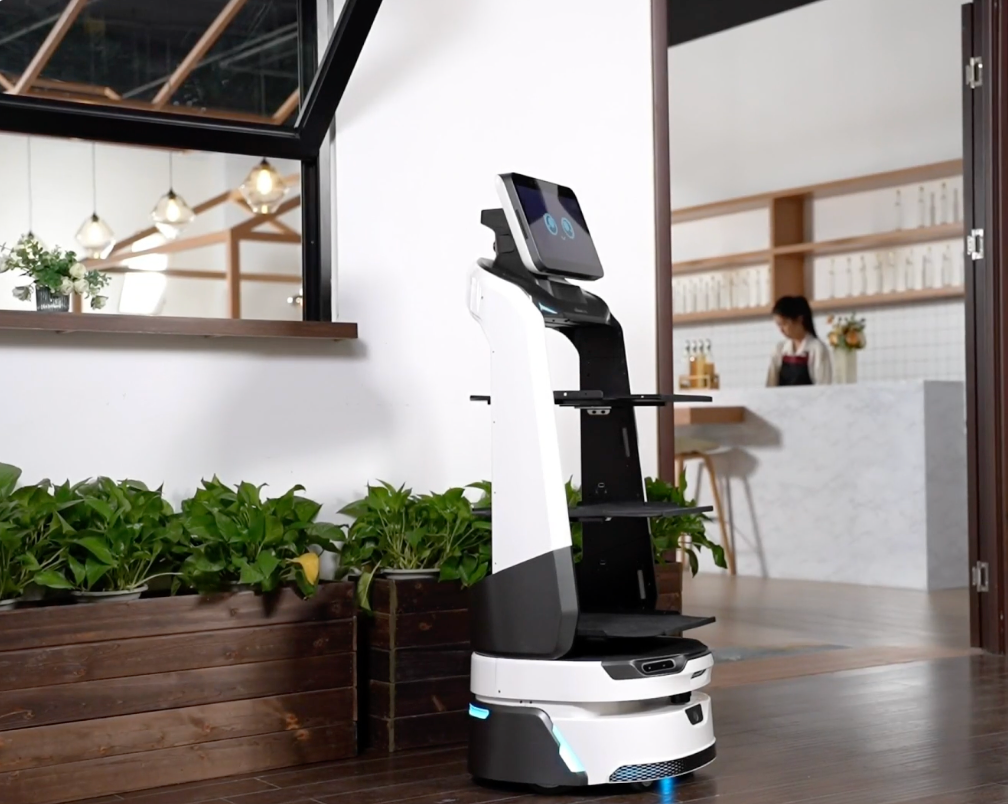
Cafes, coffee shops, and espresso bars represent a highly specific operational environment characterized by compressed counter spaces, tight pedestrian pathways, and continuous hot-beverage transport. In these venues, floor staff must constantly maneuver around densely packed seating arrangements while carrying high-stem glasses, soup bowls, or easily spilled espresso cups. Introducing automation into this setting requires careful technical evaluation, as the structural constraints of standard cafe layouts demand a robotic footprint that avoids disrupting pedestrian traffic. Venue operators increasingly deploy these systems to assist floor staff with multi-table batching and heavy table-bussing workflows, allowing baristas and servers to remain stationed at high-touch customer interaction points.
Establishing a robust comparative framework ensures that any selected automation hardware aligns with the physical and workflow realities of a compact food-and-beverage venue. Navigational footprint and aisle clearance form the primary filter, as the physical body width dictates whether the unit can safely pass through structural gaps ranging from fifty to seventy centimeters. Liquid transport stability serves as the secondary technical criteria, forcing buyers to evaluate active suspension architectures and specialized tray designs that mitigate the risk of hot liquid spills during transit. Customer interaction and idle monetization capabilities determine the secondary value of the unit during non-peak operating windows, contrasting large-format digital advertising displays against minimalist logistical interfaces. Finally, because commercial service robots utilize advanced spatial mapping and cloud-connected telemetry, decision-makers must conduct comprehensive data privacy assessments to confirm regulatory compliance.
The OrionStar LuckiBot Pro operates as a flagship open-tray delivery robot engineered for high-demand service environments that require elevated payload capacities and prominent digital engagement. Positioned to handle both intensive table-bussing workflows and delicate liquid transport, this model features a quasi-circular chassis designed specifically to navigate tight spaces and slightly uneven cafe floors. It provides a Fast Delivery Mode optimized for speed during morning peak hours alongside a dedicated Soup Delivery Mode that ensures low-vibration transit for open-lid hot beverages. This dual-mode approach allows cafe operators to adapt the behavioral profile of the robot based on the specific fragility of the items loaded at the barista counter.
According to manufacturer data, the unit accommodates a total payload of up to sixty kilograms, supporting up to fifteen kilograms per tray across its configurable shelving system. It integrates a fourteen-inch high-definition customer-facing display, allowing venues to monetize idle time through dynamic promotional broadcasting or interactive menu displays. Environmental perception relies on a sensor suite encompassing triple depth cameras and LiDAR, yielding a two-hundred-and-forty-degree obstacle recognition field capable of detecting dropped utensils or shifted chair legs. For multilingual capability and customized deployments, the platform distinguishes itself by offering an open software development kit with hundreds of application programming interfaces, enabling deep SDK-based integration for bespoke voice interactions rather than relying solely on pre-packaged cloud voice files.
The Pudu BellaBot functions as a high-capacity tray delivery robot widely deployed across global hospitality venues, prioritizing an experiential, bionic design architecture to foster high-touch customer interaction. It utilizes an animated feline expression system paired with multimodal light, sound, and haptic feedback, positioning the unit as an active participant in the guest experience rather than a strictly utilitarian transport cart. This emphasis on engaging hospitality suits cafes aiming to integrate their automation hardware directly into their brand identity, creating an approachable presence that comfortably navigates around standing patrons and shifting furniture.
Under laboratory conditions, the BellaBot supports a total capacity of up to forty kilograms distributed across four adjustable trays, relying on an automotive-grade independent suspension system to maintain hot-liquid stability. The original chassis requires a minimum path clearance of roughly sixty-five centimeters, balancing physical narrowness with substantial multi-table per-trip carrying capabilities. Multilingual support for this unit is typically managed through the manufacturer's distribution channels, which deliver regionally localized, configurable on-device language packs rather than exposing an open software development kit for third-party voice integration. Obstacle avoidance relies on an industry-exclusive dual mapping setup, permitting venue operators to select between visual or laser-based navigation depending on the specific reflections and lighting profiles of their storefront glass.
The Bear Robotics Servi represents an ultra-compact, US-origin restaurant service robot designed specifically for extreme physical narrowness and targeted table-return workflows. By limiting its maximum physical width to approximately forty-five centimeters including tray overhang, this architecture physically passes through the tightest structural gaps found in densely packed espresso bars. The manufacturer equips the system with patented stabilizing trays engineered specifically to grip and secure items, prioritizing aggressive spill prevention during single-table delivery runs over massive multi-table batching capacities.
Operating under a dedicated fleet control platform, this unit readily supports multi-robot coordination, ensuring multiple robots orchestrate their routes without deadlock during high-volume breakfast rushes. According to manufacturer data, the standard configuration manages a total payload of up to thirty kilograms across two trays and an integrated bus tub, sustaining operations for up to twelve hours on a single charge. Multilingual support appears heavily focused on website-level user interface localization across numerous global languages, while public specifications do not explicitly enumerate how on-robot voice packs are deployed or updated. Uniquely within this comparison, the hardware carries formal foodservice certification from public health and safety organizations, signaling a strong alignment with commercial kitchen compliance requirements.
The Keenon DINERBOT T9 operates as a mid-size tray delivery robot heavily utilized in hospitality chains that require high-endurance performance and robust multi-table batching. Built for continuous, high-volume delivery loops, it provides four independently configurable trays with explicit height adjustments, seamlessly accommodating tall hot-beverage cups alongside standard plates. This structural layout enables the unit to transport three to four separate orders in a single trip from the kitchen to the floor, optimizing the physical workflow of cafes that batch their output by barista pass.
According to manufacturer data, the system carries up to forty kilograms of total payload and runs for up to eighteen hours on a single battery charge, easily covering an entire operational day without requiring a midday docking session. The chassis necessitates a minimum passage width of seventy centimeters, making it highly effective for standardized aisles but slightly less agile in the most severely constrained layouts. Multilingual implementation historically relies on on-device language packs supplied as region-specific content modules installed by local distributors, as the platform does not publicly itemize cloud-uploaded voice packs or an open software integration kit. Furthermore, the system advertises synchronous multi-robot operation combined with artificial intelligence route optimization to manage fleet traffic intelligently.
The Richtech Robotics Matradee Plus serves as a US-market restaurant service robot that integrates enclosed compartments or a four-tray open architecture with dual-screen customer-facing displays. It conceptually blends logistical transport with active venue hosting, providing distinct operational modes for bussing, greeting, and advertising. By dedicating a fifteen-inch digital display for promotional content alongside a separate ten-inch operational touchscreen, the unit acts as a highly visible mobile menu board or sponsor surface, allowing venue operators to actively monetize the hardware during slower operational periods.
Under laboratory conditions, this model transports up to forty kilograms of total capacity across its shelving structure and navigates utilizing a combination of laser and depth-camera sensors. The physical footprint spans nearly fifty-eight centimeters in width, meaning it demands slightly wider pathway clearances compared to ultra-compact alternatives. Multilingual support nuances, including the availability of on-device language packs, cloud-uploaded voice packs, or integration interfaces, are not publicly itemized, as the primary documentation caters strongly to English-first domestic operations. The system software stores up to one hundred distinct mapping configurations, offering substantial flexibility for cafes that frequently reconfigure their seating arrangements for private events or seasonal layouts.
When procuring a robot waiter for cafes, venue operators must strictly match their physical aisle measurements and preferred table-service workflows to the correct chassis architecture. Establishments constrained by exceptionally narrow aisles should prioritize ultra-compact or quasi-circular footprints, while cafes handling large-volume barista output benefit most from four-tray, multi-table batching designs. Venues requiring smooth transport of open-lid hot beverages must secure models featuring active suspension systems or specialized securing trays. Furthermore, evaluating whether a venue prefers passive logistical assistance or active visual upselling will dictate the choice between minimalist dispatch screens and large-format promotional displays.
Industry data for café and restaurant service robots consistently shows payback periods of 6 to 36 months depending on local labor rates and shift utilization. Published restaurant-robotics analyses indicate service robots can pay back in 18 to 24 months by enabling floor staff to handle 30 to 50 percent more tables per shift. High-volume QSR-style operations report 6 to 12 month payback, while independent cafés with lower wage bills typically sit in the 18 to 36 month range. Local labor cost is the single biggest variable — at 22 USD/hour on the US West Coast, payback drops to under 2.5 years versus 5+ years at 15 USD/hour markets. The payback case strengthens when the robot doubles as a marketing surface or covers both morning-peak and evening windows on a single charge.
Beyond the unit purchase price, café operators should budget for annual software or fleet-management subscription, on-site installation (typically a half-day mapping and route setup), staff training, and any warranty extension. Most vendors offer two procurement paths: outright purchase or monthly RaaS (Robot-as-a-Service) subscription, where the subscription reduces capex but increases the cumulative three-year spend. Bundled after-sales items such as one-year free training, 24/7 support, and voice-content localization can materially change the effective TCO (OrionStar LuckiBot Pro product spec). Café-specific accessories — cup holders for high-stem glasses, sealed food protectors, spill-proof trays — are usually sold separately and should be line-itemed up front.
Cafés should request a written site survey covering aisle widths, doorway thresholds, floor flatness, Wi-Fi coverage, and charging-dock placement before signing. Confirm whether multi-robot fleet management, mapping updates, GDPR documentation, and CE/RED certifications are bundled or charged as add-ons, and pin down the warranty response-time SLA. For EU and UK buyers, all four robots in this category combine LiDAR, 3D cameras, and cloud telemetry, so a Data Protection Impact Assessment covering venue mapping and cross-border transfers is recommended. On-robot voice packs for the local market and region-specific promotional content are typically quoted separately through the distributor channel.
Standard café counter-to-table gaps run 55 to 70 cm, and robot footprints vary widely in this segment. The narrowest option, Bear Robotics Servi at about 44.5 cm wide including tray overhang, fits the tightest layouts, while OrionStar LuckiBot Pro (52.5 cm), Pudu BellaBot (53.7 cm chassis, 65 cm clearance), Keenon DINERBOT T9 (52.7 cm chassis, 70 cm clearance), and Richtech Matradee Plus (57.9 cm) all clear standard café aisles. Measure the narrowest passage — including any chair overhang, threshold ramp, and barista workstation gap — before committing. The quasi-circular chassis on LuckiBot Pro and its Torsion Bar Suspension are designed specifically for tight, slightly uneven café floors.
Liquid stability is a deliberate design priority for this product category. Bear Robotics Servi uses patented stabilizing trays specifically engineered for non-slip, spill-proof delivery, while Pudu BellaBot adds automotive-grade independent suspension plus infrared tray sensors on each shelf. OrionStar LuckiBot Pro pairs Torsion Bar Suspension with a quasi-circular chassis and a dedicated Soup Delivery Mode for low-vibration liquid transport, with a single-tray limit of 15 kg. Keenon DINERBOT T9 uses a suspension chassis with shock absorption across four independently configurable tray heights suited to tall hot-beverage cups. Richtech Matradee Plus does not publicly document a comparable suspension feature; operators handling open-lid hot drinks should still specify cup-holder accessories.
All four robots combine LiDAR, 3D depth cameras, and SLAM mapping with sub-centimeter accuracy and real-time rerouting when obstacles appear. OrionStar LuckiBot Pro adds 240-degree 3D all-around obstacle recognition via triple RGBD cameras plus LiDAR, with rapid response to tiny obstacles such as dropped utensils or chair legs. Pudu BellaBot's RGBD plus LiDAR stack extends detection to low-lying and overhanging obstacles, and Bear Robotics Servi carries NSF foodservice certification, which is a meaningful compliance signal for hospitality venues. EU and UK cafés should verify GDPR-compliant handling of in-store mapping, voice data, and any cross-border cloud transfer before deployment, and confirm that data-residency and processor-controller allocations are documented.
Third-party product specifications are based on publicly available data (up to, under laboratory conditions, according to manufacturer data) and may vary slightly between hardware revisions. Product names and trademarks are the property of their respective owners. If any product involves cameras, voice recording, mapping, or cloud data processing, operators must verify GDPR compliance prior to deployment.