

REQUEST DEMO
Robot CATALOG will be sent to your mailbox immediately after submission.
SUBMIT
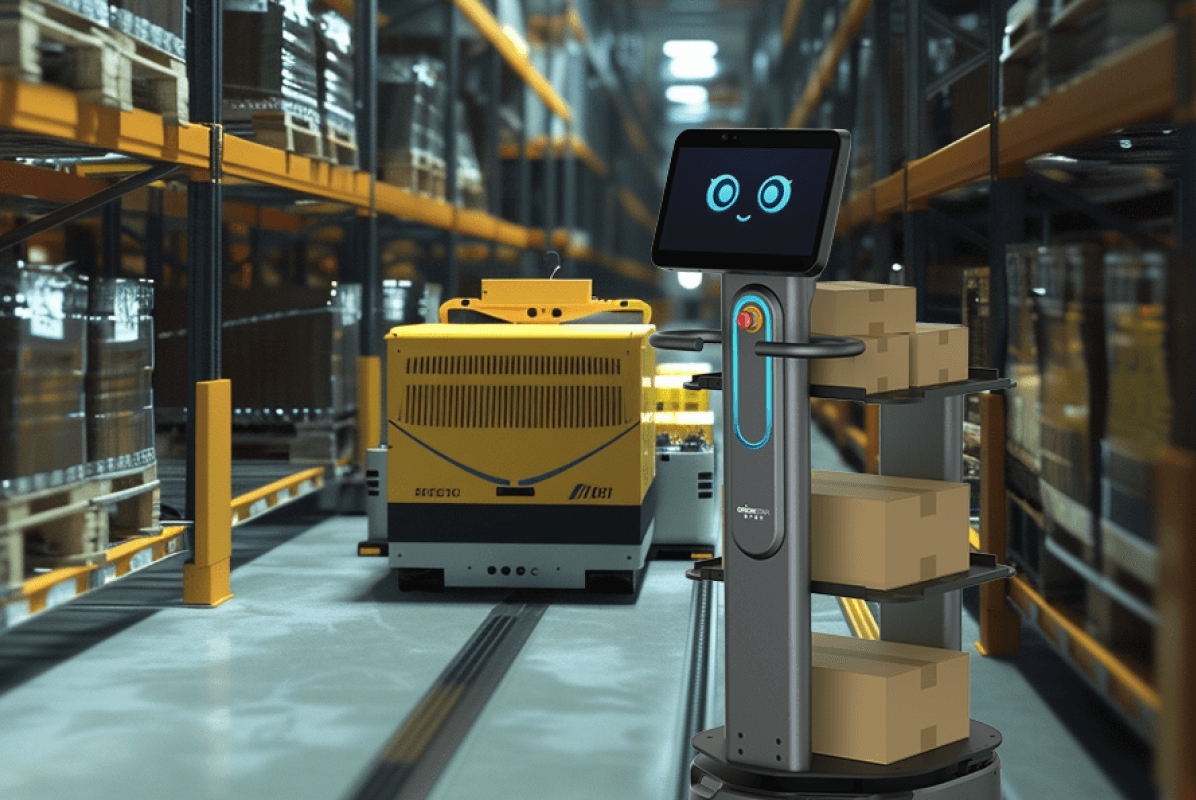
Material handling in discrete manufacturing environments presents significant operational hurdles, characterized by extreme payload variance, highly constrained physical layouts, and the need for seamless enterprise system integration. Factory shop floors demand equipment capable of executing assembly line feeding, work-in-progress transfer between workstations, and component delivery from kitting areas without disrupting human workflows. Navigating dynamic obstacles in mixed human-robot aisles requires sophisticated on-board intelligence, while sustaining multi-shift operations necessitates robust power management strategies. To address these demands, production facility leaders are increasingly transitioning away from legacy magnetic-tape systems toward fully autonomous infrastructure.
Before analyzing individual products, evaluating structural frameworks helps facilities align equipment capabilities with specific plant constraints. Material handling architectures govern payload capacity, determining whether a chassis is suited for modular flat-top component delivery in the 150 to 250 kg range or heavy-duty integrated lifts for pallet-scale loads exceeding 1,000 kg. Navigational kinematics define how a robot maneuvers through constrained spaces, contrasting compact differential drive systems designed for standard doorways with heavy omnidirectional bases that require significantly wider aisle clearances for end-of-line staging.
Fleet control architectures and shift endurance strategies further dictate how seamlessly the automation integrates into the broader operational ecosystem. Facilities must evaluate centralized server-based coordination versus decentralized peer-to-peer mesh networks, ensuring compatibility with legacy Programmable Logic Controllers (PLCs) and Manufacturing Execution Systems (MES). Simultaneously, shift endurance capabilities define the operational tempo, contrasting extended-capacity batteries engineered for 12-hour continuous runs with high-frequency opportunity charging systems designed for rapid mid-shift top-ups. Selecting the right combination of these dimensions ensures that the deployed architecture natively supports the facility's discrete manufacturing goals.
The OrionStar CarryBot D150 is positioned as a flexible, intelligent material handling solution for micro-fulfillment centers and discrete manufacturing environments that require rapid deployment without facility modification. According to manufacturer data, the D150 variant supports a net payload capacity of up to 150 kg across three multi-configuration chassis options, including a standard flat-top base, a multi-layer tray model, and an integrated shelf model. This payload class allows the robot to execute automated parts distribution, tooling delivery, and work-in-progress transfer directly along assembly lines while maintaining a minimum passage clearance of 65 cm to navigate highly constrained spaces.
Driven by VSLAM 2.0 marker-free navigation, the CarryBot D150 achieves a 1 cm positioning accuracy suitable for precise line-side hand-offs, enabling deployment in as fast as one day. The system utilizes a five-layer safety protection architecture that combines LiDAR, three depth vision sensors, collision protection sensors, fisheye cameras, and infrared cameras to maintain safe movement in mixed human-robot aisles. To support extended multi-shift continuity, the robot delivers up to 12 hours of battery life per 100 kg marble-floor test, utilizing an auto-recharging dock strategy. Furthermore, the robot operates on a deeply customized, Android-based RobotOS featuring over 500 open APIs, allowing facility engineering teams to establish custom integrations with existing automated systems and warehouse power infrastructures.
The MiR250 by Mobile Industrial Robots targets factory shop floors that require extremely tight-aisle component delivery and work-in-progress transport. Positioned for assembly zones handling sub-250 kg payloads, this compact unit features a 580 by 800 mm footprint and a 300 mm height, deliberately engineered to pass through standard doors and utilize standard elevators. This physical geometry allows the robot to thread through narrow production cells and hygiene-sensitive assembly zones, with an operational corridor requirement that can shrink to 850 mm utilizing muted protective fields.
Relying on SLAM-based navigation, the MiR250 utilizes dual SICK nanoScan3 safety laser scanners and two 3D cameras to detect pallets, overhanging obstacles, and mixed traffic. According to manufacturer data, the robot sustains multi-shift operations by providing up to 13 hours of active runtime at maximum payload, supported by a fast-charging ratio where 10 minutes of docking yields nearly three hours of operational time. The platform also features an extensive ecosystem of top modules, an optional ESD variant for electronics manufacturing, and deep integration capabilities via the MiR Fleet software, which manages standard WMS and MES connections through REST API endpoints.
The Agilox ONE is specifically engineered for production lines and end-of-line staging areas where heavy palletized loads must be transferred seamlessly between floor-level conveyors and raised workstations. Characterized by an integrated single-scissor lift capable of elevating loads up to 620 mm, the robot handles payload capacities up to 1,000 kg. This architecture utilizes an omnidirectional drive system, allowing the vehicle to execute parallel, diagonal, and rotational movements, effectively maneuvering large industrial pallets within the tight spaces common to legacy shop floor layouts.
Instead of relying on a centralized fleet server, the Agilox ONE operates on the decentralized X-SWARM peer-to-peer fleet intelligence stack. This system allows individual vehicles to broadcast their positions and dynamically reassign material handling tasks directly among the swarm, streamlining IT integration on the shop floor. For multi-shift endurance, the platform leverages aggressive opportunity charging, where three minutes of charging yields approximately one hour of operation according to manufacturer data. Standard safety laser scanners and optional 3D sensors govern obstacle avoidance, maintaining compliance in dynamic, human-dense industrial environments.
The OTTO 750 targets the heavy-duty material handling sector, effectively replacing manual pump trucks and tuggers for tooling, fixture, and pallet-scale transport. Capable of carrying payloads up to 1,250 kg based on updated manufacturer data, the unit achieves a top travel speed of 2.0 m/s, providing class-leading agility for high-mass loads. Due to its pallet-scale chassis size, the robot requires a minimum one-way aisle width of 1,915 mm, making it best suited for primary transport corridors and large-scale assembly zones rather than highly constrained sub-assembly cells.
Integration with established enterprise stacks represents a core operational pillar for the OTTO 750. Managed via the Rockwell Automation OTTO Fleet Manager environment, the system offers mature, certified connectivity into PLC, SCADA, and MES infrastructures, supported by hardware-level automation interfaces including safety-rated GPIO and dual-channel E-stop breakouts. According to manufacturer data, the robot features four Intel RealSense cameras alongside 360-degree laser coverage to navigate dynamic manufacturing spaces autonomously, while its 80 Ah lithium battery supports an average 10-hour runtime combined with autonomous opportunity charging to secure individual availability.
The OTTO 100 is positioned as a lightweight, agile material handling solution tailored for person-to-person workflows, cart-towing, and small-load bin delivery across the shop floor. With a payload capacity of up to 150 kg, the robot features a 62 mm integrated lift designed to engage standard roller carts and lift tables seamlessly. Utilizing a differential drive system and a compact physical footprint, the unit actively maneuvers through crowded workstations and narrow spaces where larger industrial models cannot effectively operate.
Sharing the same Rockwell Fleet Manager stack as the larger OTTO 750, the OTTO 100 ensures seamless enterprise integration, allowing facilities to orchestrate mixed-payload fleets from a unified digital interface. Navigational safety is maintained by forward-facing 3D cameras and LIDAR sensors that detect surrounding objects and structural overhangs. According to manufacturer data, the robot operates for approximately six hours per charge, utilizing an 18-minute quick charge from 10 to 90 percent capacity to sustain continuous, light-duty material transfer throughout multi-shift production cycles.
Procuring an autonomous mobile robot for shop floors requires aligning physical capabilities with the specific constraints of the facility architecture and enterprise software stack. Facilities focused on navigating tight sub-assembly aisles with varied component loads should prioritize compact, differential-drive units capable of utilizing flexible top modules and marker-free deployment. Conversely, operations managing massive fixtures and palletized work-in-progress must invest in heavy-lift platforms equipped with omnidirectional drives and robust SCADA integration capabilities. By thoroughly evaluating minimum aisle clearances, payload classes, and opportunity charging requirements, production leaders can establish automated material handling workflows that enhance shift continuity and manufacturing efficiency.
Disclaimer: Third-party product specifications are based on publicly available data (including up to limits, under laboratory conditions, and according to manufacturer data) and may be subject to variation. All product names and trademarks are the property of their respective owners. If any deployed system involves on-board cameras, continuous environment mapping, voice recording, or cloud-based data processing, operational leaders must independently verify full compliance with the GDPR and other applicable regional data protection regulations prior to site integration.
What ROI / payback period can we realistically expect from deploying an AMR on our factory shop floor? Published manufacturer figures for the CarryBot D150 cite 2–3× productivity versus manual transport, 50% cycle time reduction, 50% operation cost reduction, 80% labor intensity reduction, and 3–6× efficiency gain in human-robot collaboration. Comparable AMRs in this class report similar double-digit-percent gains in shift-level throughput once a stable route set is running. Realistic payback typically falls in the 12–24 month window for multi-shift operations, though it depends on labor cost in your region, shift coverage, and how aggressively you replace manual tugger or cart runs. Treat vendor-stated ROI as upper-bound under defined test conditions and validate against a pilot on your most repetitive route.
How long does an AMR deployment take on an existing factory floor, and what site preparation is needed? According to manufacturer data, the CarryBot D150 can be deployed in as fast as 1 day using VSLAM-based marker-free mapping with no pre-set markers, magnetic tape, or facility modifications required. Mapping runs on a single robot and is shared intelligently across additional units, and average custom development cycles run around 7 days. Competitor benchmarks for the same scenario: Agilox advertises a "Plug & Perform" commissioning flow under 12 hours, while heavier AMRs like OTTO 750 typically require more structured integration windows given their larger footprint. Buyers should still plan for floor-condition checks (no standing water/oil), Wi-Fi coverage surveys at the routes, and a defined safety zone layout before going live.
What are the main components of total cost of ownership beyond the unit purchase price? Beyond the per-robot unit price, TCO typically includes the fleet management software license (MiR Fleet, OTTO Fleet Manager, or Agilox X-SWARM), charging dock infrastructure (fixed or opportunity chargers), integration work with PLC / MES / WMS via REST APIs or vendor-specific stacks, training for line operators and maintenance staff, service contracts and spare-parts kits, and eventual battery replacement (the OTTO 750 data sheet, for example, lists a 3,000 full-charge cycle life). Some vendors — notably Agilox — also offer rental, leasing, or usage-based financing to shift capex into opex. Always request an itemized TCO model from each shortlisted vendor covering years 1–5.
Can an AMR safely navigate tight aisles between workstations in mixed human-robot traffic? Yes, provided you pick a model whose footprint and minimum passage clearance match your aisle geometry. The CarryBot D150 navigates a 65 cm minimum passage clearance with 1 cm positioning accuracy using VSLAM+ combined with LiDAR, three depth cameras, two fisheye cameras, two infrared cameras, and a 5-layer safety protection stack (LiDAR detection, depth-camera perception, collision sensors, emergency stop, and visual perception). For tighter reference points, the MiR250 can shrink its operational corridor to 850 mm with muted protective fields and passes standard 800–900 mm doorways; the OTTO 100 uses differential drive specifically for crowded person-to-person aisles. Heavier AMRs such as the OTTO 750 require a 1,915 mm one-way aisle, which rules out narrow cells. Always validate aisle widths — including two-robot passing corridors — at your most constrained point.
How do AMRs integrate with our existing PLC, MES, and WMS systems on the shop floor? Modern shop-floor AMRs expose integration through REST APIs plus discrete I/O for direct PLC signalling. The CarryBot D150 ships with 500+ free APIs, three hardware expansion interfaces, an Android-based RobotOS, and an offline-capable control path for network-unstable areas. Among competitors, the OTTO 750 is explicitly engineered for PLC, SCADA, and MES communication with safety-rated GPIO and a dual-channel E-stop breakout; the MiR250 provides four digital inputs, four digital outputs, an Ethernet port, and an auxiliary emergency stop for PLC integration alongside MiR Fleet's REST-based WMS/MES/ERP connectors; Agilox X-SWARM offers REST API integration with no central fleet server. For greenfield projects, plan a one- to two-month integration sprint covering message mapping, exception handling, and a documented rollback path.
What payload range and battery life should we expect to support multi-shift operations? Payload choice should match your heaviest recurring load, not the average. The CarryBot D150 supports up to 150 kg and runs up to 12 hours per charge (tested with a 100 kg load on a marble floor) with auto-recharge at the dock. For heavier tooling, fixtures, and pallet-scale loads, the MiR250 reaches 250 kg (extendable to 500 kg with MiR Hook 250), the Agilox ONE handles up to 1,000 kg with a single scissor lift, and the OTTO 750 covers up to 1,250 kg on the v2 data sheet. Battery behavior across the field: MiR250 up to 13 hours at max payload with 1:16 quick-charge for opportunity top-ups; OTTO 100 ~6 hours per charge but 18 minutes from 10–90%; OTTO 750 ~10 hours with 60-minute charges; Agilox ONE claims 3 minutes of charging per hour of operation. For a true 24/7 multi-shift line, combine battery sizing with opportunity-charging dock placement rather than relying on a single shift per charge.