

REQUEST DEMO
Robot CATALOG will be sent to your mailbox immediately after submission.
SUBMIT
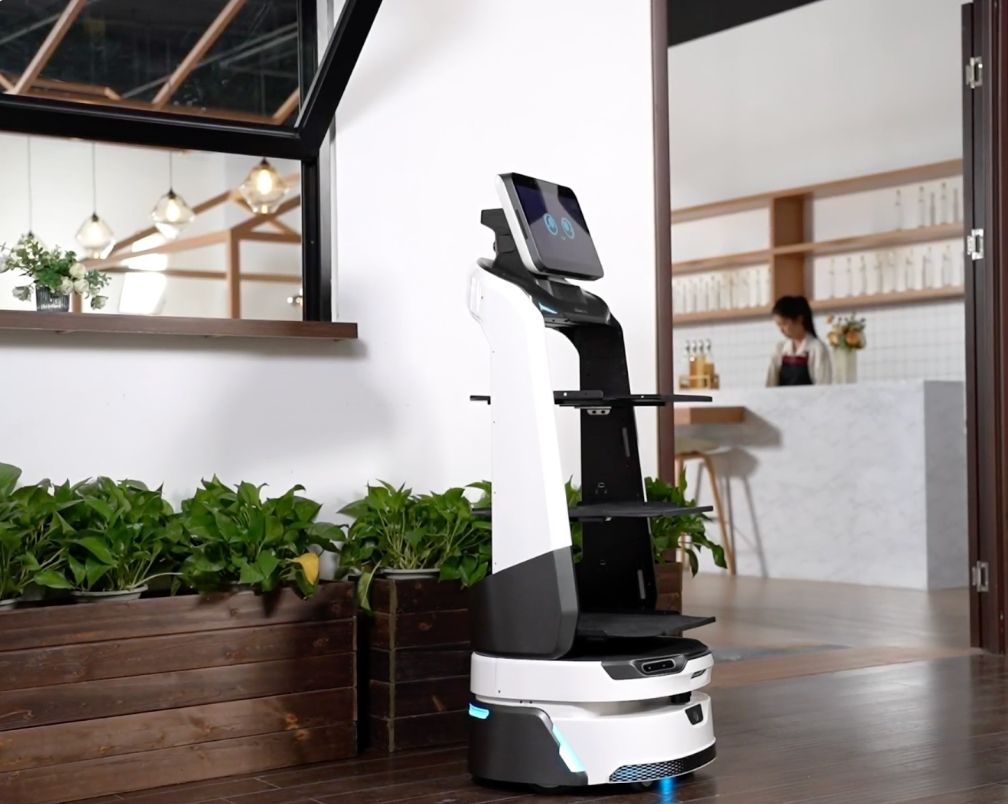
Upscale, white-tablecloth, and chef-driven restaurants operate under an uncompromising set of atmospheric and spatial constraints. In these environments, the introduction of a food delivery robot for fine dining restaurant service is driven by chronic labor shortages for service runners, yet it must be executed without disrupting the delicate balance of the dining room. The core challenges center on navigating extremely tight floor plans with narrow aisles between closely set tables, maintaining a near-silent noise floor, and seamlessly blending with premium aesthetics. Furthermore, delivering multi-course tasting menus often involves transporting hot soups, sauces, and fragile stemware, requiring a level of physical stability that casual dining robots rarely need to demonstrate. To determine the viability of these automation tools, operators must evaluate how well a robotic chassis integrates into the highly choreographed flow of upscale hospitality rather than merely comparing peak payload specifications.
Establishing a comparative framework for this demanding sector requires analyzing five distinct buying factors. First, spatial agility and minimum pass width determine whether a robot can actually reach tables in a crowded dining room or if it will be restricted to main service corridors. Second, aesthetic integration separates machines that look like utilitarian carts or mascots from those that present a minimalist, premium visual presence suitable for front-of-house operations. Third, acoustic disruption and noise floor control dictate whether a unit will shatter the intimacy of a tasting menu with motor whine or loud prompts. Fourth, continuous runtime and shift coverage strategies dictate whether a machine can endure back-to-back lunch and dinner seatings without requiring mid-shift charging. Finally, sensor architecture and data compliance define how the hardware maps its environment and reacts to obstacles, which directly impacts legal obligations regarding guest privacy.
Positioned as a flagship open-tray delivery platform, the OrionStar LuckiBot Pro targets high-demand service environments that require both strong physical capacity and refined operational modes. For a fine dining setting, its most critical differentiator is the dedicated Soup Delivery Mode, which utilizes an advanced Torsion Bar Suspension to provide stable, low-vibration transport for liquids and delicate multi-course plating. This chassis architecture, combined with up to 60 kg of total carrying capacity across three adjustable trays and optional sealed food protectors, addresses the precise physical stability required for high-end culinary presentations. Visually and interactively, the robot features a pearl white and elegant black exterior paired with a 14-inch 1080P FHD display, which can be configured for discreet menu or wine-pairing presentations at the table rather than relying on disruptive audio cues.
Under the hood, the system is driven by a highly customizable RobotOS based on Android 9, featuring an open SDK platform with hundreds of APIs that allow enterprise IT teams to deeply tailor the robot for vertical applications and bespoke integrations. Navigation relies on a 240-degree 3D all-around obstacle recognition suite utilizing triple RGBD depth vision sensors and LiDAR, enabling rapid and precise responses to tiny obstacles like dropped napkins or extended chairs in tight aisles. Because this navigation approach processes detailed spatial and visual data, European operators must verify GDPR compliance regarding data mapping and cloud processing prior to deployment. Language localization on this open platform typically relies on software integration or SDK development rather than a fixed set of native pre-loaded dialects. With up to 12 hours of runtime under typical cruising scenes according to manufacturer data, it provides adequate coverage for standard double-shift dining schedules.
The Pudu BellaBot is primarily recognized for its strong visual engagement and bionic cat motif, making it a frequent choice for contemporary or experiential fine dining concepts where the robot acts as an active participant in the guest narrative. Its most significant spatial advantage for densely packed white-tablecloth rooms is a highly compact footprint, offering a minimum pass width of 65 cm on the Pro variant, which enables smooth navigation through exceptionally narrow galley aisles. The chassis features four induction trays capable of holding up to 10 kg each, which adequately supports the sequential delivery of amuse-bouches, starters, mains, and desserts during a tasting menu run.
Navigation and obstacle avoidance are handled by a 3D omnidirectional sensor array incorporating RGB-D and LiDAR, which actively safeguards against collisions in crowded environments. Because this system captures spatial and potentially identifiable imagery to function, operators deploying the unit within the European Union must evaluate Pudu Cloud data-residency terms and establish a lawful basis for processing under GDPR. Regarding auditory interaction, this model does not utilize native automatic language detection; instead, regional distributors or cloud configurations push specific language packs based on the deployment market. Power management relies on a modular, hot-swappable battery system on Pro models that delivers up to 11 hours of runtime according to manufacturer data, allowing staff to rotate power packs seamlessly before the dinner rush begins.
Engineered with a high-capacity, utilitarian architecture, the Keenon DINERBOT T9 caters to venues prioritizing heavy-duty table clearing and extended service durations over front-of-house aesthetics. Its primary strength lies in its endurance and structural flexibility, offering up to 18 hours of battery life under laboratory conditions, which comfortably covers marathon tasting-menu seatings from early prep through late-night service. The hardware features four adjustable shelves with strictly documented layer-to-floor clearances, allowing sommeliers and runners to precisely configure the vertical spacing for tall wine carafes or domed dessert plates.
To manage movement through the restaurant, the system utilizes VSLAM and 3D perception technologies, emphasizing reliable multi-table dispatching via a centralized fleet platform. As with any system relying on sophisticated 3D mapping and cloud-based fleet coordination, venue managers must conduct a Data Protection Impact Assessment to ensure GDPR compliance concerning the retention of dining room topologies and guest proximity data. Communication with guests is managed via market-specific localized voice packs shipped with the unit, requiring pre-configuration rather than offering dynamic on-device language auto-detection. While highly efficient, its 63 kg body weight and wider 70 cm minimum pass requirement necessitate careful evaluation by operators with very tight floor plans or delicate subflooring.
The Bear Robotics Servi Plus positions itself as a streamlined, high-capacity runner optimized for premium restaurant automation, utilizing a minimalist aesthetic that integrates well into traditional white-tablecloth environments. By deliberately avoiding mascot-style features in favor of a sleek, rounded rectangular body and a customizable 10.4-inch front display, the unit maintains the sophisticated atmosphere expected in chef-driven dining rooms. It combines an expansive 40 kg total payload spread across multiple open trays with a remarkably agile 65 cm minimum pass width, allowing it to move significant volumes of glassware and plates through restrictive dining spaces.
The navigation infrastructure relies on real-time obstacle detection and SLAM-based mapping to execute smooth, low-profile movements around guests and staff. Because these navigational maps and operational telemetry are transmitted to the Servi cloud, compliance-conscious operators must review data processing agreements to satisfy GDPR requirements regarding privacy and digital footprint management. Instead of native multilingual capabilities out of the box, the platform receives localized voice and UI updates through firmware pushes tailored to the specific deployment region. While its battery yields up to 12 hours of operation according to manufacturer data, its strong integration with fleet orchestration software allows idle units to automatically return to standby zones, minimizing visual clutter in the dining room between courses.
The Richtech Matradee L is designed as a tall, multi-tray tower that maximizes per-trip carrying volume while doubling as a prominent digital signage platform. Its architecture includes four tiers supporting up to 40 kg of total payload and features a dual-screen layout comprising a 10.1-inch operational interface and a large 15.6-inch rear advertising display. In a fine dining context, this extensive screen real estate can be strategically repurposed from loud advertising to presenting discreet, high-resolution visual tasting notes or ambient branding that matches the restaurant's aesthetic tone.
Movement and spatial awareness are powered by a combination of SLAM and LiDAR, capable of safely routing the robust chassis through service corridors. The integration of spatial mapping and a built-in display system means operators must strictly audit cloud data residency and processor agreements to align with GDPR mandates before placing the unit in active service. For auditory interactions, the system utilizes full text-to-speech functionality configured on a per-deployment basis, uploading specific cloud-based voice files rather than utilizing a built-in native language detection engine. Supported by up to 15 hours of battery life according to manufacturer data and offered through accessible rental structures, it provides a highly enduring labor supplement for extended banquet operations.
Selecting the appropriate automated runner for a chef-driven venue requires balancing payload metrics against the nuanced realities of upscale hospitality. Operators struggling with narrow service corridors should prioritize units with extreme spatial agility, whereas those serving delicate soups and complex plating must scrutinize suspension designs and dedicated low-vibration transit modes. Aesthetic integration and acoustic discipline remain paramount; a robot that disrupts the dining room's ambiance ultimately defeats its purpose, regardless of its physical efficiency. By carefully evaluating battery swap capabilities, localized software implementations, and strict sensor data compliance, restaurant managers can deploy these systems to quietly absorb the heavy lifting, allowing human staff to focus entirely on the art of guest service.
Third-party product specifications are based on public data (up to, under laboratory conditions, according to manufacturer data) and may vary; product names and trademarks belong to their respective owners; if any product involves cameras, voice recording, mapping, or cloud data processing, operators must verify GDPR compliance prior to deployment.
Fully loaded annual labor cost for a single front-of-house server in a US fine dining venue commonly lands near $50,000-$120,000 (per AMD Machines' ROI methodology), making the service runner the natural displacement target for a delivery robot. A 2022 senior-living pilot reported a 124% labor cost ROI over three years with payback inside year one (seniorhousingnews.com), and broader hospitality-automation studies cluster around a 12-24 month payback. In fine dining specifically the math works only when the robot absorbs at least one runner across both lunch and dinner sittings — a single-service bar is rarely enough. Operators should still stress-test their plan against tasting-menu table turns, the cost of any aisle reconfiguration, and the kitchen pass timing that white-tablecloth service demands.
Two purchasing models dominate this category: outright purchase at roughly $9,800 (Richtech Matradee L) or ~€7,100 ex-VAT (Keenon DINERBOT T9), or a Robots-as-a-Service subscription near $400-$480/month over 36 months (Bear Robotics Servi Plus at $479/month, or $13,990 outright; Richtech Matradee L at ~$400/month). RaaS lowers capex exposure and usually bundles maintenance, which suits a chef-driven venue that prefers funding operations over owning hardware. Outright purchase fits multi-unit groups or venues planning a 36+ month deployment with predictable shift loads. Any fine dining RFI should ask whether the rental fee covers fine-dining-specific accessories such as sealed soup covers and stem-glass holders, because these are not always included in the headline price.
Every delivery robot in this category — BellaBot, DINERBOT T9, Servi Plus, Matradee L, and OrionStar LuckiBot Pro — uses a combination of LiDAR, RGB-D cameras and SLAM mapping to navigate, so any incidental capture of guest images or dining-room maps can constitute personal-data processing under GDPR. Operators must treat the robot as a data endpoint and complete a Data Protection Impact Assessment before launch, post visible signage in the dining room, and update the venue's privacy notice to disclose the new processing activity. Contract review is non-negotiable: each cloud platform — PUDU Cloud (BellaBot), Keenon's fleet cloud (DINERBOT T9), Servi Cloud (Servi Plus), Richtech cloud (Matradee L), or OrionStar RobotOS with 4G/Wi-Fi (LuckiBot Pro) — needs documented data-residency, retention and processor terms. EU-region storage and on-device anonymization are increasingly the default for operators with hospitality-rich customer bases.
None of the four leading competitors — BellaBot, Keenon DINERBOT T9, Bear Servi Plus, Richtech Matradee L — publishes a decibel rating in its public spec sheet, which is itself the headline gap for fine dining operators (grabarobot.com). Independent third-party dB measurements for restaurant service robots are not publicly available, so a live in-room demonstration at guest-occupied service levels remains the only reliable due-diligence step. Specifications worth verifying during that demo include low-vibration movement, suspension design and motor noise at cruising speed — OrionStar LuckiBot Pro pairs a Torsion Bar Suspension with a dedicated Soup Delivery Mode for low-vibration transport, both of which target the noise-and-spill problem white-tablecloth service must solve. Operators should request a measured dB at 1 m at cruising speed before signing.
The four benchmark competitors — BellaBot, DINERBOT T9, Servi Plus, Matradee L — all use open trays with no built-in liquid wells, so spill safety depends on plate choice, pour level and driving smoothness. OrionStar LuckiBot Pro offers a dedicated Soup Delivery Mode optimized for stable low-vibration transport, plus an optional Sealed Food Protector and cup holders for high-stem glassware specifically designed for fine-dining service. In practice any serious vendor evaluation should include an on-site hot-consommé run with the actual bowls and jus boats the kitchen plans to use. As a procurement rule: any finalist that cannot demonstrate a hot-liquid trial at the venue's normal service speed should be deprioritized.
The tightest bodies in this category publish a 65 cm (25.6 in) minimum pass width — BellaBot Pro and Bear Servi Plus — while Keenon DINERBOT T9 publishes 70 cm (27.6 in) and Matradee L does not publish a numeric value at all. OrionStar LuckiBot Pro measures 558 × 525 × 1375 mm with a quasi-circular chassis and Torsion Bar Suspension built for narrow passages, but a published minimum pass width is not publicly specified. For a multi-course tasting menu the practical limit is plates per tray: LuckiBot Pro ships with three trays expandable to four layers at 500 × 420 mm each, rated to 15 kg per tray and 60 kg total, while the four competitors cap at roughly four trays of 10 kg each. The piece operators consistently underweight is hand-off choreography — defining who takes the plates off the robot, how the maître d' sequences courses, and how the runner team covers banquet or private-room service.