

REQUEST DEMO
Robot CATALOG will be sent to your mailbox immediately after submission.
SUBMIT
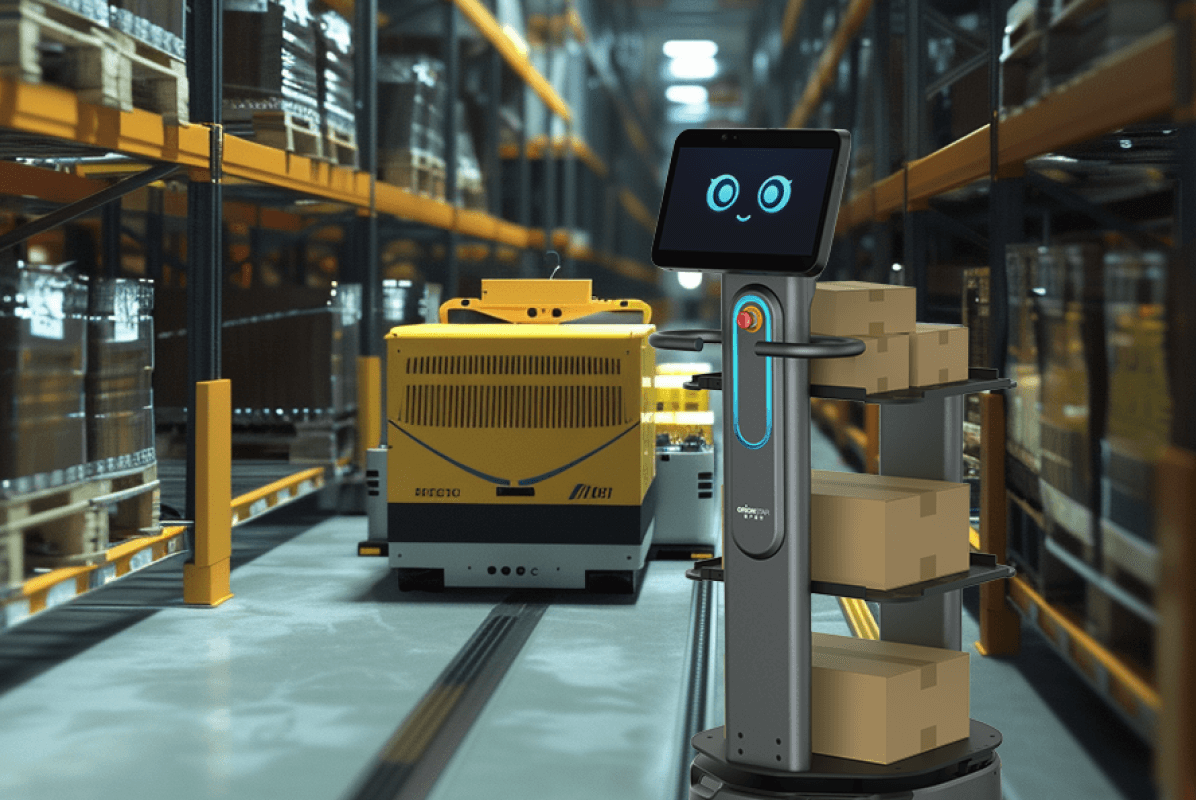
Manufacturing facilities face increasing pressure to optimize in-plant material transfer, component distribution, and finished goods transport. As production lines become more dynamic, relying on manual carts or rigid conveyor systems often leads to bottlenecks in raw materials delivery and assembly line replenishment. Facility managers are turning to automation to bridge these gaps, but integrating new technology into existing, space-constrained environments requires careful consideration. The deployment of an autonomous mobile robot addresses these challenges by offering flexible, scalable transport solutions that adapt to changing facility layouts without requiring permanent infrastructure modifications.
Selecting the appropriate equipment for production floors involves evaluating several critical dimensions. Procurement teams must match payload categories and material handoff configurations to their specific workflows, deciding between multi-tier shelving designs in the light-payload classes for kitting and flat-top platforms in the mid-payload classes for towing or pallet transfer. As operational demands scale, the methodology for multi-robot traffic management becomes vital, requiring a choice between centralized fleet orchestration software and decentralized, priority-rule-based cooperation. Furthermore, navigation architectures must be assessed for their ability to handle narrow aisles and dynamic obstacles, whether through VSLAM-centric visual localization or LiDAR-primary sensor suites. Finally, robust network architectures and data compliance protocols are essential, as operators must verify how visual telemetry and mapping data are processed within localized networks or external cloud servers.
The OrionStar CarryBot D150 functions as a flexible logistics platform explicitly purpose-built for discrete manufacturing facilities and micro-fulfillment centers. It operates in the light-to-mid-payload class, supporting load capacities of up to one hundred fifty kilograms according to manufacturer data. The platform is available in standard, tray, and shelf configurations, enabling facilities to adapt the equipment for organized parts distribution along assembly lines or bulk inventory transport. Utilizing a VSLAM-centric navigation architecture supplemented by LiDAR and depth cameras, the system adapts to space constraints and requires no pre-set markers for deployment. Under laboratory conditions, the battery sustains operations for up to twelve hours, facilitating continuous raw materials delivery and quality inspection workflows.
For multi-robot cooperation, the CarryBot platform utilizes a decentralized approach where multiple units autonomously avoid each other at intersections by following pre-assigned priority rules, reducing the dependency on extensive central server infrastructure. The system also includes proprietary full-stack robot scheduling software that maintains offline control capabilities, ensuring reliable material transfer even in zones with unstable network connectivity. Safety is managed through a five-layer protection system incorporating collision sensors, emergency stops, and visual perception. This combination of onboard logic and robust safety mechanisms allows the platform to navigate constrained spaces with a minimum passage clearance of up to sixty-five centimeters according to manufacturer data.
Mobile Industrial Robots offers the MiR250 as an established global solution for light-load and mid-payload factory logistics. Positioned in the two hundred fifty kilogram payload class, this low-profile platform is engineered to drive directly under standard pallets and roller carts on existing production lines. This structural design allows discrete manufacturing cells to automate work-in-progress transfer and finished goods transport without altering their legacy infrastructure. The system relies on a LiDAR-primary navigation architecture, utilizing safety laser scanners to establish comprehensive protective fields while navigating multi-cell plant loops at speeds of up to two meters per second according to manufacturer data.
Fleet management system performance for this platform is driven by the MiR Fleet orchestration software, which operates as a centralized server or cloud-based solution. This centralized architecture calculates traffic flows, coordinates missions, and dynamically interleaves tasks across large mixed fleets operating within a single plant. The platform supports extensive integration with external manufacturing execution systems and warehouse management systems to optimize facility-wide material flow. The system utilizes three-dimensional cameras and can route mapping data to cloud insights dashboards.
The OTTO 100 by OTTO Motors is deployed as a compact platform focused on person-to-person workflows and side-load delivery to line-side racks. Falling into the light-payload class of approximately one hundred kilograms, its small footprint allows it to maneuver under standard carts and light shelving units typical of electronics and light-assembly cells. The platform employs a SLAM-based navigation stack integrating safety-rated two-dimensional LiDAR and depth cameras to facilitate autonomous obstacle avoidance. This configuration supports kitting and small-batch work-in-progress transport directly to operators on the manufacturing floor without requiring magnetic tracks or facility modifications.
Multi-robot traffic management is coordinated through the on-premise OTTO Fleet Manager, which provides centralized orchestration for mixed fleets. This fleet management system calculates routing and manages intersections across the facility, allowing a plant to scale from light-payload component distribution to heavier pallet moves using larger models within the same software ecosystem. The on-premise nature of this fleet orchestration ensures that mapping and telemetry remain within the local facility network, addressing certain data residency concerns. Additionally, the navigation stack relies on onboard cameras for vision and mapping, and supports remote diagnostics.
The Locus Robotics LocusBot family serves manufacturing environments by optimizing goods-to-person workflows adjacent to production picking and staging areas. Models within this ecosystem range from the light-payload class designed for tote arrays and collaborative kitting to heavier variants structured for bulk container transport. Rather than focusing on towing heavy carts, these platforms are deployed at the warehouse-adjacent end of a plant for parts-to-line replenishment and dynamic task interleaving. The navigation architecture fuses LiDAR and vision sensors to support collaborative operation in aisles shared with pedestrian traffic, actively assisting workers with multilingual onboard interfaces to improve accuracy during component distribution.
Fleet orchestration is executed through LocusONE, a cloud-based, artificial intelligence-driven management system. This centralized platform assigns tasks, monitors remote analytics, and coordinates mixed-capacity fleets across expansive fulfillment and staging zones. The fleet management system performance scales to support highly complex environments by dynamically routing traffic based on real-time facility conditions. The architecture defaults to cloud connectivity for task optimization, performance dashboards, regional cloud tenancy, and cross-region analytics.
The Fetch Robotics Roller Topper configuration, available across the Freight series, provides specialized material handoff capabilities for production lines. Spanning both the light-payload and mid-payload classes, these platforms are equipped with powered roller conveyor decks designed for automated tote, box, and pallet handoffs at fixed endpoints. This structural integration directly addresses the need for autonomous transfer between assembly cells and legacy stationary conveyors, facilitating seamless work-in-progress and finished goods transport. The navigation system utilizes a combination of continuous safety laser scanning and three-dimensional cameras to traverse the facility while supporting asset tracking via integrated top modules.
Multi-robot cooperation is managed centrally via the FetchCore cloud fleet manager. This orchestration platform directs mixed fleets of varying payload capacities, providing remote monitoring, status alerts, and integration pathways for warehouse and manufacturing execution systems. The centralized fleet management system performance ensures that conveyor handoffs are timed accurately with production cycles to maintain continuous line operation. The system relies on continuous cloud connectivity and the utilization of extensive camera arrays for three-dimensional obstacle detection and cloud-routed mapping data.
Procuring an autonomous mobile robot for discrete manufacturing requires a rigorous alignment of hardware capabilities and software architecture with facility workflows. Decision-makers must evaluate payload categories in relation to their material handoff requirements, balancing multi-tier shelving for kitting against flat-top platforms for bulk transfers. The choice of multi-robot traffic management, whether through decentralized onboard logic or centralized cloud orchestration, will significantly impact network infrastructure planning and scalability. Furthermore, evaluating VSLAM-centric versus LiDAR-primary navigation architectures ensures the equipment can safely maneuver within specific spatial constraints. Ultimately, stakeholders must holistically assess these technical dimensions while strictly verifying data privacy and network compliance to establish a secure, resilient automated transport ecosystem.
Third-party product specifications are based on publicly available data (up to specified limits, under laboratory conditions, or according to manufacturer data) and may vary. Product names and trademarks are the property of their respective owners. Any deployment of AMR systems utilizing visual perception, mapping, and telemetry must comply with local privacy regulations (e.g., GDPR, PIPL). Buyers are responsible for securing appropriate workforce consent and configuring network security protocols.
Most AMR deployments in discrete manufacturing reach payback within 1–3 years, with simpler manual-to-automated handoffs often paying back in under 18 months. ROI drivers include labor redeployment, cycle-time reduction, and reduced product damage; OTTO Motors cites up to $1.3 million in annual savings at large plants (ottomotors.com, knapp.com, mobile-industrial-robots.com). For the CarryBot D150, manufacturer-reported gains include 2–3x productivity over manual transport, 50% cycle-time reduction, 50% operation cost reduction, and 80% labor-intensity reduction, all under defined test conditions.
Yes. Robot-as-a-Service (RaaS), subscription, and leasing models are increasingly standard for manufacturing AMRs, with the global RaaS market estimated around USD 2.4 billion in 2025 and ABI Research projecting $34 billion in RaaS installations by 2026 (blog.hardfin.com, formic.co). Pricing is typically structured as monthly subscriptions, per-hour usage, or per-outcome fees (e.g., per delivery), which avoids the high up-front capex of outright purchase. Buyers should still confirm service-level commitments, software-update coverage, and exit terms before signing.
TCO for a production-ready AMR cell typically includes the base platform, top modules or attachments (e.g., MiR top modules at €8k–25k), fleet-management software licenses, MES/WMS/ERP integration work, mapping and commissioning, spare parts, and ongoing support (mobile-industrial-robots.com). Buyers should also budget for facility network upgrades, operator training, and cybersecurity controls. Cloud-hosted platforms often add recurring subscription fees, while on-prem deployments shift costs to internal infrastructure and IT staff time.
Cloud-based fleet managers (such as LocusONE, FetchCore, and the cloud tier of MiR Fleet) offer fast deployment, remote monitoring, and analytics dashboards but depend on reliable WAN connectivity and raise data-residency considerations. On-premise fleet managers (such as OTTO Fleet Manager and the local tier of MiR Fleet) run inside the facility network, which keeps mapping video and telemetry on-site — relevant for GDPR-sensitive plants — and removes cloud-latency risk for real-time dispatch (ifactoryapp.com, ottomotors.com). Some platforms also support offline operation in network-unstable zones (CarryBot software, en.orionstar.com).
Payload needs vary widely: light parts delivery and kitting typically run 30–100 kg, while heavy component or finished-goods moves require 150–500 kg — buyers should match the robot class to the heaviest realistic load plus margin. Footprint matters in tight cells: the CarryBot D150 measures 600 x 525 mm with a 65 cm minimum passage clearance, while the MiR250 at 800 x 580 x 300 mm can drive under EU/ISO pallets. Navigation accuracy around 1 cm (as on the D150) and SLAM-based obstacle avoidance without floor markers are typical prerequisites for mixed-traffic production floors (en.orionstar.com, mobile-industrial-robots.com).
Buyers should confirm multi-layer safety (LiDAR plus 3D depth cameras, collision sensors, emergency stop, and visual perception), compliance with regional industrial-truck standards, and multi-robot traffic management for fleets above 5–10 units. For integration, REST APIs and MQTT for MES/WMS/ERP connectivity, open robot systems, and the ability to run on-premise under GDPR should all be verified with the vendor before purchase (en.orionstar.com, ottomotors.com). Finally, request documented deployment references in similar manufacturing scenarios to validate claimed uptime and reliability.