

REQUEST DEMO
Robot CATALOG will be sent to your mailbox immediately after submission.
SUBMIT
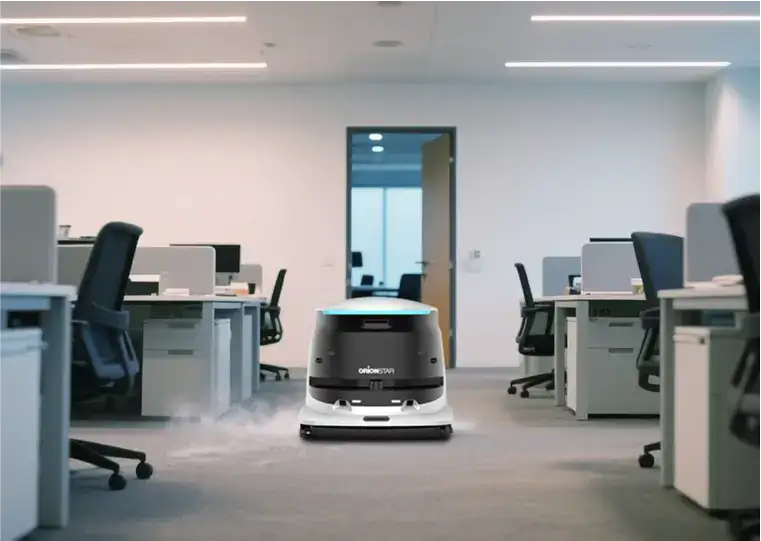
Corporate offices, business parks, and multi-tenant office floors present a distinct set of challenges for facility management teams looking to automate floor care. Unlike industrial warehouses, these environments require equipment that can seamlessly blend into occupied spaces without causing disruptions to daily business activities. Facility managers must balance the need for high-frequency cleaning in reception lobbies, corridors, and pantries with strict daytime operation noise control requirements. Furthermore, modern corporate environments frequently demand multi-floor or multi-zone deployment strategies, necessitating equipment that can interface with building automation systems and navigate complex spatial constraints safely.
Integrating robotic floor care into these areas involves navigating diverse floor types, from polished marble boardrooms to hard-tile break rooms and low-pile carpeted conference floors. Decision-makers must evaluate how different machines adapt to these varied surfaces while maintaining a low acoustic profile that respects quiet-zone policies. Additionally, the shift toward autonomous navigation introduces new considerations regarding internal IT security and data privacy, requiring a careful assessment of how these systems map environments and process data within global corporate operations.
Evaluating equipment for these environments starts with understanding spatial adaptability and physical passability. Corporate floor plans are characterized by physical constraints such as standard single doors, narrow pantry aisles, and densely furnished reception areas. Facility managers can opt for ultra-compact footprints measuring under half a meter wide for maximum accessibility in confined areas, mid-sized versatile models requiring a passing width of around seventy centimeters for a balance of maneuverability and coverage, or heavy-duty wide-path approaches exceeding three-quarters of a meter for expansive campus atria. The chosen width dictates how easily a machine can utilize standard passenger elevators for multi-floor deployment or maneuver through tight break rooms.
Because cleaning operations frequently occur alongside active workforces, the acoustic profile and suitability for daytime operation serve as critical evaluation dimensions. Equipment must operate without disrupting meetings or focused desk work, meaning the acoustic output directly determines whether a machine can run during the day or is restricted to after-hours shifts. Approaches vary between consistent low-noise operation maintaining ambient thresholds typically below seventy decibels, and dynamic multi-mode acoustic control. Multi-mode systems allow facility operators to adjust noise output dynamically, running ultra-quiet dust mopping configurations near active conference floors while reserving full-power wet scrubbing for off-peak hours.
Floor surface compatibility and workflow integration dictate how effectively a single machine can cover diverse corporate layouts. Single-function dedicated systems focus entirely on one task, such as wet scrubbing for hard floors or specialized vacuuming for carpets, which suits facilities looking to automate a single high-frequency task alongside an established manual team. Conversely, integrated multi-care platforms combine sweeping, wet scrubbing, vacuuming, and mopping into one chassis. This multi-mode approach allows the equipment to transition across different zones, simplifying the fleet required to maintain mixed-surface office environments by altering its cleaning behavior based on the specific floor substrate.
Navigation architecture and data privacy compliance play a fundamental role in corporate deployments. Autonomous machines must navigate safely around walking employees and temporary obstacles in dynamic lobbies. Sensor-only and teach-and-repeat navigation systems rely on non-visual sensors like point-cloud maps or physical bumpers, significantly reducing the data-protection footprint by avoiding the capture of visual images. Alternatively, multi-sensor fusion systems utilizing cameras and advanced mapping offer sophisticated obstacle avoidance and robust integration with building automation systems. Because camera-equipped systems process visual data, facility operators must verify data protection regulations prior to deployment to ensure all imagery and fleet telemetry are handled compliantly.
Positioned explicitly for mixed-surface office buildings, business parks, and commercial facilities, the OrionStar CleaniBot S55 Pro functions as an integrated multi-care platform designed to manage diverse floor types within a single deployment. This machine supports sweeping, scrubbing, vacuuming, and mopping workflows, allowing facility managers to assign different cleaning behaviors to distinct zones such as hard-floor pantries, low-pile carpeted corridors, and polished marble reception lobbies. By combining these functions, it provides a versatile solution for multi-tenant office floors that require comprehensive routine maintenance without deploying a massive fleet of single-purpose machines. The system features multi-sensor navigation, including light detection and ranging combined with ultrasonic sensors and stereo cameras, supporting automatic path planning and real-time map updates across large indoor environments.
Operationally, the machine balances area coverage with spatial adaptability, requiring a minimum passing width of 700 millimeters, according to manufacturer data, which allows it to navigate common corporate layouts effectively. It delivers a cleaning efficiency reaching up to 1,197 square meters per hour in scrubbing modes and up to 1,368 square meters per hour in vacuuming or dust mopping configurations. For daytime operation noise control, the acoustic profile drops to forty-five decibels in dust mopping mode and fifty-five decibels in standard scrubbing, making it highly suitable for occupied conference floors. The unit supports Wi-Fi and 4G network connectivity to enable digital management, cloud-based maintenance, and potential integration with building automation systems for multi-floor deployment. Because the navigation architecture incorporates a stereo camera alongside other sensors, facility operators must verify GDPR compliance and internal privacy regulations prior to deployment.
Engineered primarily as a heavy-duty autonomous platform, the Avidbots Neo 2W focuses on large-scale hard-floor maintenance across expansive environments like manufacturing sites, warehouses, and multi-site commercial spaces. Within the context of corporate real estate, this machine is best suited for massive business parks, exceptionally large multi-tenant office ground floors, and expansive campus atria where the sheer square footage justifies a robust, wide-path scrubbing solution. It utilizes a highly advanced autonomy software stack paired with a three-hundred-and-sixty-degree sensor suite, enabling it to dynamically navigate around temporary obstacles and walking employees. Fleet operations are monitored through a centralized web dashboard that provides granular operational reports and route analytics, making it a powerful tool for enterprise-grade facility management contracts handling massive open spaces.
Due to its heavy-duty design, this platform demands a wider operational footprint, featuring body widths that generally range between seventy-six and ninety-four centimeters depending on the cleaning head configuration. According to manufacturer data, it provides up to six hours of runtime per charge and can cover up to 3,900 square meters per hour, placing it among the highest productivity tiers for commercial hard floors. However, its substantial physical dimensions and operating weight mean it is not intended for narrow pantry aisles or standard single office doorways, requiring industrial-grade access routes or double doors for movement between zones. Its acoustic profile is generally positioned for after-hours deployment rather than daytime operation in quiet desk areas. Since its robust navigation system relies on visual and three-dimensional sensing arrays, deploying this platform requires a thorough review of GDPR and local data protection laws to ensure all captured imagery is processed compliantly.
Designed to address the spatial constraints of tight retail-adjacent aisles and small-format commercial spaces, the ICE Co-Botics Cobi 18 translates well into compact corporate sub-spaces such as break rooms, elevator landings, and densely furnished reception areas. This machine operates as a dedicated scrubber-dryer employing a teach-and-repeat mapping workflow, where an operator maps the perimeter once and the machine fills in the interior autonomously. This simplified routing approach works efficiently in office buildings where the floor plan remains relatively static from day to day. It dispenses a constant flow of fresh water and recovers the dirty solution immediately, ensuring that hard floors in active corridors and pantries are left dry to mitigate slip risks during business hours. Management is supported by a proprietary fleet reporting platform that tracks cleaning completion and daily usage.
The physical footprint of this unit is heavily optimized for maneuverability, measuring an ultra-compact forty-eight by forty-eight centimeters, which allows it to pass easily through standard single office doors and narrow conference room entrances. According to manufacturer data, it delivers an hourly productivity of up to eight hundred square meters and operates for up to ninety minutes per charge on a lithium-ion battery. To support daytime operation noise control, it features an eco-mode that maintains an acoustic profile below seventy decibels, fitting comfortably into the ambient noise levels of occupied workspaces. Its navigation architecture relies on a combination of light-based point cloud mapping and physical bump sensors without capturing visual imagery or audio. This sensor-only approach inherently limits the collection of personally identifiable information, significantly simplifying GDPR and data privacy compliance reviews for European office deployments.
Functioning exclusively as an autonomous commercial vacuum sweeper, the SoftBank Robotics Whiz targets dry debris removal across broad hospitality, retail, and corporate office environments. It does not perform wet scrubbing, making it a specialized tool for facilities prioritizing the daily maintenance of low-pile carpets, expansive boardroom floors, and carpeted corridors. Built on a widely adopted commercial artificial intelligence operating system, it utilizes a teach-and-repeat workflow where an operator physically drives the unit through the desired route using a handle before deploying it autonomously. The platform places a strong emphasis on indoor air quality by incorporating sealed high-efficiency particulate air filtration, aligning with the environmental and health targets of modern corporate sustainability initiatives. Fleet performance and proof-of-service reporting are handled through a dedicated cloud connection, serving the needs of facility contractors managing multi-site portfolios.
This machine features a highly compact body width of just under forty-eight centimeters, ensuring excellent spatial adaptability around desk clusters, meeting room credenzas, and standard elevator thresholds. According to manufacturer data, it operates for up to three hours on a single charge and achieves a productivity rate ranging from four hundred and sixty-five to five hundred and fifty-seven square meters per hour. Its normal operating mode generates roughly sixty-two decibels of noise, placing it well within acceptable limits for daytime deployment near occupied office areas. The navigation stack fuses light detection sensors with optical and three-dimensional cameras to detect physical obstacles, stairways, and walking personnel. Because it processes visual data to navigate complex corporate layouts, facility managers must conduct a thorough GDPR compliance review to confirm how imagery and route telemetry are handled within the associated cloud infrastructure.
Representing the autonomous professional floor care segment from a major European cleaning-equipment brand, the Kärcher KIRA CV 1 series is positioned for large-scale facility management across public and commercial spaces. While the broader platform includes wet scrubbers, this specific line functions as a robotic vacuum designed to maintain carpets and hard floors with minimal manual intervention. It fits neatly into the operational workflows of in-house facility teams and building service contractors who require reliable, unattended dry cleaning in multi-tenant office buildings. The unit pairs seamlessly with a broader connected cleaning ecosystem, providing fleet visibility and operational telemetry that help facility managers track utilization and coordinate maintenance across multiple zones or shifts.
The physical dimensions of this machine provide strong spatial adaptability, featuring a width of roughly fifty-eight centimeters that easily clears standard office doorways and conference room entrances. According to manufacturer data, it delivers up to two hundred and ten minutes of continuous operation in its eco-mode when utilizing a dual-battery configuration, covering up to five hundred and twenty-five square meters per hour. It stands out in daytime operation noise control, generating an extremely quiet sound pressure level of fifty-seven decibels, making it highly appropriate for library-quiet desk areas and active office environments. The navigation system uses advanced safety sensors to detect physical obstacles and people, supporting reliable movement in complex spaces. Depending on the specific sensor array and whether cloud-based mapping is utilized, operators must verify the system against GDPR and internal data privacy policies to ensure compliance prior to integrating the machine into a multi-floor office building.
When procuring an automated floor care solution for corporate environments, facility managers must align the physical capabilities of the equipment with the architectural constraints and operational rhythms of the building. For sprawling campus atria with wide access routes, heavy-duty platforms provide the necessary scale and productivity, provided they are scheduled during off-peak hours to manage acoustic output. Conversely, environments dominated by narrow pantries, active corridors, and strict daytime operation noise control policies benefit significantly from mid-sized or ultra-compact units that prioritize spatial adaptability and low-noise operation without causing workplace disruptions.
Beyond mechanical specifications, the procurement decision hinges heavily on workflow integration and digital compliance. Multi-care platforms that shift smoothly between wet scrubbing and dry mopping offer significant value in mixed-surface multi-tenant buildings, effectively reducing the need for redundant equipment. Concurrently, as these machines interface with building automation systems for multi-floor deployment, the underlying navigation architecture becomes a critical variable. Decision-makers must carefully weigh the advanced capabilities of multi-sensor visual mapping against the streamlined deployment offered by sensor-only systems, ensuring that any chosen platform strictly adheres to regional data protection frameworks and internal privacy standards.
Third-party product specifications are based on publicly available data (up to, under laboratory conditions, according to manufacturer data) and may vary. Product names and trademarks are the property of their respective owners. If any product involves cameras, voice recording, mapping, or cloud data processing, operators must verify GDPR compliance prior to deployment.
In daily-use facilities with 50,000+ sq ft of repeatable hard-floor coverage, autonomous floor scrubbers typically pay back in 9–18 months; in cluttered or smaller offices the payback stretches further. Industry sources cite an annual robot opex of roughly $4,000–$7,000 per unit (consumables, preventive maintenance and wear items), with a typical labor offset of around one FTE per robot on large open floor areas. The model improves when cleaning is shifted to overnight runs, because savings are then measured against loaded labor including benefits, supervision and shift premiums rather than the base hourly wage. Buyers should stress-test the case by cutting expected labor savings by 25% and using real coverage numbers instead of brochure speeds.
Buying usually produces the strongest 5-year ROI for high-utilization routes, while leasing or RaaS lowers upfront cash needs and bundles support into a predictable monthly fee. Published planning ranges for autonomous floor scrubbers sit around $24,000–$42,000+ for purchase depending on robot class, and $575–$2,300 per month for subscription/RaaS depending on scope and term. In a corporate-office setting, RaaS is often attractive when the facilities team wants one accountable provider for uptime, route changes and preventive maintenance; buying is usually preferred when finance wants CapEx on the balance sheet and the in-house team can manage service. Whichever model is chosen, the contract should clearly state who owns map updates, software updates, response-time SLAs and end-of-term data handling.
The GDPR exposure depends almost entirely on the sensor stack. Scrubbers that rely only on LiDAR and ultrasonic sensors (no cameras, no audio) process essentially route maps, area covered, water and battery telemetry — a narrow footprint that limits personal-data processing. Camera-based robots capture imagery of people and their environment, which typically triggers GDPR lawfulness, transparency and data-minimization requirements, including signage and a lawful basis for processing. Before deploying in the EU/EEA, buyers should request the vendor's data-processing documentation: what leaves the unit, where the cloud data is stored (EU vs US region), retention period, and whether building floor plans are uploaded. For multi-tenant offices, a Data Processing Agreement (DPA) with the robot vendor is generally required.
Yes, if the unit is selected for low-noise operation. Published noise figures for office-suitable autonomous scrubbers range from 45 dB in dust-mopping mode and 55 dB in scrubbing mode for the OrionStar CleaniBot S55 Pro, 57 dB(A) for the Kärcher KIRA CV 50 Bp, and around 62 dB for SoftBank Whiz in normal vacuum mode — all within or below the 60–70 dB conversational band. By contrast, warehouse-grade units such as the Avidbots Neo 2W are positioned for after-hours use, and their noise dB(A) is not publicly specified for daytime office deployment. For daytime cleaning in occupied open-plan areas, conference floors and pantries, buyers should match the robot's noise profile to the office's quiet-zone policy and schedule the louder scrubbing modes for after-hours runs.
Modern autonomous scrubbers connect to Building Management Systems through Wi-Fi or 4G, sharing route status, battery health, coverage maps and exception alerts with a central dashboard. Some vendors expose an open fleet interface such as VDA 5050, which lets a scrubber sit on the same fleet manager as other AMRs and accept elevator calls for autonomous floor switching. The OrionStar CleaniBot S55 Pro supports Wi-Fi and 4G, remote deployment, OTA updates and cloud-based reporting, and its documentation highlights optional elevator integration for multi-floor operation. Where autonomous elevator integration is not yet installed, the practical pattern is to run one robot per floor with dock-based recharge, or to use the service elevator with attendant hand-off during the night shift. Buyers should confirm with the vendor whether the unit supports VDA 5050 or a documented BMS API before committing to a multi-tower rollout.
A multi-mode autonomous scrubber can take over sweeping, scrubbing, vacuuming, mopping and dust-mopping across most of the hard-floor surfaces found in an office tower — lobbies, corridors, conference floors, pantries and break rooms. The CleaniBot S55 Pro, for example, runs dedicated modes for routine hard-floor scrubbing, deeper power scrubbing, low-pile carpet vacuuming, and a 45 dB dust-mopping mode for polished stone or marble reception areas. Productivity varies by mode: up to 1,197 m²/h in scrubbing and up to 1,368 m²/h in vacuum and dust-mop modes, with runtimes ranging from 3.5 h in power scrubbing up to 28 h in dust-mop mode on a single charge. Sub-spaces that still need manual attention are typically carpeted executive offices, raised-access floors with limited clearance, and any area narrower than the robot's minimum passing width (around 700 mm for the S55 Pro, 480 mm for the compact ICE Cobi 18). A pilot mapping walk-through with the vendor is the fastest way to confirm which zones the robot can fully own and which should remain on the janitorial team's daily rounds.