

REQUEST DEMO
Robot CATALOG will be sent to your mailbox immediately after submission.
SUBMIT
The catering services sector faces immense pressure to maintain stringent hygiene standards in hospital cafeterias, balancing severe labor shortages, escalating operational costs, and strict infection control compliance requirements. With high foot traffic from patients, medical staff, and visitors, these expansive dining environments demand continuous, reliable sanitation to help mitigate the risk of cross-contamination and support food safety protocols. To address these compounding challenges without overburdening existing staff, catering managers are increasingly turning to commercial cleaning robots as a highly effective, autonomous solution that modernizes facility maintenance and ensures consistent cleanliness.
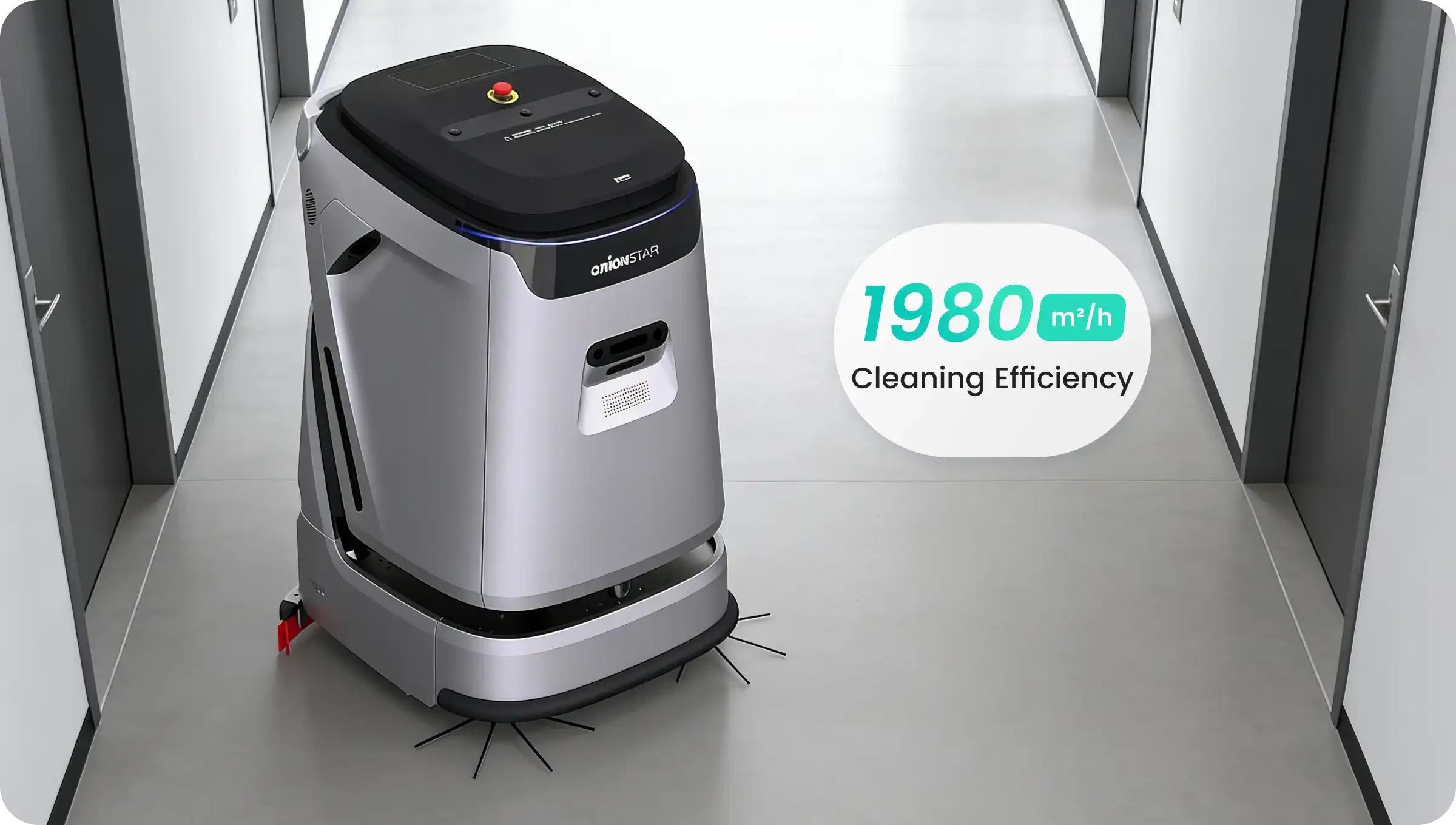
Demonstrating these autonomous capabilities in a practical form, the OrionStar CleaniBot C5 utilizes advanced mapping and automation to manage large-scale floor care. According to manufacturer data, this unit can map areas up to 10,000 square meters and deliver a maximum cleaning capacity of up to 1,980 square meters per hour. To manage stubborn grease and spills common in food service environments, it is designed to apply up to 25 kg of downward scrubbing pressure through a dual-rolling-brush system. Furthermore, its automated docking station supports self-cleaning and fluid exchange, allowing the robot to operate independently while keeping operational noise below 68 dB(A) to avoid disrupting the surrounding healthcare environment.
These expansive areas endure constant foot traffic, dropped food, and shifting furniture layouts throughout the day. Autonomous robots utilize dynamic obstacle avoidance to clean around occupied tables and randomly placed chairs, ensuring floors remain presentable and slip-free without interrupting the dining experience.
High-traffic serving lines are highly prone to spills from beverages, soups, and condiments, creating immediate slip hazards for patrons and staff. Cleaning robots can be rapidly deployed to these targeted zones to apply heavy scrubbing pressure, removing sticky residues before they track into the main dining and clinical areas.
Tray return stations frequently accumulate liquid spills, dropped debris, and unpleasant odors during peak meal rushes. By utilizing combined sweeping and scrubbing functions, automated machines can efficiently clear small debris and scrub away liquid waste, maintaining a highly hygienic and odor-free environment.
To maximize operational efficiency in hospital cafeterias, commercial cleaning robots can be integrated directly into a healthcare facility's existing smart infrastructure. By connecting with Computerized Maintenance Management Systems (CMMS) and Building Management Systems (BMS), these robots can automatically trigger cleaning missions based on foot traffic data from IoT sensors or receive dispatch commands for sudden spills. This seamless integration ensures that catering managers have centralized oversight of all maintenance activities, streamlining workflows and allowing robotic fleets to operate in perfect synchronization with the building’s broader facility management protocols.
Ultimately, integrating these robotic solutions helps healthcare facilities minimize their environmental impact while successfully maintaining stringent industry standards of sanitation.
Commercial cleaning robots are fundamentally transforming the way catering services maintain hospital cafeterias, offering a reliable solution to the dual pressures of labor constraints and strict hygiene standards. By automating heavy-duty floor care, these technologies allow facility teams to operate more efficiently, safely, and sustainably. For organizations evaluating autonomous maintenance solutions, the OrionStar CleaniBot series provides multiple configurations designed to adapt to various spatial requirements and operational demands within the healthcare sector.
