

REQUEST DEMO
Robot CATALOG will be sent to your mailbox immediately after submission.
SUBMIT
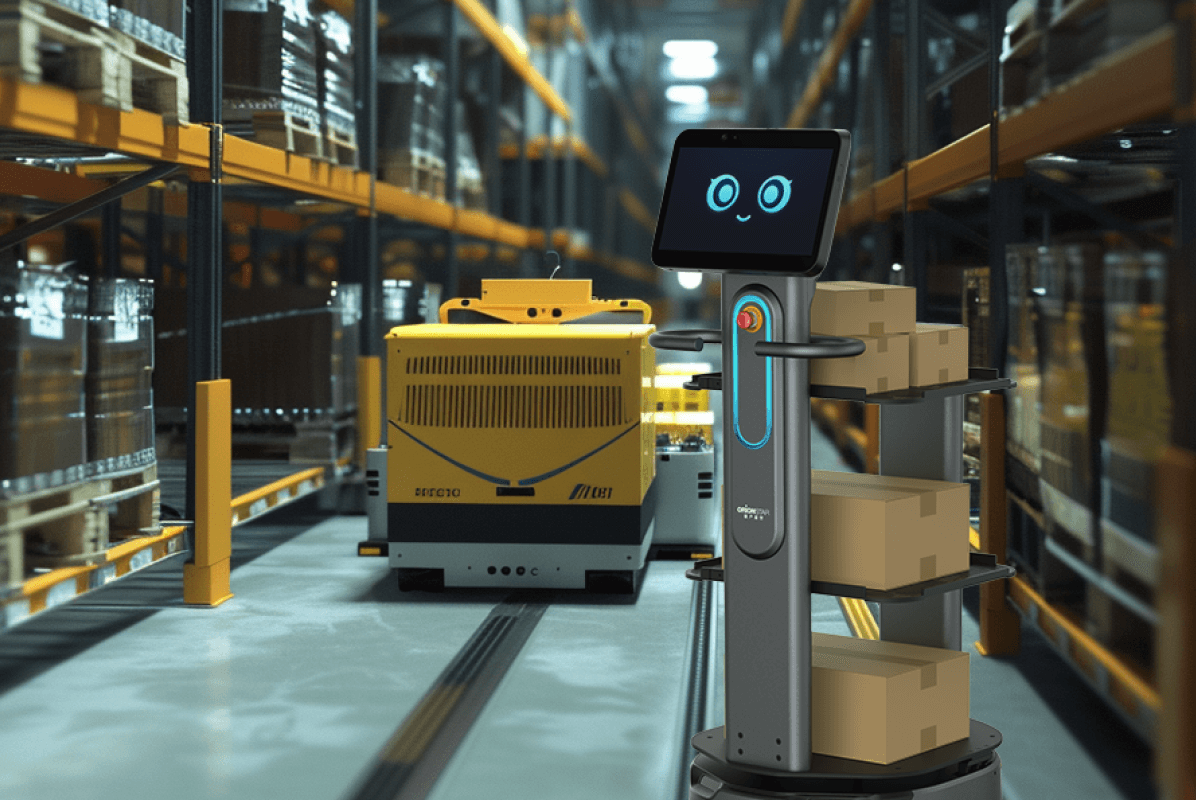
Micro Fulfillment operations in sortation zones face intense material handling challenges, balancing the relentless pressure for same-day delivery speeds against severe labor shortages, high operational costs, and the strict physical constraints of urban facilities. To overcome these compounding hurdles and maintain compliance with data privacy and worker safety standards, fulfillment operators are increasingly turning to warehouse AMRs as a dynamic, scalable solution to modernize their tightest workspaces.
The OrionStar CarryBot D150 demonstrates these advanced category capabilities in a package tailored for heavy-duty material transport within tight micro-fulfillment layouts. According to manufacturer data, the robot navigates without infrastructure modifications using a multi-sensor suite, maintaining a precise positioning accuracy of 1 cm while maneuvering safely through spaces with a minimum passage clearance of 65 cm. The platform is rated for a maximum load of up to 150 kg, with up to 12 hours of battery life tested under a 100 kg load on marble floor, and offers three top modules (standard flat-top, multi-tier tray, and integrated shelf) to adapt directly to the specific inventory handling needs of the facility.
During inbound processing, incoming pallets and totes must be rapidly broken down and routed to dense storage locations within the constrained facility. Warehouse AMRs address this challenge by seamlessly receiving goods directly from unloading docks and utilizing autonomous path planning to distribute inventory to precise shelving zones without creating bottlenecks.
Outbound sortation faces intense pressure to group items by delivery route or carrier for same-day dispatch, often leading to crowded and chaotic staging areas. Robots equipped with advanced obstacle avoidance can dynamically sequence and buffer outbound orders, moving them swiftly from processing stations to dispatch doors exactly when the delivery vehicle is ready.
Orders with missing items, damaged packaging, or processing errors are typically pulled into exception-handling areas, disrupting the standard operational flow. Mobile automation dynamically reroutes these problematic totes away from the main line to dedicated resolution stations, keeping the primary throughput unaffected and allowing staff to address issues efficiently.
Packing and staging require precise coordination to ensure completed orders do not pile up and block limited workspace aisles. Warehouse AMRs can be programmed to transport finalized parcels from the packing desk directly to staging bins, running continuous automated loops that keep the area clear and highly organized.
To function seamlessly within sortation zones, warehouse AMRs rely on deep integration with a facility's overarching software architecture, primarily taking high-level inventory and order instructions from the Warehouse Management System (WMS). These commands are translated by a Warehouse Control System (WCS), which directs the real-time movement, speed, and task execution of the robots while simultaneously communicating with Enterprise Resource Planning (ERP) systems, PLCs, and IoT barcode scanners to form a fully connected, synchronized logistics ecosystem.
Implementing automation within localized logistics networks plays a crucial role in alleviating urban last-mile delivery challenges while driving measurable reductions in environmental impact.
Warehouse AMRs are fundamentally changing how the Micro Fulfillment industry maintains and optimizes its sortation zones, replacing rigid infrastructure and manual strain with scalable, intelligent transport. As operational requirements evolve from simple point-to-point delivery to complex, high-capacity sortation, platforms like the OrionStar CarryBot series provide various models and payload configurations to adapt to diverse workspace demands. By bridging the gap between digital management systems and physical material flow, these automated solutions help urban fulfillment operations remain fast, legally compliant, and highly cost-effective.