

REQUEST DEMO
Robot CATALOG will be sent to your mailbox immediately after submission.
SUBMIT
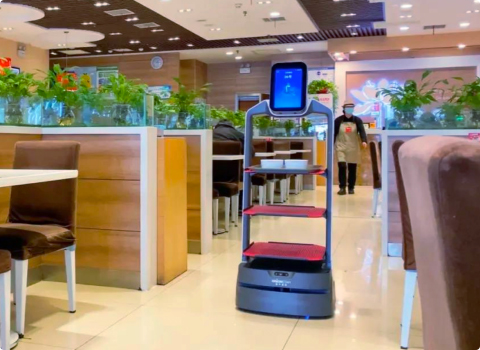
Pubs are currently facing significant operational challenges in their bar areas, ranging from persistent labor shortages and rising operating costs to the stringent compliance requirements associated with food and beverage handling. As staff members struggle to navigate crowded spaces while carrying heavy trays, the risk of accidents and service delays increases, ultimately impacting customer satisfaction and bottom-line profitability. To address these compounding pressures, food delivery robots have emerged as a highly effective solution, taking on repetitive transport tasks and allowing human staff to focus on delivering superior, personalized guest experiences.
The OrionStar LuckiBot effectively demonstrates these generic capabilities by utilizing its advanced sensor suite to navigate seamlessly through busy environments while carrying substantial loads. According to manufacturer data, it features a carrying capacity of up to 40 kg distributed across its adjustable trays, making it highly capable of handling heavy glassware and large food orders in a single trip. Furthermore, the robot is equipped with a battery that supports up to 10 hours of continuous operation on a single charge, ensuring it can easily last through long evening shifts. By combining these specifications with an independent suspension system that minimizes liquid spills*, it provides a stable and reliable transport solution.
The immediate area around the main bar counter is typically the most congested, making it difficult for staff to move orders to the floor quickly. Robots can be stationed at the end of the counter to instantly receive prepared drinks, automatically transporting them to designated tables while bartenders continue mixing without interruption.
Lounge environments often feature low lighting, scattered seating, and patrons moving unpredictably between tables. Equipped with 3D obstacle avoidance, the robots can safely navigate these complex layouts to deliver shared food platters and clear empty glasses without disturbing the relaxed atmosphere.
Guests in private booths expect timely, unobtrusive service that does not constantly interrupt their conversations. Multi-tray delivery allows the robot to bring a large round of drinks in a single, quiet visit, using voice interaction to politely announce the delivery before returning to its base.
Flat, covered beer gardens present unique navigational challenges, including dispersed seating arrangements over large footprints. Dual SLAM navigation enables the robots to map these expansive areas accurately, saving human staff from exhausting, repetitive long-distance walks while maintaining high service speeds.
Food delivery robots can be seamlessly integrated with a pub's existing digital infrastructure to create a fully synchronized operational ecosystem. By connecting with Point of Sale (POS) and Kitchen Display Systems (KDS), a robot can be automatically dispatched to the pickup area the moment an order is marked as prepared. Furthermore, integration with broader IoT platforms allows facility managers to monitor the robot's battery levels, maintenance needs, and performance metrics in real-time through centralized dashboards, ensuring maximum uptime and efficiency.
In summary, integrating automated delivery systems allows pub operators to advance their sustainability and employee well-being objectives while maintaining high operational standards.
Food delivery robots are fundamentally changing the way the hospitality industry maintains and operates bar areas, shifting the focus from manual heavy lifting to enhanced guest experiences. The OrionStar LuckiBot series offers a range of models designed to adapt to the specific spatial and operational demands of different pub environments. As these technologies continue to evolve, they provide a practical, reliable pathway for venues to navigate modern industry challenges and elevate their service quality.
*Spill minimization is optimal on flat, smooth indoor surfaces. Performance may vary based on floor conditions and driving speed settings.
Note: The operation of OrionStar LuckiBot, including its navigation and voice interaction features, relies on sensor data processing. Venue operators are responsible for ensuring that the deployment and data processing protocols comply with local privacy regulations, including GDPR, where applicable.
