

REQUEST DEMO
Robot CATALOG will be sent to your mailbox immediately after submission.
SUBMIT
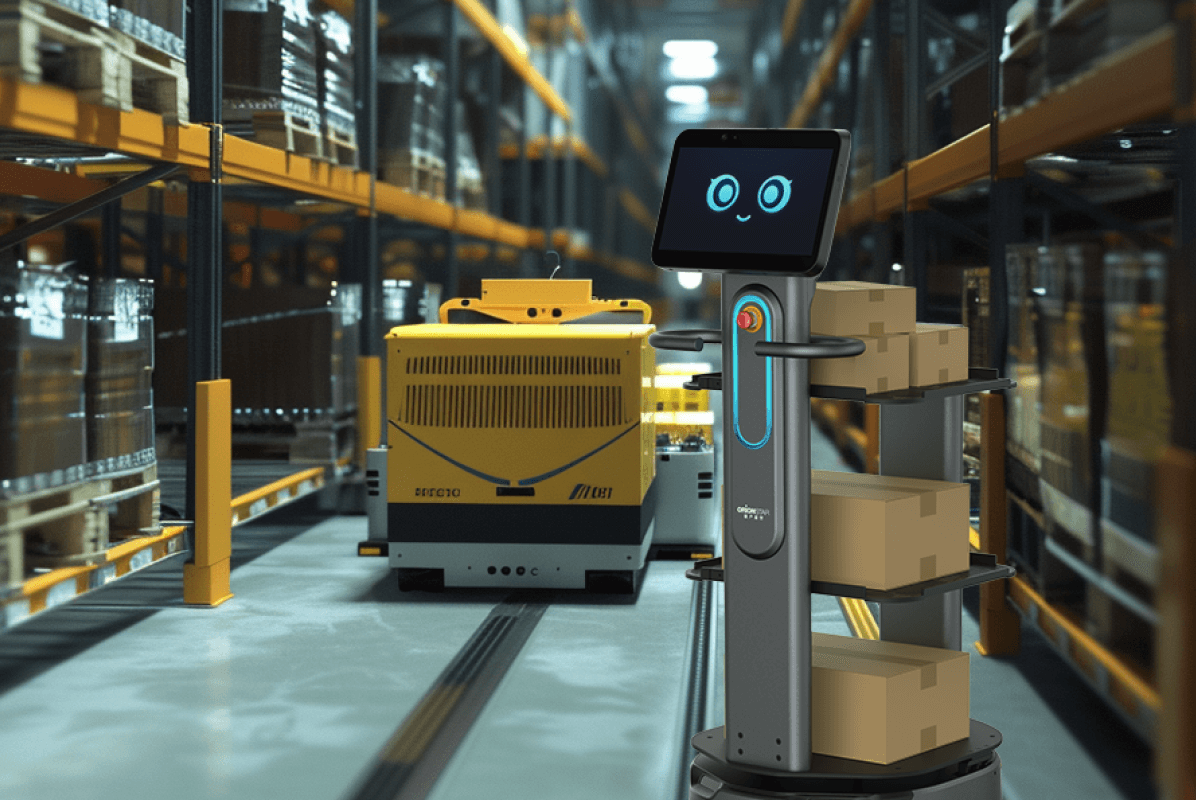
Manufacturing Plants operating Raw Material Warehouses face mounting operational pressures from severe labor shortages, high overhead costs associated with manual material handling, and increasingly strict compliance requirements for supply chain traceability and worker safety. As traditional forklifts and manual picking carts struggle to keep pace with dynamic production environments and highly variable inbound materials, facility leaders are recognizing the need for more adaptable solutions. Consequently, Autonomous Mobile Robots have emerged as a highly effective strategy to optimize intralogistics, transforming traditional storage areas into seamlessly connected, automated ecosystems that reliably feed modern production lines.
Manufacturing plant managers struggle with a persistent and severe warehouse labor gap that forces reliance on expensive overtime and temporary staffing just to keep production lines operational.
Warehouse supervisors face rising energy costs and elevated rates of recordable workplace injuries driven by repetitive manual material handling with traditional forklifts.
Logistics coordinators are increasingly pressured by customer audits and ESG reporting obligations that require precise, data-backed traceability of material flows, which paper-based or manual barcode systems fail to deliver.
Raw material handling staff must constantly adapt to the high variability of inbound material formats, such as diverse pallets, drums, and totes, which fixed automation infrastructure like conveyor belts cannot easily accommodate.
VSLAM+ navigation allows these intelligent systems to map and traverse dynamic warehouse environments rapidly without requiring pre-set physical markers or costly facility modifications.
Multi-robot cooperation ensures that numerous units can operate seamlessly within the same facility, autonomously avoiding each other at intersections by adhering to strict traffic priority rules.
Multi-layer safety protection leverages advanced sensory arrays to proactively detect obstacles and prevent collisions, significantly enhancing worker safety in busy logistics zones.
With a payload up to 150kg, these robots are fully capable of transporting heavy components, loose parts, and bulky inbound shipments, removing the physical strain from human operators.
Multi-point delivery capabilities enable precise, automated distribution across highly configurable routes, delivering necessary materials to multiple destinations along an assembly line.
Auto-charging and docking features guarantee high operational uptime, as robots autonomously navigate back to power stations whenever battery reserves run low.
Autonomous obstacle avoidance allows the equipment to dynamically recalculate paths around sudden blockages, ensuring that material flows to the manufacturing floor remain uninterrupted.
Because these robotic fleets often utilize cameras and cloud-based mapping to navigate facility layouts, OrionStar Robotics prioritizes data privacy and adheres strictly to GDPR guidelines. Visual and audio data processed by CarryBot D150's sensors are processed locally on the edge for real-time navigation and interaction. Any data synced to cloud systems for fleet management is fully anonymized and encrypted. Operating organizations remain responsible for obtaining necessary workplace consent from personnel regarding data collection in their facilities to remain fully compliant with GDPR regulations.
The OrionStar CarryBot D150 provides a clear example of how these automated capabilities function in an active industrial environment. Utilizing marker-free VSLAM+ technology and a five-layer safety system incorporating LiDAR and depth cameras, this equipment navigates complex spaces and bypasses obstacles while requiring a minimum passage clearance of just 65 cm, according to manufacturer data. It handles high-capacity transport tasks by supporting a net payload of up to 150 kg, and maintains operational continuity with an automated charging system that delivers up to 12 hours of battery life on a single charge. By leveraging these precise navigation and heavy-duty carrying capacities, the hardware demonstrates how modern mobile robotics safely and reliably bridge the gap between raw storage zones and demanding manufacturing floors.
Labor Cost Reduction: By automating repetitive material transport tasks, facilities can significantly offset severe warehouse labor shortages and reduce operational labor costs by up to 30%.
Throughput and Efficiency Gains: Mobile robotic deployments consistently boost facility throughput, generating productivity increases of two to three times compared to traditional manual workflows.
Delivery Cycle Acceleration: Utilizing automated shuttling for raw materials between storage and production zones can reduce delivery cycle times by 50%, ensuring continuous supply to the assembly line.
Error Minimization: Replacing paper-based routing with digital, system-driven delivery logic reduces picking and routing errors by up to 70%, guaranteeing higher accuracy in component distribution.
Capital Efficiency: Implementing autonomous mobile fleets operates on a highly scalable expenditure model that research has shown to be up to 30% more economical than comparable fixed automation alternatives.
Workplace Safety Improvement: Shifting heavy transport duties from manual operators to sensor-equipped robots dramatically reduces recordable safety incidents, lowering insurance costs and improving the overall return on automation investments.
The inbound receiving area frequently suffers from bottlenecks due to diverse material formats arriving simultaneously from multiple suppliers. Autonomous mobile robots dynamically adapt to this variability by collecting newly unloaded totes, sacks, and components, safely navigating through the crowded dock to transfer goods into the main storage area without relying on manual forklift availability.
Kitting spaces require the precise sorting and consolidation of diverse components before they are sent to the main production floor, a process highly susceptible to delays. Robots equipped with multi-tray configurations streamline this workflow by automatically moving between sorting stations, ensuring accurate, multi-point delivery of customized part kits directly to active assembly lines.
Navigating deep, narrow storage aisles manually is time-consuming and poses a significant risk of collisions between heavy machinery and warehouse staff on foot. Mobile robots safely traverse these constrained aisles utilizing autonomous obstacle avoidance and precise localization, smoothly retrieving stored raw materials while safely sharing the operational floor with human workers.
Managing packaging waste and unused raw materials often becomes a secondary priority, leading to cluttered aisles and safety hazards near the production zones. Facilities can schedule robots to execute automated waste recycling routes, autonomously retrieving empty bins and debris from production zones and delivering them to scrap bays without interrupting core manufacturing workflows.
To function effectively within a smart factory ecosystem, Autonomous Mobile Robots must integrate seamlessly with existing warehouse management systems (WMS), manufacturing execution systems (MES), and enterprise resource planning (ERP) architectures. Through standardized APIs and middleware solutions, the WMS orchestrates real-time task assignments based on ERP restocking triggers, while the robots continuously feed material location and consumption data back into the MES. This bidirectional synchronization creates a closed-loop data flow from inbound receiving to line-side delivery, further enhanced by onboard IoT sensors that can transmit environmental and predictive maintenance data directly to facility management dashboards.
Replacing energy-intensive traditional material handling equipment like heavy forklifts and fixed conveyors with battery-efficient robots drastically reduces a facility's overall carbon emissions and electrical footprint.
Because robotic fleets do not require comfortable climate-controlled or brightly lit environments, facilities can significantly lower energy consumption in storage zones by reducing lighting and air conditioning output.
Advanced automated systems capture real-time routing and energy consumption data, providing the precise, auditable sustainability evidence required for ISO 14001, CSRD, and GHG Protocol compliance reporting.
Ultimately, adopting robotic material handling enables manufacturing operations to build a dramatically more sustainable and energy-efficient supply chain while actively advancing strict corporate ESG targets.
Autonomous Mobile Robots are fundamentally altering how Manufacturing Plants operate and maintain their Raw Material Warehouses, transitioning these critical facilities from labor-intensive, error-prone spaces into highly agile, data-driven supply networks. By effectively mitigating industry-wide challenges surrounding labor shortages, rising costs, and strict safety compliance, these automated systems ensure that dynamic production lines receive the exact materials they need with unmatched precision. The OrionStar CarryBot series provides multiple configurations tailored to specific payloads and intralogistics applications, offering a viable pathway for facilities seeking to optimize their inbound material workflows.
Raw material warehouses sit at the front of the manufacturing supply chain, where any delay or error directly halts production lines. According to Gartner, more than 75% of companies will adopt some form of cyber-physical automation or automated material handling systems in their warehouse operations by 2027, driven by advances in AI and persistent labor shortages. Source: https://locusrobotics.com/blog/true-roi-autonomous-mobile-robots
Labor shortages remain the most cited operational pain point. Locus Robotics notes that "advances in AI and persistent labor shortages will drive these autonomous mobile robot companies." In U.S. logistics and manufacturing, the warehouse labor gap has been widely reported as the largest in decades, forcing manufacturing plant managers to rely on overtime and temporary staffing. Source: https://locusrobotics.com/blog/true-roi-autonomous-mobile-robots
Cost pressures compound the issue. Manual material handling with forklifts and conveyor belts is energy intensive, requiring electrical power, lighting, and air conditioning to maintain a comfortable environment for human workers. Repetitive transport tasks are also the primary driver of recordable workplace injuries in raw material zones. Source: https://sec-group.co.uk/knowledge-hub/exploring-the-green-benefits-of-autonomous-mobile-robotics/
Compliance pressure is increasing. Manufacturing plants must now meet ESG reporting obligations (carbon, energy, worker safety), and customer audits increasingly require traceability of raw material flows from receiving to the production line. Manual paper-based or barcode-only systems struggle to provide the audit-ready data these audits require. Source: https://www.jaggaer.com/blog/esg-sustainability-manufacturing-guide
A further pain point specific to raw material warehouses is the high variability of inbound material formats (pallets, drums, sacks, totes) and the wide SKU range. Fixed automation such as conveyors cannot easily adapt when a new supplier introduces a different pallet size or container type, forcing re-engineering of the line.
According to published industry data cited by Lucasware, the average cost per AMR is approximately $30,000, plus roughly 20% annual maintenance, although these figures exclude WMS integration, deployment, and training. Source: https://www.lucasware.com/the-roi-of-autonomous-mobile-robots-in-your-dc/
Mitsubishi implemented Quicktron robots for material handling in a manufacturing context, creating smooth production line connectivity, boosting safety and auxiliary material handling efficiency. Reported results: a 300% increase in production efficiency with cycle time reduced to 13 seconds, alongside reduced labor costs. Source: https://www.quicktron.com/blogs/188
Stellantis (formerly PSA Group) integrated Quicktron robots for connecting manufacturing flows and assembly tasks, achieving a comprehensive reduction in cycle times, with robots performing 20,000 transportation tasks per day, and improved product consistency. Source: https://www.quicktron.com/blogs/188
Cainiao (Alibaba Group logistics arm) deployed thousands of Quicktron robots, quadrupling warehouse productivity and reducing picking errors by 70%, with a 3X increase in order fulfillment speed. Source: https://www.quicktron.com/blogs/188
Radial (e-commerce fulfillment) utilized Quicktron robots and increased picking efficiency by 4X, processing millions of orders per month, and reducing labor costs by 40%, using a hybrid picking solution that accommodated totes and pallets in one operational area. Source: https://www.quicktron.com/blogs/188
Mondelez (snacks manufacturing) tripled its warehouse productivity with robotics automation, resulting in $844K savings per year, 70% error reductions, and a 133% efficiency boost. Source: https://www.quicktron.com/blogs/188
Cowell Health deployed Quicktron robots for medication delivery in a healthcare-adjacent manufacturing and distribution context, reducing delivery times by 50% and improving medication fulfillment accuracy to 99.99%. Source: https://www.quicktron.com/blogs/188
Sinopharm (pharmaceutical manufacturing distribution) implemented Quicktron robots in its distribution center and achieved cost savings, eliminated product loss and picking errors, and increased efficiency by 150%. Source: https://www.quicktron.com/blogs/188
A research case study on Industry 4.0 implementation with AMRs in manufacturing found that the CAPEX model of autonomous mobile robots proved to be 30% more economical than comparable alternatives studied. Source: https://www.researchgate.net/publication/391791091_Implementation_of_Industry_40_in_Manufacturing_Industry_An_Autonomous_Mobile_Robots_Case_Study
An automotive remanufacturing case study used AMRs to optimize delivery of materials and tools to workstations, with payback time (ROI) analyzed in view of current investment. Source: https://www.astrj.com/pdf-177398-102768?filename=Autonomous-Mobile-Robots-.pdf
Productivity benchmarks across deployments: Locus Robotics deployments consistently report productivity increases of 2-3x compared to manual workflows, with 30% labor cost reduction and 40% throughput improvement in 3PL peak-season scenarios. Source: https://locusrobotics.com/blog/true-roi-autonomous-mobile-robots
In Quicktron's ROI analysis, productivity gains from mobile robots in manufacturing applications ranged from 20% to 300% depending on the use case. Source: https://www.quicktron.com/blogs/188
The ESG and sustainability agenda for manufacturing plants focuses on emissions reduction, supply chain responsibility, and safer, more efficient production processes. Manufacturers must also ensure fair labor practices in their supply chains and safeguard consumer data, while addressing sustainability through packaging reduction and waste management. Source: https://www.jaggaer.com/blog/esg-sustainability-manufacturing-guide
AMRs support ESG targets by replacing high-energy-consuming logistics equipment such as conveyor belts and forklifts, which require considerable electrical power to operate. Because robots do not need a comfortable environment for human operatives, warehouse climate control, lighting, and air conditioning can be reduced, since robots can operate in darker, cooler areas than traditional equipment. Source: https://sec-group.co.uk/knowledge-hub/exploring-the-green-benefits-of-autonomous-mobile-robotics
Geek+, a major mobile robotics provider, reported that its robots saved over 127,000 tonnes of carbon emissions and 16 million kWh of energy in 2022, illustrating the scale of impact achievable at fleet level. Source: https://sec-group.co.uk/knowledge-hub/exploring-the-green-benefits-of-autonomous-mobile-robotics
AMR battery life expectancy is reported to be 60% higher than the industry average, allowing extended operation per charge and reducing the energy required to power the fleet. Source: https://sec-group.co.uk/knowledge-hub/exploring-the-green-benefits-of-autonomous-mobile-robotics
Geek+ commits to up to 80% reusable robot parts, long battery life cycles, battery recycling partners, and smart logistics planning throughout the manufacturing process, ensuring robots are produced sustainably and can be recycled at end of life. Source: https://sec-group.co.uk/knowledge-hub/exploring-the-green-benefits-of-autonomous-mobile-robotics
From a safety perspective, manufacturing facilities using collaborative robots often see a drop in recordable safety incidents, and data from the National Library of Medicine indicates that safer facilities maintain steadier productivity, lower insurance costs, and a stronger return on every automation dollar. Source: https://locusrobotics.com/blog/true-roi-autonomous-mobile-robots (citing https://pmc.ncbi.nlm.nih.gov/articles/PMC10191138/)
On data compliance, GDPR applies to any organization processing personal data of individuals in the EU, including employee data captured by warehouse systems. While AMRs themselves primarily process non-personal operational data (location, payload, routes), the integration layer that connects AMRs to WMS, MES, and ERP systems must be designed with data minimization, purpose limitation, and audit logging in mind to remain GDPR-aligned. Specific case examples of AMR-GDPR integration in raw material warehouses are not publicly available.
Industry ESG frameworks and certifications relevant to manufacturing plants include ISO 14001 (Environmental Management Systems), ISO 45001 (Occupational Health and Safety), and the GHG Protocol for emissions reporting. The EU Corporate Sustainability Reporting Directive (CSRD) and the U.S. SEC climate disclosure rules are also driving manufacturing plants to require auditable, data-driven sustainability evidence from their raw material handling operations, which AMRs can help provide through real-time energy and route data.
AMRs integrate with WMS and ERP systems through APIs (Application Programming Interfaces) that allow the WMS to send tasks to the AMRs, such as picking up items or moving them to specific locations. The AMRs, in return, provide real-time updates on task completion and their status. Source: https://www.innorobix.com/how-do-amrs-integrate-with-wms-and-erp-systems/
In this architecture, the WMS acts as the operational brain of the warehouse, orchestrating the movement and storage of goods, while the ERP provides a holistic view of organizational processes from procurement to sales. When integrated, the ERP can trigger a restocking order, which the WMS then assigns to an AMR to fulfill. Source: https://www.innorobix.com/how-do-amrs-integrate-with-wms-and-erp-systems/
Key integration components include real-time data exchange (AMRs continuously update inventory levels, track shipments, and manage order fulfillment), automated task assignment (AMRs autonomously navigate based on data received), scalability (easy scaling without significant infrastructure changes), and enhanced analytics (integrated systems provide comprehensive reports to identify bottlenecks and optimize processes). Source: https://www.innorobix.com/how-do-amrs-integrate-with-wms-and-erp-systems/
Modern AMR fleet platforms such as iFactory provide pre-built connectors for SAP S/4HANA, Oracle EBS, Microsoft Dynamics, Rockwell FactoryTalk, Siemens Opcenter, and major WMS platforms, using OPC-UA, REST APIs, and SQL bridges. Source: https://ifactoryapp.com/industries/manufacturing-plant/amr-robot-fleets-transforming-material-handling-manufacturing
A separate layer, the Robotics Manager (RM) or Warehouse Execution System (WES), sits between the WMS and the AMR fleet, translating WMS commands into specific, optimized tasks for the AMR and AGV fleet. Source: https://www.balyo.com/blog/warehouse-automation-erp-wms-integration-cio-guide
Common integration pitfalls include data synchronization mismatches, which lead to inventory discrepancies, order fulfillment errors, and operational inefficiencies. Mitigations include API integration for seamless data exchange, middleware solutions to bridge gaps between disparate systems, regular audits to verify data accuracy, and standardized communication protocols to ensure interoperability. Source: https://www.innorobix.com/how-do-amrs-integrate-with-wms-and-erp-systems/
Best practices for AMR integration include prioritizing standardized APIs, ensuring WMS and ERP systems are scalable to support growing AMR fleets, involving cross-functional teams (IT, warehouse managers, operations) early, conducting regular training, and maintaining a feedback loop for continuous optimization. Source: https://www.innorobix.com/how-do-amrs-integrate-with-wms-and-erp-systems/
In the smart factory ecosystem, AMRs connect raw material warehouses to production lines by feeding real-time material location and consumption data to MES (Manufacturing Execution Systems), which in turn exchanges order and inventory data with ERP. This creates a closed-loop data flow from supplier receiving, through warehouse storage, to line-side delivery, and finally to finished goods shipping. iFactory's pre-built MES connectors illustrate this bidirectional sync can be operational in under 10 days. Source: https://ifactoryapp.com/industries/manufacturing-plant/amr-robot-fleets-transforming-material-handling-manufacturing
IoT integration extends the AMR data layer further. AMRs equipped with sensors contribute to the broader factory IoT fabric, enabling predictive maintenance on the robots themselves, environmental monitoring (temperature, humidity) for sensitive raw materials, and real-time dashboards for plant managers. Specific case studies of AMR-IoT integration in raw material warehouses are not publicly available beyond vendor marketing material.
The OrionStar CarryBot D150 is a high-payload variant of the CarryBot series — the pioneering logistics robot designed specifically for micro-fulfillment centers (MFCs). As an Autonomous Mobile Robot (AMR), the CarryBot D150 is designed for discrete manufacturing enterprises across domains including consumer electronics, warehousing, logistics, and smart factories. It delivers autonomous navigation, reliable obstacle avoidance, strong load capacity, and multi-layer safety protection, helping businesses achieve smart manufacturing and ensure flexible, secure delivery.
With a net payload capacity of up to 150 kg, the D150 variant extends the CarryBot platform's versatility to heavier material transport tasks. It leverages VSLAM 2.0 visual simultaneous localization and mapping technology alongside LiDAR and depth cameras, enabling rapid deployment without pre-set markers or facility modifications. The CarryBot D150 is available in three hardware configurations — CarryBot 1 (standard base), CarryBot 2 (tray model), and CarryBot 3 (shelf model) — each sharing the same core navigation and safety capabilities while offering different load-handling top modules.
The CarryBot D150 is positioned as a flexible, intelligent logistics AMR for micro-fulfillment centers and discrete manufacturing environments. It targets businesses seeking to automate intra-facility material transport including component distribution, raw materials delivery, waste recycling, finished goods transportation, and quality inspection workflows. Its key differentiators include rapid 1-day deployment (vs. weeks for traditional AGVs), VSLAM-based marker-free navigation, an open robot system with 500+ free APIs, and a proven global deployment base of over 60,000 robots across 60+ countries. The D150 variant specifically addresses scenarios requiring higher payload capacities beyond the 100 kg limit of the D100 model.
Maximum net payload: Up to 150 kg (D150 variant)
CarryBot 1 (Standard): Flat-top platform, max load 150 kg — suitable for general goods, boxes, and containers
CarryBot 2 (Tray Model): Multi-tray configuration, 30 kg per tray, up to 150 kg total (including trays) — ideal for organized, multi-layer parts distribution along assembly lines
CarryBot 3 (Shelf Model): Integrated shelf (405 mm x 825 mm x 937 mm), max load 150 kg (including shelf) — designed for bulk or structured inventory transport
Carrying attachments sold separately, allowing customization to specific operational needs — whether loose parts or packaged boxes
Versatile compatibility with 20+ production scenarios across factories, warehouses, micro-fulfillment centers, and logistics hubs
Point-to-Point Delivery: Autonomous shuttling between two locations, ideal for material transfer from raw storage to production
Multi-Point Delivery: Configurable cruise routes with custom destinations and stop durations, enabling automated parts distribution or product recovery along production lines
Multi-Robot Cooperation: Multiple CarryBots working in the same facility autonomously avoid each other at intersections by following robot-number priority rules, requiring no human intervention
Smart Summon Solution: Call-button activated — the robot navigates to the designated location on demand; also supports follow-me mode
Smart Interaction: 14-inch 1080 FHD large touchscreen for easy operation and monitoring
6-microphone array with 360-degree sound source localization and noise reduction for voice interaction
CarryBot Software: Full-stack robot scheduling and control software covering the underlying operating system (customized RobotOS based on Android 9.0), precision motion programming, warehouse power automation integration, and offline control for areas with unstable network connectivity
Navigation technology: VSLAM+ (Visual Simultaneous Localization and Mapping 2.0) with dual panoramic cameras
Navigation sensors:
LiDAR x 1
Depth vision sensors x 3
Fisheye cameras x 2
Infrared cameras x 2
Wheel odometer
Inertial Measurement Unit (IMU) x 1
Positioning accuracy: 1 cm
Minimum passage clearance: 65 cm (25.59 inches)
Threshold crossing: Effortlessly overcomes 10 mm (0.39 inches) thresholds
Groove crossing: Effortlessly overcomes 30 mm (1.18 inches) grooves
Adaptive to layout changes: No pre-set markers or facility modifications required; quickly adapts to production line rearrangements
Single-robot mapping with intelligent sharing across multiple units
Operating system: RobotOS, deeply customized based on Android 9.0
Hardware platform: Qualcomm 8-core chip + industrial-grade MCU
Network support: 4G, Wi-Fi (2.4 GHz / 5 GHz)
Open robot system: Over 500 free APIs for custom integrations
Hardware expansion: 3 hardware expansion interfaces
Custom development: Average 7-day custom development cycle
Offline capability: Supports independent and accurate control of freight and delivery systems even in areas with unstable network connectivity
Battery life (D150): Up to 12 hours (tested with a 100 kg load on marble floor)
Charging time: 4.5 hours for full charge
Battery capacity and voltage (D150): 34 Ah, 25.2 V
Charger output (D150): 29.4 V, 8 A
Charging mode: Automatic charging dock or cable charging
Auto-recharge: When battery is low, the robot autonomously returns to the charging dock
Moving speed: 0.5 ~ 1.0 m/s
Productivity improvement: 2-3x vs. manual transport
Cycle time reduction: 50%
Operation cost reduction: 50%
Labor intensity reduction: 80%
Efficiency increase in human-robot collaboration: 3-6x
5-layer safety protection system:
1. LiDAR-based obstacle detection 2. Depth camera-based obstacle perception (3 depth cameras) 3. Collision protection sensors 4. Emergency stop button 5. Visual perception via fisheye and infrared cameras
Multi-robot autonomous avoidance at intersections following priority rules
Minimum safe clearance: 65 cm for navigating constrained spaces
International safety certifications: Multiple authoritative international safety certifications passed
Proven stability: Over 60,000 units deployed globally, service-oriented organization worldwide
Micro-fulfillment centers (MFCs)
Factory component distributing along assembly lines
Raw materials delivery from warehouse to production lines
Inter-zone material transfer between production areas
Waste and recyclables transport to disposal areas
Finished goods transportation from production line to warehouse/loading dock
Quality inspection: delivering products from production line to inspection areas
Warehouse picking and shelving support
Logistics center order preparation and shipment staging
Smart manufacturing flexible delivery
| Parameter | CarryBot 1 (Standard) | CarryBot 2 (Tray) | CarryBot 3 (Shelf) | |---|---|---|---| | Robot Dimensions | 600 mm x 525 mm x 1377 mm | 600 mm x 525 mm x 1377 mm | 600 mm x 525 mm x 1377 mm | | Shelf Dimensions | — | — | 405 mm x 825 mm x 937 mm | | Net Weight | 48 kg | 58 kg | 60 kg (robot 48 kg + shelf 12 kg) |
| Parameter | CarryBot 1 (Standard) | CarryBot 2 (Tray) | CarryBot 3 (Shelf) | |---|---|---|---| | Max Load | 150 kg | 30 kg per tray, 150 kg total (including trays) | 150 kg (including shelf) |
| Parameter | Value | |---|---| | Screen Size | 14-inch, 1080 FHD | | Microphone Array | 6-mic array, 360-degree sound source localization, noise reduction |
| Parameter | Value | |---|---| | Navigation Technology | VSLAM+ | | LiDAR | 1 | | Depth Vision Sensors | 3 | | Fisheye Cameras | 2 | | Infrared Cameras | 2 | | Wheel Odometer | Yes | | IMU | 1 | | Positioning Accuracy | 1 cm |
| Parameter | Value | |---|---| | Moving Speed | 0.5 ~ 1.0 m/s | | Minimum Passage Clearance | 65 cm | | Threshold Crossing | 10 mm | | Groove Crossing | 30 mm |
| Parameter | Value | |---|---| | Battery Life | Up to 12 h (tested with 100 kg load on marble floor) | | Battery Capacity | 34 Ah | | Battery Voltage | 25.2 V | | Charging Time | 4.5 h | | Charger Output | 29.4 V, 8 A | | Charging Mode | Automatic charging dock, cable |
| Parameter | Value | |---|---| | Hardware Platform | Qualcomm 8-core chip + industrial-grade MCU | | Operating System | RobotOS (based on Android 9.0) | | Network Support | 4G, Wi-Fi (2.4 GHz / 5 GHz) | | Open APIs | 500+ | | Hardware Expansion Interfaces | 3 | | Custom Development Cycle | Average 7 days |
| Parameter | Value | |---|---| | Deployment Time | As fast as 1 day (as fast as 10 minutes per Chinese official page) | | Mapping | Single-robot mapping, intelligent multi-robot sharing | | PC Required | No (built-in mapping software) |
| Parameter | Value | |---|---| | Safety Layers | 5 | | International Certifications | Multiple authoritative certifications |
| Parameter | D100 | D150 | |---|---|---| | Max Load | 100 kg | 150 kg | | Battery Life | Up to 9 h | Up to 12 h | | Battery Capacity | 24.3 Ah | 34 Ah | | Battery Voltage | 25.55 V | 25.2 V | | Charger Output | 32 V, 7.8 A | 29.4 V, 8 A |