

REQUEST DEMO
Robot CATALOG will be sent to your mailbox immediately after submission.
SUBMIT
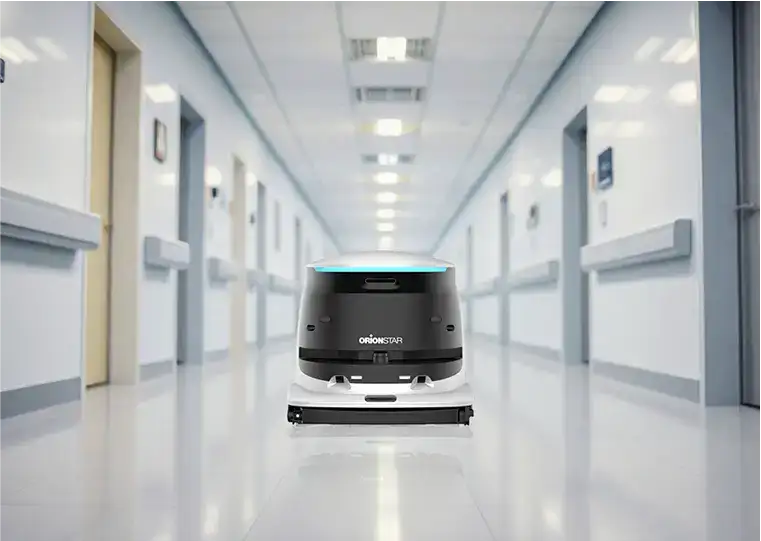
Healthcare Facility Management is currently standing at a critical inflection point within the modern healthcare facility. EVS operations face compounding structural shifts, forcing administrators to rethink traditional manual routines. Why is this happening now? The persistence of severe labor shortages intersects directly with escalating infection-control expectations and heavily constrained operating margins. Simultaneously, robotic technology has reached a mature operational threshold, shifting the deployment cost curve to make mechanized intervention highly viable on a broader scale. Patient experience scoring systems also demand higher visible cleanliness, leaving facility managers with limited room for operational error. Therefore, the automatic floor scrubber has emerged as an essential, industry-level solution. Rather than a temporary experiment, automated floor care is now a necessary structural adaptation. It successfully resolves the widening gap between shrinking workforce numbers and strictly rising hygiene standards. As a result, forward-thinking institutions are rapidly integrating these autonomous systems to stabilize their daily maintenance operations.
To address these complex environmental demands, the OrionStar CleaniBot series provides a dual-model, differentiated approach tailored to various zones within a healthcare facility. The CleaniBot C5 serves as the heavy-duty operational core for broad, high-traffic environments. It is highly suitable for expansive entrance zones, large lobbies, and main public corridors where durable scrubbing is required. According to manufacturer data, the C5 delivers up to 25 kg of downward scrubbing pressure and handles a maximum cleaning area of up to 1,980 square meters per hour. Its combined 90-liter water tank system minimizes manual refills, making it highly effective for continuous, multi-shift deployment in extensive public spaces.
Conversely, the CleaniBot S55 Pro addresses the need for versatile, low-noise maintenance across mixed-use and clinical areas. It fits seamlessly into patient wings, quiet waiting areas, and tighter common areas where minimal disruption is a strict priority. Based on manufacturer specifications, the S55 Pro operates at a noise level as low as 45 decibels in dust mopping mode and can run for up to 28 hours in this setting under optimal, unobstructed test conditions. With a compact minimal passing width of 700 mm, it easily navigates standard corridors and crowded spaces.
Crucially, these machines operate on a complementary logic. Facility managers do not have to decide which unit is universally superior; instead, they deploy each model to fulfill specific, zone-appropriate functions. Furthermore, the fleet relies on digital management capabilities, including Wi-Fi and 4G connectivity for remote deployment, over-the-air updates, and cloud-based performance reporting. These autonomous platforms process spatial data using cameras and cloud connectivity. Consequently, healthcare facility managers and infection prevention teams must verify that all data handling complies with HIPAA and GDPR regulations. The privacy architecture is designed to help prevent personal health information from being improperly captured or retained.
The introduction of automated floor care shifts the dominant industry narrative from replacing human workers to actively elevating their daily roles. Automation systematically absorbs the heaviest, most repetitive large-area scrubbing tasks. As a result, human staff can redirect their focus toward higher-value, higher-judgment responsibilities. Instead of spending hours pushing heavy floor equipment, environmental services personnel are redeployed to execute critical infection-control tasks. They can now prioritize high-touch surface care in patient rooms and managing direct patient engagement.
Moreover, this human-robot collaboration fosters the development of entirely new technical skills within the cleaning workforce. EVS teams are actively transitioning into roles that involve overseeing robot fleets, monitoring quality control, and interpreting daily data performance reports. Facility workers now map optimal routes and manage docking maintenance, naturally raising the skill floor of traditional janitorial positions. Above all, offloading strenuous physical labor directly reduces musculoskeletal strain. In short, automation allows healthcare facilities to protect their workforce while simultaneously maintaining strict hygiene standards.
Moving forward, the automatic floor scrubber is steadily transitioning from a specialized technological novelty to standard operational infrastructure within healthcare facility management. As clinical spaces face persistent staffing limitations and unyielding cleanliness mandates, manual floor maintenance simply cannot scale to meet modern demands. Naturally, the OrionStar CleaniBot series provides multiple models to accommodate the distinct spatial and acoustic requirements of varied clinical environments. Facility managers can confidently deploy specific units tailored to broad lobbies or quiet patient corridors, ensuring consistent hygiene across the entire building footprint. Ultimately, the integration of autonomous cleaning systems represents a permanent structural shift. The future of healthcare environmental services relies heavily on mechanized consistency, allowing human professionals to focus exclusively on the high-touch care and infection prevention that only they can provide.