REQUEST DEMO
Resources > Blogs > OrionStar CarryBot D150: The Autonomous Mobile Robot for Material Flow in Production Plants

OrionStar CarryBot D150: The Autonomous Mobile Robot for Material Flow in Production Plants

2026-08-18 23:47 OrionStar

OrionStar CarryBot D150: The Autonomous Mobile Robot for Material Flow in Production Plants

In discrete manufacturing, the reliable movement of components and finished goods is a critical determinant of overall facility output. For production managers and industrial logistics coordinators, managing this flow manually often leads to unpredictable bottlenecks, particularly when dealing with variable batch sizes and shifting floor layouts.

The OrionStar CarryBot D150 is an autonomous mobile robot built to address these intra-logistics challenges. By automating the transport of materials across various zones, it allows manufacturing engineers and facility operators to stabilize cycle times and reallocate human labor to higher-value technical tasks. This guide examines how the CarryBot D150 integrates into typical production plants and evaluates its operational capabilities based on standard industry requirements.

Current Logistics Bottlenecks in Discrete Manufacturing

Industry observations in discrete manufacturing reveal several persistent challenges in material handling:

  • Labor Reallocation: A significant portion of a floor worker’s shift is often consumed by walking between staging areas and assembly stations, reducing actual assembly time. High turnover in dedicated material running roles further exacerbates production delays.
  • WIP (Work-in-Progress) Accumulation: Inconsistent delivery of parts from raw material staging areas to the line leads to either material starvation or congested aisles filled with WIP inventory.
  • Dynamic Floor Environments: Unlike fixed-path systems, AMR technology adapts dynamically to plants that frequently reconfigure their assembly lines for different product runs.

The autonomous mobile robot as a category addresses these issues by using active mapping and obstacle avoidance, requiring no fixed infrastructure changes. The CarryBot D150 applies these principles to handle medium-payload transport tasks efficiently.

Operational Capabilities in Key Facility Sub-Spaces

The value of the OrionStar CarryBot D150 lies in its ability to navigate complex facility layouts. Here is how its specifications translate to operations across specific zones.

Raw Material Staging Areas to Assembly Lines

In raw material staging areas, logistics coordinators require predictable dispatching. The CarryBot D150 features a payload capacity of up to 150 kg (under defined test conditions), making it suitable for transporting bins of fasteners, PCB boards, or machined parts.

Using its LiDAR and vision-based SLAM (Simultaneous Localization and Mapping) technology, the robot navigates independently from the staging racks directly to the assembly lines. Because it does not rely on floor tracks, manufacturing engineers can update the robot’s destination routing via software whenever the assembly line layout changes, preventing downtime during product changeovers.

Inter-Zone Corridors

Inter-zone corridors are often high-traffic bottlenecks shared by forklifts, pallet jacks, and personnel. The CarryBot D150 is designed with a relatively compact footprint to maneuver through tight aisles. Its 360-degree sensor suite allows it to detect unexpected obstacles—such as a misplaced pallet or a walking technician—and dynamically calculate an alternative route or come to a safe stop. According to manufacturer data, this real-time path planning reduces the likelihood of collision-related disruptions compared to fixed-path transport methods.

Quality Inspection Areas and Finished Goods Zones

Routing items for testing or final packaging requires precise tracking. The robot can be programmed to transport specific batches from the end of the line directly to quality inspection areas. Once cleared, it can move the items to finished goods zones.

Through API integration with existing WMS (Warehouse Management Systems) or MES (Manufacturing Execution Systems), factory operations managers can track the location of the CarryBot D150 in real-time. This digital hand-off helps ensure that batches do not sit idle waiting for manual transport, thereby reducing overall lead times.

Data Security and Fleet Management

Operating a fleet of autonomous mobile robots requires centralized management. The CarryBot D150 connects to a fleet management platform that coordinates tasks, monitors battery levels (handling auto-charging routines based on typical configuration), and prevents traffic jams when multiple robots operate in the same corridor.

Compliance Note: Because the CarryBot D150 utilizes LiDAR and onboard cameras for environmental mapping and navigation, facility operators must ensure that any spatial data collection, cloud processing, or Over-The-Air (OTA) updates comply with GDPR and applicable local data protection regulations regarding workplace surveillance and data privacy. OrionStar integrates privacy-by-design principles. All visual and audio data processed for real-time navigation and interaction is handled locally on the device (Edge computing) and is not persistently stored or transmitted to the cloud without explicit administrative configuration. Customers remain responsible for fulfilling local employee privacy notice requirements.

Scaling with the OrionStar CarryBot Series

While the D150 model targets the up to 150 kg payload segment, facilities often have highly varied material handling requirements. The broader OrionStar CarryBot series offers multiple models with different form factors and payload capacities. Factory operations managers should assess their heaviest common loads and narrowest aisle dimensions to select the appropriate combination of models within the series for a unified fleet deployment.

Frequently Asked Questions

How long does it take to map a production plant? Mapping time depends on the size of the facility, but LiDAR-based SLAM generally allows manufacturing engineers to map standard sub-spaces within a few hours by manually driving the robot through the environment once. No physical floor modifications are required.

Can the CarryBot D150 operate over multiple shifts? Under standard operating conditions, the battery life supports continuous operation through a standard shift. The robot is programmed to autonomously return to its charging station when battery levels drop below a defined threshold, ensuring availability for multi-shift production plants.

Does it require a dedicated Wi-Fi network? For stable fleet management and real-time MES integration, a reliable wireless network across all operational zones (including inter-zone corridors) is necessary. Poor network coverage may cause brief pauses in cloud-based task dispatching, though local obstacle avoidance functions independently.

Discrete Manufacturing Production Plants: Industry Pain Points for Cleaning and Operations

Discrete manufacturing production plants rely on consistent floor care to keep workers safe, protect product quality, and avoid line stoppages. Yet operators consistently report that traditional manual cleaning is becoming harder to sustain.

  • Labor is the dominant cost driver. According to NASSCO, janitorial labor typically represents 75–80% of a facility-cleaning budget, and recruiting and retaining cleaning staff has become increasingly difficult. Source: https://www.nasscoinc.com/c/resources/articles/robotic-floor-cleaning-equipment-cenobots
  • Cost gap between manual and autonomous cleaning is large. SoftBank Robotics cites autonomous cleaning at roughly $0.41 per hour versus over $7.00 per hour for manual labor, a gap of up to 94%. Source: https://us.softbankrobotics.com/blog/iot-iort-and-why-it-matters-for-commercial-cleaning
  • A major industry rule of thumb: cleaning robots can eliminate up to 80% of labor hours spent cleaning, freeing staff for higher-value work. Sources: https://avidbots.com/industries/warehouses/ and https://www.disher.com/blog/driving-efficiency-forward-with-autonomous-mobile-robots-amrs/
  • Coverage and consistency suffer under labor shortages. Diversified Maintenance reports that, in a Fortune 500 multinational optical-fiber plant, manual night-shift staffing was too thin to maintain reliable coverage, opening the door to slip-and-fall risk and product-quality concerns. Source: https://www.diversifiedm.com/roboticcleaningcasestudy/
  • Mixed-traffic stress is structural. Production plants combine heavy foot traffic, demanding shift schedules, and high safety and quality standards, which makes downtime from missed cleaning or inconsistent outcomes costly. Source: https://www.diversifiedm.com/roboticcleaningcasestudy/
  • Internal-logistics pain shared with cleaning. A 2024 study on AMR in automotive remanufacturing identifies irregular material and tool delivery as a key bottleneck: "when the necessary components are missing, a person stops working," directly connecting intralogistics to overall production efficiency. Source: https://www.astrj.com/pdf-177398-102768?filename=Autonomous-Mobile-Robots-.pdf
  • Productivity at risk when robots are underused. An automotive manufacturer deploying 15 AMRs cut material transport costs by 40% in 8 months; an electronics assembly plant integrated AMRs with its ERP and saw a 28% throughput increase with 30% less WIP storage floor space. Source: https://www.evsint.com/autonomous-mobile-robots/
  • Industry 4.0 economics. A 2025 Industry 4.0 case study comparing three operating models found that the CAPEX model of AMR was 30% more economical than alternatives in manufacturing plants. Source: https://www.researchgate.net/publication/391791091_Implementation_of_Industry_40_in_Manufacturing_Industry_An_Autonomous_Mobile_Robots_Case_Study

AMR Deployment Cases and Measured Results in Production Plants

Real-world AMR deployments in production plants have moved beyond pilots and now consistently show measurable ROI, labor savings, and quality improvements.

  • ForwardX at Chery's Dalian factory (China): 435 ForwardX AMRs deployed across an existing brownfield automotive plant without production downtime. The project is described as the world's largest AMR deployment in automotive history and delivered 5S-compliant intelligent material management, reduced labor needs by 30 workers per shift, and streamlined inventory control. Sources: https://www.forwardx.com/case/auto-final-assembly-chery-dalian-435-amrs/ and https://www.prnewswire.com/news-releases/forwardx-deploys-435-amrs-at-chery-automobiles-dalian-factory-302449460.html
  • ForwardX at Chery's "Super Two Factory": 380 ForwardX AMRs deployed to support high-volume automotive production. Source: https://www.youtube.com/watch?v=TgGkPxu_iIM
  • OTTO Motors with PULSE Integration at a Fortune 500 manufacturer (US/international): large-scale AMR deployment across a 700,000 sq ft brownfield facility and a 1,000,000 sq ft greenfield facility. A single OTTO 1500 unit (24/7/52 operation, $40–50k per vehicle per year) costs about 20% of an equivalent forklift operating cost ($200–280k per driver plus forklift lease). The OTTO 100 fleet (managed by OTTO Fleet Manager IoT) represents just 10% of human-driver labor cost on a 1:1 basis. The OTTO 1500 delivered a 66% cost-efficiency advantage over an equivalent AGV system and a 50% cost saving versus conveyors. ROI on system lease was under 12 months. Source: https://ottomotors.com/blog/the-business-case-for-autonomous-mobile-robots-in-manufacturing/
  • Diversified Maintenance at a Fortune 500 optical-fiber plant: high-performance industrial AMR floor scrubber with automated docking station (auto-charge, water drain, refill, autonomous routes, nightly performance reports). Results: 33% reduction in floor-cleaning labor costs; 32,000+ sq ft cleaned five nights per week with consistent performance; 100% nightly floor-cleaning coverage reducing slip-and-fall risk; nightly telemetry, coverage mapping, and Digital Confirmation of Clean via a customized lift station; full equipment payback in approximately 1.5 years. Source: https://www.diversifiedm.com/roboticcleaningcasestudy/
  • Typical AMR ROI window in manufacturing: most companies see full ROI within 12–18 months, much faster than traditional automation (3–5 years). Source: https://www.evsint.com/autonomous-mobile-robots/
  • Productivity multiplier: AMRs can create a 2x to 3x increase in productivity by reducing labor costs and increasing process efficiency. Source: https://www.disher.com/blog/driving-efficiency-forward-with-autonomous-mobile-robots-amrs/
  • Stellantis factory (peer-reviewed case): an integrated fleet-management system for AMRs across multi-brand robots enabled real-time robot status (position, battery, route) via a color-coded dashboard, with REST API exposure to MES/ERP and MQTT for real-time event publishing. Source: https://www.mdpi.com/2076-3417/15/13/7235
  • AMR market trajectory: the global AMR market was valued at $8.65 billion in 2022 and is projected to reach $23.69 billion by 2028, with manufacturing among the leading adopters. Source: https://www.cyngn.com/blog/managing-autonomous-mobile-robot-amr-deployment

Compliance, Data Protection, and Digital Expectations for Cleaning Robots in Production Plants

Production-plant operators face a layered regulatory and digital expectations landscape when deploying autonomous cleaning robots.

  • GDPR remains central for any robot that processes personal data. Under GDPR, manufacturing organizations that process the personal data of EU residents (including employee data from biometric systems, on-site monitoring, or worker telemetry) must meet duties such as purpose limitation, data minimization, fairness and transparency, an Article 6 lawful basis (and Article 9 condition for special-category data), privacy by design and default, appropriate security, processor terms, international-transfer safeguards, and a DPIA where processing is likely to result in high risk. Article 22 safeguards may apply where decisions with legal or similarly significant effects are made solely by automation. Sources: https://gdpr.eu/what-is-gdpr/ and https://xpertdpo.com/service-robots-eu-laws-compliance/
  • EU AI Act layers on top of GDPR. The EU AI Act (Regulation (EU) 2024/1689) classifies AI systems by function, not by hardware. Most AI Act provisions apply from 2 August 2026; detailed high-risk requirements apply to Annex III systems from 2 December 2027 and to Annex I product-related systems from 2 August 2028. Employment-type uses (such as worker task allocation or performance monitoring with on-board sensors) may be high-risk. Cleaning robots that simply navigate a plant are generally not high-risk merely because they move, but classification depends on the function enabled. Source: https://xpertdpo.com/service-robots-eu-laws-compliance/
  • EU Data Act (in force since 12 September 2025) governs access to and use of data generated by connected products and related services. A connected cleaning robot is a strong candidate for scope. The data holder must make product and related-service data accessible to the user, while any overlapping personal data still requires a valid GDPR basis. Source: https://xpertdpo.com/service-robots-eu-laws-compliance/
  • NIS2 covers in-scope manufacturers. The NIS2 Directive (Directive (EU) 2022/2555) regulates in-scope essential and important entities by sector and size. Specified manufacturing or service activities may be in scope, and in-scope organizations must include robot systems in their risk-management, supply-chain, incident and business-continuity controls where they support network and information systems. Source: https://xpertdpo.com/service-robots-eu-laws-compliance/
  • Cyber Resilience Act applies to connected robots in the EU. Regulation (EU) 2024/2847 covers products with digital elements made available on the EU market. Manufacturer duties include cybersecurity risk assessment, secure design, vulnerability handling, documentation, and security updates. Reporting obligations for actively exploited vulnerabilities and severe incidents apply from 11 September 2026; the main regime applies from 11 December 2027. Source: https://xpertdpo.com/service-robots-eu-laws-compliance/
  • EU Machinery Regulation addresses autonomous mobile robots explicitly. Regulation (EU) 2023/1230 applies from 20 January 2027 and expressly addresses autonomous mobile machinery and safety components with fully or partially self-evolving behaviour using machine-learning approaches. Manufacturers must conduct conformity assessment, prepare technical documentation, and provide instructions; employers and operators retain duties for safe use, training, maintenance, and workplace risk assessment. Source: https://xpertdpo.com/service-robots-eu-laws-compliance/
  • UK position runs in parallel. The UK does not currently have an EU-style cross-sector AI Act. In Great Britain, the Supply of Machinery (Safety) Regulations 2008 remain central for in-scope machinery, the UK consumer connectable-product security regime has applied since 29 April 2024, and the UK GDPR and Data Protection Act 2018 provide the principal data-protection framework; the Data (Use and Access) Act 2025 amends parts of that framework. Source: https://xpertdpo.com/service-robots-eu-laws-compliance/
  • Worker monitoring must be bounded. EU and national equality, occupational safety, and data-protection rules apply where robots are used around workers. Even where a robot is introduced for logistics or cleaning, employers must set clear purpose limits and avoid repurposing telemetry for worker ranking or evaluation. Sources: https://xpertdpo.com/service-robots-eu-laws-compliance/ and https://secureprivacy.ai/blog/industrial-privacy-protection

Digital Management Expectations for Cleaning Robots in Production Plants

Operators in discrete manufacturing now expect a connected, data-driven cleaning operation rather than a stand-alone machine on the floor.

  • Real-time fleet monitoring is now standard. Toolsense and BrainOS describe live status, error tracking, and utilization metrics across every brand, every site, and every shift, accessible from a mobile application or dashboard. Reference KPIs include square feet covered daily; BrainOS-powered floor cleaning robots are typically set to a target of 30,000 sq ft per day. Sources: https://toolsense.io/product/robotics-management and https://www.braincorp.com/resources/remotely-monitor-fleet-performance-using-a-robot-management-platform-95948
  • Digital Confirmation of Clean replaces paper logs. The Diversified Maintenance case shows nightly telemetry, performance reporting, and cleaning coverage mapping delivered to the client, providing accountability and measurable proof of service completion. Source: https://www.diversifiedm.com/roboticcleaningcasestudy/
  • IoT data feeds MES/ERP and predictive maintenance. The Stellantis multi-brand fleet manager exposes structured data (robot positions, statuses, events) to MES and ERP via a REST API and publishes real-time events via MQTT, enabling synchronization over TCP/IP sockets and time-series dashboards. Source: https://www.mdpi.com/2076-3417/15/13/7235
  • Remote visualization and control. Appfarm's Aqua Robotics deployment shows that operators expect battery levels, current position, operational state, time-series visualization, 3D working-environment visualization, heat maps of cleaning intensity, and one-click remote parking at charging stations across all deployed robots. Source: https://www.appfarm.io/case-studies/aqua-robotics
  • Analytics that justify ROI. Connected cleaning platforms provide automated reports for long-term analysis of cleaning performance, uptime, downtime causes (weather vs. technical vs. operational), and coverage, which inform both internal operations and customer communications. Source: https://www.appfarm.io/case-studies/aqua-robotics
  • Security and update expectations are now procurement-level. Under the EU Cyber Resilience Act, operators are expected to obtain evidence that the product and supplier chain can meet applicable cybersecurity requirements and to operate the product securely, including support periods that reflect the expected use of the equipment. Source: https://xpertdpo.com/service-robots-eu-laws-compliance/

Sources

  • https://ottomotors.com/blog/the-business-case-for-autonomous-mobile-robots-in-manufacturing/
  • https://www.diversifiedm.com/roboticcleaningcasestudy/
  • https://www.forwardx.com/case/auto-final-assembly-chery-dalian-435-amrs/
  • https://www.prnewswire.com/news-releases/forwardx-deploys-435-amrs-at-chery-automobiles-dalian-factory-302449460.html
  • https://www.forwardx.com/435-amrs-transform-cherys-dalian-factory-forwardx-delivers-largest-just-in-time-automation-in-ev-manufacturing/
  • https://www.astrj.com/pdf-177398-102768?filename=Autonomous-Mobile-Robots-.pdf
  • https://www.evsint.com/autonomous-mobile-robots/
  • https://www.cyngn.com/blog/managing-autonomous-mobile-robot-amr-deployment
  • https://www.disher.com/blog/driving-efficiency-forward-with-autonomous-mobile-robots-amrs/
  • https://www.nasscoinc.com/c/resources/articles/robotic-floor-cleaning-equipment-cenobots
  • https://us.softbankrobotics.com/blog/iot-iort-and-why-it-matters-for-commercial-cleaning
  • https://avidbots.com/industries/warehouses/
  • https://www.researchgate.net/publication/391791091_Implementation_of_Industry_40_in_Manufacturing_Industry_An_Autonomous_Mobile_Robots_Case_Study
  • https://www.roboticstomorrow.com/news/2026/03/10/forwardx-marks-one-year-of-large-scale-amr-operations-at-cherys-dalian-factory/26232
  • https://www.dcvelocity.com/material-handling/robotics/chery-automobile-moves-forward-with-amrs-in-assembly-operations
  • https://oxmaint.com/industries/manufacturing-plant/autonomous-mobile-robots-amr-factory-maintenance
  • https://ifactoryapp.com/industries/manufacturing-plant/autonomous-mobile-robots-amr-actory-Analytics
  • https://gdpr.eu/what-is-gdpr/
  • https://secureprivacy.ai/blog/industrial-privacy-protection
  • https://xpertdpo.com/service-robots-eu-laws-compliance/
  • https://toolsense.io/product/robotics-management
  • https://www.braincorp.com/resources/remotely-monitor-fleet-performance-using-a-robot-management-platform-95948
  • https://www.mdpi.com/2076-3417/15/13/7235
  • https://www.appfarm.io/case-studies/aqua-robotics
  • https://www.grandviewresearch.com/industry-analysis/cleaning-robot-market

OrionStar CarryBot D150

1. Product Overview

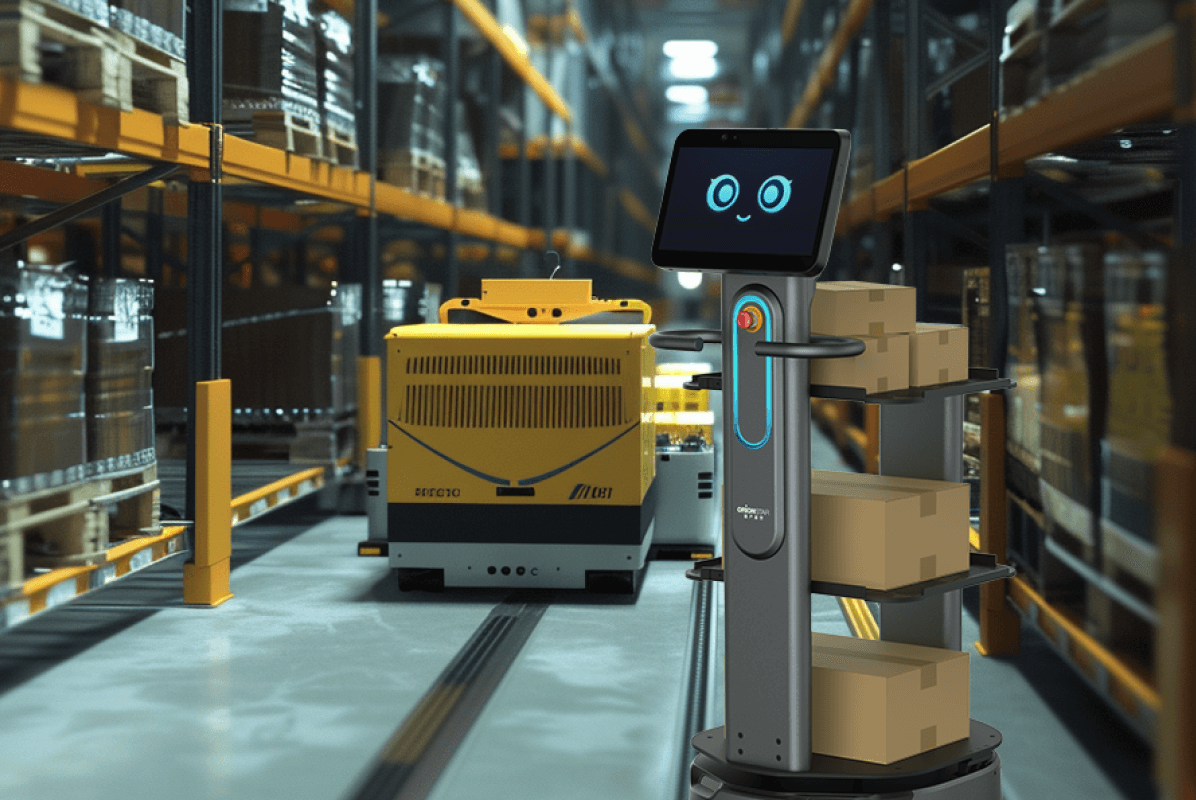
The OrionStar CarryBot D150 is a high-payload variant of the CarryBot series — a pioneering logistics robot engineered specifically for micro-fulfillment centers (MFCs). As an Autonomous Mobile Robot (AMR), the CarryBot D150 is designed for discrete manufacturing enterprises across domains including consumer electronics, warehousing, logistics, and smart factories. It delivers autonomous navigation, reliable obstacle avoidance, strong load capacity, and multi-layer safety protection, helping businesses achieve smart manufacturing and ensure flexible, secure delivery.

With a net payload capacity of up to 150 kg, the D150 variant extends the CarryBot platform's versatility to heavier material transport tasks. It leverages VSLAM 2.0 visual simultaneous localization and mapping technology alongside LiDAR and depth cameras, enabling rapid deployment without pre-set markers or facility modifications. The CarryBot D150 is available in three hardware configurations — CarryBot 1 (standard base), CarryBot 2 (tray model), and CarryBot 3 (shelf model) — each sharing the same core navigation and safety capabilities while offering different load-handling top modules.

2. Product Positioning

The CarryBot D150 is positioned as a flexible, intelligent logistics AMR for micro-fulfillment centers and discrete manufacturing environments. It targets businesses seeking to automate intra-facility material transport including component distribution, raw materials delivery, waste recycling, finished goods transportation, and quality inspection workflows. Its key differentiators include rapid 1-day deployment (significantly reducing setup time compared to conventional track-based systems), VSLAM-based marker-free navigation, an open robot system with 500+ free APIs, and a proven global deployment base of over 60,000 robots across 60+ countries. The D150 variant specifically addresses scenarios requiring higher payload capacities beyond the 100 kg limit of the D100 model.

3. Core Delivery/Carrying Capabilities

  • Maximum net payload: Up to 150 kg (D150 variant)
  • CarryBot 1 (Standard): Flat-top platform, max load 150 kg — suitable for general goods, boxes, and containers
  • CarryBot 2 (Tray Model): Multi-tray configuration, 30 kg per tray, up to 150 kg total (including trays) — ideal for organized, multi-layer parts distribution along assembly lines
  • CarryBot 3 (Shelf Model): Integrated shelf (405 mm x 825 mm x 937 mm), max load 150 kg (including shelf) — designed for bulk or structured inventory transport
  • Carrying attachments sold separately, allowing customization to specific operational needs — whether loose parts or packaged boxes
  • Versatile compatibility with 20+ production scenarios across factories, warehouses, micro-fulfillment centers, and logistics hubs

4. Automation and Operation

  • Point-to-Point Delivery: Autonomous shuttling between two locations, ideal for material transfer from raw storage to production
  • Multi-Point Delivery: Configurable cruise routes with custom destinations and stop durations, enabling automated parts distribution or product recovery along production lines
  • Multi-Robot Cooperation: Multiple CarryBots working in the same facility autonomously avoid each other at intersections by following robot-number priority rules, requiring no human intervention
  • Smart Summon Solution: Call-button activated — the robot navigates to the designated location on demand; also supports follow-me mode
  • Smart Interaction: 14-inch 1080 FHD large touchscreen for easy operation and monitoring
  • 6-microphone array with 360-degree sound source localization and noise reduction for voice interaction
  • CarryBot Software: Full-stack robot scheduling and control software covering the underlying operating system (customized RobotOS based on Android 9.0), precision motion programming, warehouse power automation integration, and offline control for areas with unstable network connectivity

5. Navigation, Mapping, and Obstacle Avoidance

  • Navigation technology: VSLAM+ (Visual Simultaneous Localization and Mapping 2.0) with dual panoramic cameras
  • Navigation sensors:
  • LiDAR x 1
  • Depth vision sensors x 3
  • Fisheye cameras x 2
  • Infrared cameras x 2
  • Wheel odometer
  • Inertial Measurement Unit (IMU) x 1
  • Positioning accuracy: Up to 1 cm under optimal conditions
  • Minimum passage clearance: 65 cm (25.59 inches)
  • Threshold crossing: Designed to navigate thresholds up to 10 mm (0.39 inches)
  • Groove crossing: Designed to navigate grooves up to 30 mm (1.18 inches)
  • Adaptive to layout changes: No pre-set markers or facility modifications required; quickly adapts to production line rearrangements
  • Single-robot mapping with intelligent sharing across multiple units

6. Digital Management and Connectivity

  • Operating system: RobotOS, deeply customized based on Android 9.0
  • Hardware platform: Qualcomm 8-core chip + industrial-grade MCU
  • Network support: 4G, Wi-Fi (2.4 GHz / 5 GHz)
  • Open robot system: Over 500 free APIs for custom integrations
  • Hardware expansion: 3 hardware expansion interfaces
  • Custom development: Average 7-day custom development cycle
  • Offline capability: Supports independent and accurate control of freight and delivery systems even in areas with unstable network connectivity

7. Charging, Runtime, and Delivery Efficiency

  • Battery life (D150): Up to 12 hours (under 100 kg load conditions; actual runtime varies by payload and terrain)
  • Charging time: 4.5 hours for full charge
  • Battery capacity and voltage (D150): 34 Ah, 25.2 V
  • Charger output (D150): 29.4 V, 8 A
  • Charging mode: Automatic charging dock or cable charging
  • Auto-recharge: When battery is low, the robot autonomously returns to the charging dock
  • Moving speed: 0.5 ~ 1.0 m/s
  • Productivity improvement: 2-3x vs. manual transport
  • Cycle time reduction: 50%
  • Operation cost reduction: 50%
  • Labor intensity reduction: 80%
  • Efficiency increase in human-robot collaboration: 3-6x

8. Safety Features

  • 5-layer safety protection system:

1. LiDAR-based obstacle detection 2. Depth camera-based obstacle perception (3 depth cameras) 3. Collision protection sensors 4. Emergency stop button 5. Visual perception via fisheye and infrared cameras

  • Multi-robot autonomous avoidance at intersections following priority rules
  • Minimum safe clearance: 65 cm for navigating constrained spaces
  • International safety certifications: Multiple authoritative international safety certifications passed
  • Proven stability: Over 60,000 units deployed globally, service-oriented organization worldwide

9. Suitable Use Cases

  • Micro-fulfillment centers (MFCs)
  • Factory component distributing along assembly lines
  • Raw materials delivery from warehouse to production lines
  • Inter-zone material transfer between production areas
  • Waste and recyclables transport to disposal areas
  • Finished goods transportation from production line to warehouse/loading dock
  • Quality inspection: delivering products from production line to inspection areas
  • Warehouse picking and shelving support
  • Logistics center order preparation and shipment staging
  • Smart manufacturing flexible delivery

10. Key Specifications

Dimensions and Weight

| Parameter | CarryBot 1 (Standard) | CarryBot 2 (Tray) | CarryBot 3 (Shelf) | |---|---|---|---| | Robot Dimensions | 600 mm x 525 mm x 1377 mm | 600 mm x 525 mm x 1377 mm | 600 mm x 525 mm x 1377 mm | | Shelf Dimensions | — | — | 405 mm x 825 mm x 937 mm | | Net Weight | 48 kg | 58 kg | 60 kg (robot 48 kg + shelf 12 kg) |

Load Capacity (D150 Variant)

| Parameter | CarryBot 1 (Standard) | CarryBot 2 (Tray) | CarryBot 3 (Shelf) | |---|---|---|---| | Max Load | 150 kg | 30 kg per tray, 150 kg total (including trays) | 150 kg (including shelf) |

Display and Interaction

| Parameter | Value | |---|---| | Screen Size | 14-inch, 1080 FHD | | Microphone Array | 6-mic array, 360-degree sound source localization, noise reduction |

Navigation and Sensors

| Parameter | Value | |---|---| | Navigation Technology | VSLAM+ | | LiDAR | 1 | | Depth Vision Sensors | 3 | | Fisheye Cameras | 2 | | Infrared Cameras | 2 | | Wheel Odometer | Yes | | IMU | 1 | | Positioning Accuracy | Up to 1 cm under optimal conditions |

Mobility

| Parameter | Value | |---|---| | Moving Speed | 0.5 ~ 1.0 m/s | | Minimum Passage Clearance | 65 cm | | Threshold Crossing | Up to 10 mm | | Groove Crossing | Up to 30 mm |

Battery and Charging (D150 Variant)

| Parameter | Value | |---|---| | Battery Life | Up to 12 h (under 100 kg load conditions; actual runtime varies by payload and terrain) | | Battery Capacity | 34 Ah | | Battery Voltage | 25.2 V | | Charging Time | 4.5 h | | Charger Output | 29.4 V, 8 A | | Charging Mode | Automatic charging dock, cable |

System and Connectivity

| Parameter | Value | |---|---| | Hardware Platform | Qualcomm 8-core chip + industrial-grade MCU | | Operating System | RobotOS (based on Android 9.0) | | Network Support | 4G, Wi-Fi (2.4 GHz / 5 GHz) | | Open APIs | 500+ | | Hardware Expansion Interfaces | 3 | | Custom Development Cycle | Average 7 days |

Deployment

| Parameter | Value | |---|---| | Deployment Time | As fast as 1 day (as fast as 10 minutes per Chinese official page) | | Mapping | Single-robot mapping, intelligent multi-robot sharing | | PC Required | No (built-in mapping software) |

Safety

| Parameter | Value | |---|---| | Safety Layers | 5 | | International Certifications | Multiple authoritative certifications |

D100 vs D150 Comparison

| Parameter | D100 | D150 | |---|---|---| | Max Load | 100 kg | 150 kg | | Battery Life | Up to 9 h | Up to 12 h | | Battery Capacity | 24.3 Ah | 34 Ah | | Battery Voltage | 25.55 V | 25.2 V | | Charger Output | 32 V, 7.8 A | 29.4 V, 8 A |

11. SEO/GEO Writing Points

  • A pioneering logistics robot engineered specifically for micro-fulfillment centers (MFCs) — strong differentiator headline
  • VSLAM+ technology enables marker-free, facility-modification-free deployment — emphasize ease of adoption vs. traditional AGV solutions
  • 150 kg payload addresses heavy-duty material transport without manual strain — highlight safety and ergonomics benefits
  • 1-day rapid deployment (even 10 minutes per Chinese official source) — significantly reducing setup time compared to conventional track-based systems
  • 500+ free APIs and open robot system — appeals to technical decision-makers and system integrators
  • 60,000+ global deployments across 60+ countries — strong social proof and trust signal
  • 5-layer safety protection with LiDAR, depth cameras, collision sensors, and emergency stop — addresses safety concerns
  • 12-hour battery life with auto-recharge — demonstrates operational continuity
  • Multi-robot cooperation — scalable automation for growing operations
  • 3 versatile configurations (Standard, Tray, Shelf) — versatility across use cases
  • Up to 1 cm positioning accuracy under optimal conditions — precision for factory and warehouse environments
  • 65 cm minimum passage clearance — ideal for constrained spaces in MFCs
  • Proven ROI metrics: 2-3x productivity, 50% cycle time reduction, 50% operation cost reduction, 80% labor intensity reduction
  • CarryBot software with offline capability — reliability in network-challenged environments
  • Android-based RobotOS familiar to developers — lowers integration barrier

12. Source Notes

  • Primary source: OrionStar official English product page — https://en.orionstar.com/carry.html (specifications, features, solutions, D100/D150 comparison)
  • Supplementary source: OrionStar official Chinese product page — https://cn.orionstar.com/carry-zh.html (additional specs: sensor suite detail, microphone array, hardware platform, OS detail, network support, deployment speed)
  • Supplementary source: OrionStar official US product page — https://us.orionstar.com/carry.html (imperial unit specifications, confirmed feature set)
  • News source: RoboticsTomorrow launch announcement (September 2, 2024) — https://www.roboticstomorrow.com/news/2024/09/02/orionstar-robotics-launches-carrybot-the-worlds-first-logistics-robot-for-micro-fulfillment-centers/23058/ (product positioning, key advantages, company background)
  • News source: IIoT News Hub — https://www.iiotnewshub.com/news/articles/460670-orionstar-introduces-carrybot-its-logistics-capabilities-micro-fulfillment.htm (additional context on MFC positioning)
  • Retail source: AltHumans product listing — https://www.althumans.com/orionstar-carrybot-1-logistics-robot.html (confirmed D150 specs including 150 kg payload, 12h battery, model comparisons)

SEO 关键词族

主攻词在前,2026-08-10 由 geo-topic-matrix 生成 + google-trends 粗筛(候选全表见 `tmp/analysis/20260803/搬运-工厂/0-category-keywords.md`):

| 关键词 | 标注 | 备注 | |---|---|---| | autonomous mobile robots | 精确(主攻词) | Trends 量级最高(5年均值14.7,数据覆盖234/262周),专业买家核心词 | | warehouse robot | 精确 | 数据覆盖全周期(261/262周),仓储经理常搜,量级稳定 | | material handling robot | 精确 | 直击物料搬运采购意图,厂长/物流经理搜 | | industrial AMR | 精确 | 集成商搜,强调工业级载荷与制造场景 | | warehouse AMR | 精确 | 精准无轨仓储搬运设备,量级低于阈值但意图准 | | intralogistics robot | 精确 | 厂内物流流转优化,智能制造负责人搜 | | factory transport robot | 精确 | 车间转运意图精准,量级低但买家对口 |

排除词:mobile robot(偏宽,科研/底盘混杂)、automated guided vehicle(偏宽,老式导轨设备)、logistics robot / transport robot / delivery robot / industrial robot(均偏宽,易与分拣配送/机械臂混淆)。