

REQUEST DEMO
Robot CATALOG will be sent to your mailbox immediately after submission.
SUBMIT
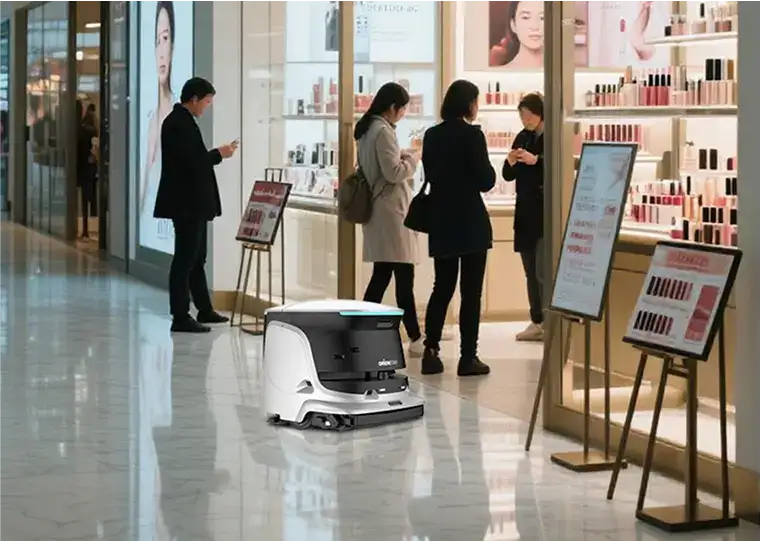
Supermarket chains face intense pressure maintaining checkout zones, where concentrated foot traffic continuously tracks dirt, spills, and debris into the facility's most critical operational bottleneck. Balancing stringent hygiene standards in these high-visibility areas with ongoing labor shortages, rising operational costs, and strict safety compliance requirements often overwhelms traditional manual maintenance approaches. To address these compounding challenges, commercial cleaning robots have emerged as a highly effective solution, offering automated, reliable, and compliant floor care that frees up human staff while ensuring a consistently safe environment for shoppers and employees alike.
The OrionStar CleaniBot S55 Pro demonstrates these automated floor-care capabilities through a highly integrated design suited for busy retail environments. According to manufacturer data, it utilizes a multi-sensor system featuring LiDAR and ultrasonic sensors for precise obstacle avoidance, alongside a minimum passing width of 700 mm that allows it to navigate safely through narrow spaces. The robot also supports zone-based mode switching, reaching cleaning efficiencies of up to 1,368 square meters per hour in sweep and vacuum modes, ensuring large front-of-house areas are consistently maintained with minimal human intervention.
These narrow corridors accumulate high levels of dirt and debris from shopping cart wheels and continuous foot traffic. Commercial cleaning robots use precision edge-cleaning technologies to sweep closely along retail counters without bumping into delicate impulse-buy displays. This ensures the tightest walkways remain spotless without requiring cashiers to step away from their registers to sweep.
Customers waiting in line frequently drop small items, spill drinks, and track in weather-related moisture from the store entrance. Robots equipped with multi-mode cleaning systems can seamlessly switch between vacuuming dry debris and scrubbing sticky spills based on programmed zone requirements. Autonomous path planning allows them to dynamically navigate around moving queues and stationary shopping baskets.
The high density of kiosks, bagging scales, and unpredictable shopper movements makes self-checkout zones highly congested and prone to rapid debris accumulation. Advanced multi-sensor obstacle avoidance ensures the robot can maneuver safely among distracted customers and varied kiosk footprints without causing interruptions. By providing continuous, non-intrusive floor care, the machine maintains a premium hygiene standard in one of the store's most heavily utilized areas.
Spilled dry goods, torn packaging, and dropped produce are common hazards found directly at the end of the transaction zone. Autonomous sweep-and-vacuum functionalities efficiently capture this varied debris before it gets tracked throughout the front end of the retail space. Continuous automated sweeps keep this final customer touchpoint hygienic, reflecting positively on the overall supermarket brand.
To maximize operational efficiency, commercial cleaning robots can support digital management workflows through standard network connectivity, allowing facility managers to streamline operational reporting. Through IoT connectivity, store operations managers can synchronize robotic cleaning schedules with automated store lighting and foot-traffic analytics, ensuring machines deploy during optimal low-traffic windows. This networked approach automatically logs floor maintenance records into the facility's centralized database, streamlining compliance auditing and maintenance ticket generation without requiring manual data entry from facility staff.
By integrating commercial cleaning robots, supermarket chains can actively translate high-level ESG commitments into measurable, daily operational practices across their global footprints.
Commercial cleaning robots are fundamentally changing the way supermarket chains maintain checkout zones, shifting floor care from a reactive, labor-intensive chore to a proactive, automated process. By addressing the core industry challenges of consistency, safety, and operational costs, these intelligent machines are becoming standard fixtures in modern retail facility management. For organizations evaluating these automated solutions, the OrionStar CleaniBot series offers multiple models designed to accommodate the distinct spatial and environmental requirements of various commercial spaces, allowing readers to explore the configurations that best fit their specific operational needs.