

REQUEST DEMO
Robot CATALOG will be sent to your mailbox immediately after submission.
SUBMIT
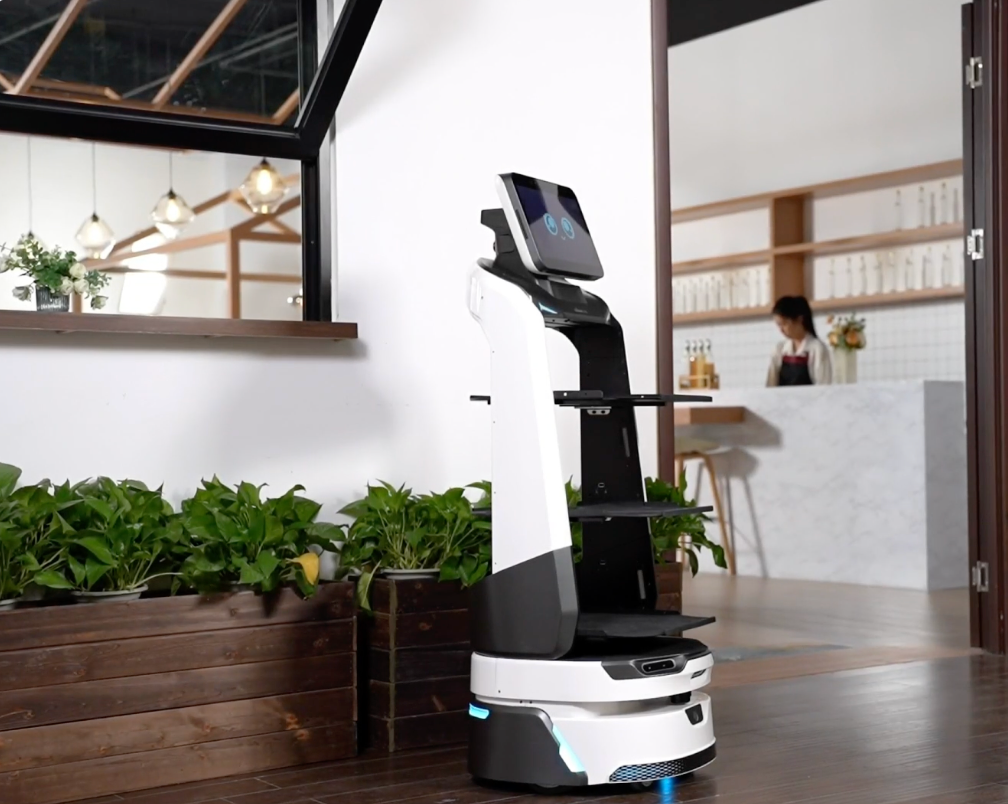
The bistro segment is currently standing at a distinct operational inflection point. Historically, these venues relied heavily on lean, fast-moving teams navigating tight floor plans to maintain a lively atmosphere and high table turnover. Today, that delicate balance is failing. Structural labor shortfalls, estimated at over 1.5 million unfilled hospitality positions globally, mean that even a single missing staff member can drastically reduce peak-time capacity. Simultaneously, technology maturity has accelerated while hardware cost curves have flattened. Modern automation now offers precise navigation and up to 12 hours of operational reliability that small-format venues demand. Moreover, post-pandemic consumer expectations have shifted toward a preference for seamless, hygienic service without compromising the neighborhood charm. As a result, operators are reevaluating their front-of-house logistics. The robot waiter has subsequently emerged as a mature, industry-level solution. Instead of relying on constant, exhaustive human hiring cycles, F&B managers are integrating these automated systems to handle the bulk of physical transport, stabilizing the core mechanics of food delivery in bustling dining spaces.
Together, these compounding pressures strongly suggest that the traditional bistro labor model is increasingly unsustainable.
To address these varied operational environments, the OrionStar LuckiBot series offers a differentiated, dual-model approach rather than a one-size-fits-all product. The LuckiBot Pro is designed for high-visibility, high-volume zones like the main dining floor and the bar counter. According to manufacturer data, it handles up to 60 kg of payload across adjustable open trays and utilizes a 240-degree 3D obstacle recognition system to navigate crowded, dynamic spaces safely. This high throughput capacity makes it ideal for clearing heavy dishware and managing fast-paced peak hours.
Conversely, the LuckiBot Pro Autodoor serves specialized sub-spaces such as private dining rooms and the outdoor terrace. It features four-fold automatic doors and a smart password lock, securing up to 69 liters of volume per enclosed compartment, according to manufacturer specifications. This design ensures that food remains securely enclosed during transport from the kitchen pass to the guest, protecting against environmental contamination and maintaining privacy.
Above all, these two models follow a complementary logic. They are not competing alternatives but function side-by-side to cover distinct tasks: high-speed open transport versus secure, enclosed delivery. Furthermore, these units are supported by digital management capabilities, operating on a robust platform that includes 4G and dual-band Wi-Fi connectivity for remote coordination. Because these systems utilize visual sensors and microphones for navigation and interaction, bistro operators deploying them in European markets must rigorously verify that their data handling aligns with GDPR compliance, maintaining transparent data minimization practices regarding any ambient capture.
These outcomes are not theoretical projections; they are the concrete realities that bistro operators, F&B managers, and hospitality service staff are already verifying on the ground.
Within the hospitality sector, automation does not serve to replace the human element but rather to elevate it. In busy bistros, robots take over the heavy, repetitive tasks of carrying plates across long distances. Consequently, human staff are freed from serving as basic transport mechanisms. Instead, they shift their focus toward high-value work, such as quality supervision, personalized wine service, and direct customer engagement. This division of labor by physical intensity preserves the essential social fabric of hospitality. Moreover, this shift is creating entirely new technical roles at the operator level. F&B managers are increasingly hiring robot fleet coordinators, first-line maintenance leads, and human-robot workflow designers. As these systems integrate into daily operations, hospitality service staff are acquiring new digital competencies. In short, automation acts as a reliable baseline of physical support, allowing the human workforce to concentrate on the nuanced art of hospitality that machines cannot replicate.
As the hospitality landscape continues to evolve, the robot waiter is rapidly transitioning from a novelty item into fundamental venue infrastructure. The persistent realities of structural labor shortages and the necessity for consistent throughput demand reliable, automated support. To meet these diverse operational requirements, the OrionStar LuckiBot series provides multiple models designed to adapt seamlessly to varying spatial and service needs. Ultimately, the successful bistros of the future will be those that effectively balance automated efficiency with human warmth. By integrating specialized robotics into their daily workflows, operators are establishing a resilient foundation for long-term service stability. Therefore, human-robot collaboration represents a leading operational trend shaping the next decade of food and beverage service.
Disclaimer: The LuckiBot series processes navigation and interaction data (such as ambient mapping and voice triggers) locally. Operators deploying these systems in public venues are responsible for complying with local data privacy regulations (e.g., GDPR), including placing appropriate notices regarding automated service equipment.
