REQUEST DEMO
Resources > Blogs > Optimizing Supermarket Chain Operations: Deploying Commercial Cleaning Robots In Main Aisles Of Supermarket Stores

Optimizing Supermarket Chain Operations: Deploying Commercial Cleaning Robots In Main Aisles Of Supermarket Stores

2026-08-14 23:16 OrionStar

Optimizing Supermarket Chain Operations: Deploying Commercial Cleaning Robots In Main Aisles Of Supermarket Stores

Introduction

Supermarket chain operations face profound cleaning challenges in the main aisles of supermarket stores, where high foot traffic, persistent labor shortages, and stringent safety compliance intersect. These wide, open spaces are constantly exposed to product spills and customer-driven obstacles, turning routine floor maintenance into a complex logistical and liability issue for facility managers. To address these compounding pressures without disrupting the shopping experience, operators are increasingly turning to commercial cleaning robots as a reliable, automated solution to maintain floor hygiene, mitigate slip-and-fall risks, and optimize labor allocation.

The Growing Need For Smarter Cleaning In Main Aisles

  • Supermarket operations managers and store facility supervisors struggle with chronic labor shortages, rising costs, and the difficulty of retaining dedicated night-shift janitorial staff to maintain high-traffic floors.
  • In-store cleaning teams face constant interruptions from repositioned shopping carts, promotional islands, and seasonal displays, which limit the number of daily cleaning cycles.
  • Store facility supervisors must manage severe slip-and-fall liabilities caused by wet floors and food spills, which are statistically major drivers of injury and litigation in the grocery sector.
  • Supermarket operations managers find it difficult to execute centralized cleaning programs with consistent quality across hundreds of locations, particularly during unmonitored overnight shifts.

How Commercial Cleaning Robots Can Help

  • Advanced LiDAR navigation allows these platforms to continuously map expansive retail floors and dynamically update their paths to adapt to shifting store layouts.
  • Multi-sensor obstacle avoidance ensures the equipment can safely navigate around shoppers, abandoned carts, and sudden spills without causing disruptions or collisions.
  • Multi-mode cleaning capabilities—including sweeping, scrubbing, vacuuming, and mopping—enable operators to address varying floor types and soil levels with a single automated system.
  • Auto-charging and docking functions permit the units to manage their own power cycles, automatically returning to designated stations when battery levels drop to ensure continuous readiness.
  • Real-time monitoring systems provide facility managers with utilization data. OrionStar cleaning robots process navigation data locally. Any deployment of visual or heatmap tracking must align with local privacy regulations.

A Closer Look: [OrionStar CleaniBot S55 Pro](https://en.orionstar.com/cleaning.html) In Action

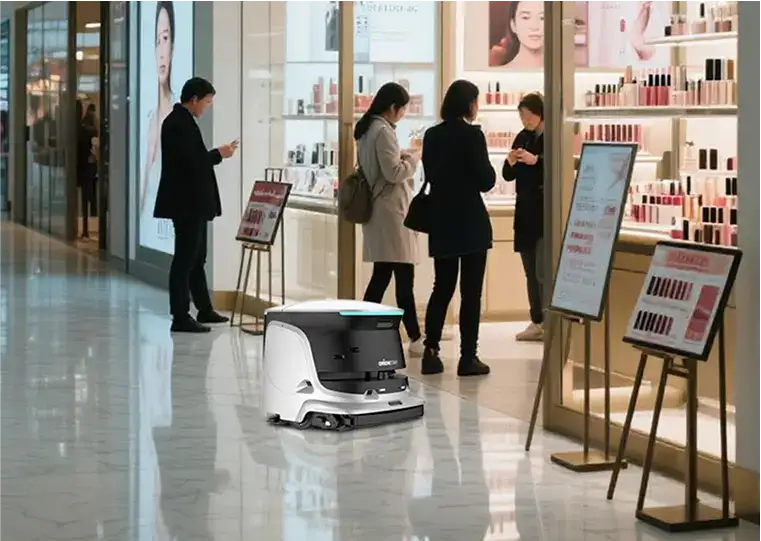
The OrionStar CleaniBot S55 Pro illustrates how these autonomous capabilities function within a physical retail environment. Utilizing an integrated sensor array that includes a LiDAR sensor and a stereo camera, the unit is designed to construct facility maps of up to 10,000 square meters and detect steps or cliffs, according to manufacturer data. To accommodate the varied hygiene requirements of large store formats, it supports multiple floor-care functions, delivering a cleaning efficiency of up to 1,197 square meters per hour in its scrubbing modes. Furthermore, its automated workflow is supported by network connectivity and a provided charging dock, allowing the system to operate autonomously and return for power replenishment without continuous manual oversight.

Benefits For Supermarket Operations Managers, Store Facility Supervisors, And In-Store Cleaning Teams

  • Labor Optimization: Transitioning to automated floor care allows facility supervisors to reallocate their limited in-store cleaning teams away from repetitive scrubbing and toward higher-value sanitation tasks.
  • Cost Reduction: Managed robotic floor cleaning programs have demonstrated the ability to reduce cleaning and maintenance costs by up to 21 percent while eliminating manual equipment rental expenses.
  • Consistent Execution: Autonomous platforms ensure that main aisles across dozens or hundreds of store locations are cleaned to the exact same standard, eliminating the variability associated with overnight manual shifts.
  • Enhanced Floor Safety: By utilizing controlled water dosing and immediate extraction, automated scrubbers mitigate the creation of slick wet zones, directly addressing the slip-and-fall hazards that drive workplace injuries.
  • Data-Driven Oversight: Fleet management dashboards allow supermarket operations managers to remotely track utilization rates and completed routes, converting floor cleaning into a transparent and plannable activity.
  • Increased Utilization: Optimizing robotic deployments through structured management programs can increase machine utilization rates by up to 49 percent across multiple sites, ensuring the initial hardware investment delivers measurable returns.

Real-World Applications

Center Aisles Between Gondola Shelving

These central pathways experience heavy, continuous foot traffic and frequent dry debris buildup from packaged goods. Commercial cleaning robots navigate these long stretches systematically, using sweeping and vacuuming modes to remove dust and debris without interrupting the flow of shoppers.

Perimeter Aisles Along Store Walls

Often housing dairy and frozen goods, these boundary pathways are highly susceptible to liquid leaks and condensation. Autonomous scrubbers apply targeted water dosing and immediate extraction in these areas, ensuring that slick spots are neutralized quickly to prevent slip-and-fall incidents.

Cross-Aisles Near Fresh Produce

The intersections near fruit and vegetable displays frequently accumulate organic debris, water drips, and varying types of customer congestion. Cleaning robots utilize dynamic obstacle avoidance to safely bypass patrons and scattered produce, switching to deep scrubbing modes to address sticky residues and maintain food-safety standards.

Promotional Display Areas

End-cap zones and temporary promotional islands create highly variable floor layouts that change daily or weekly. Robots equipped with real-time mapping update their routes automatically to clean around these seasonal stacks, ensuring hygiene blind spots are not created when displays are repositioned.

Integration With Other Smart Systems

Commercial cleaning robots function as mobile nodes within a supermarket's broader smart building ecosystem, significantly increasing their operational value through system integration. Telemetry from the robots can be fed directly into Facility Management Software or Computerized Maintenance Management Systems to convert floor cleaning into a plannable, tracked activity with automated work orders for predictive maintenance. Additionally, operations can sync cleaning paths with inventory management IoT—such as electronic shelf labels—and customer heatmap analytics, allowing the robots to automatically schedule their routes during low-traffic windows or inventory restocking lulls to minimize disruption on the main floor.

Supporting ESG And Sustainability Goals

  • Automated floor scrubbers utilize controlled dosing systems and water-saving modes, which can reduce detergent and water consumption by up to 70 percent compared to traditional manual methods.
  • Integrating precise chemical dispensing supports strict environmental safety frameworks, including EPA guidelines for reducing aquatic toxicity and volatile organic compounds.
  • Providing measurable, auditable data on resource usage enables retailers to document high-performance green cleaning protocols required for LEED Retail certification and broader corporate ESG reporting.

By transitioning to automated, data-backed floor care, supermarket chains can actively demonstrate their commitment to environmental sustainability while maintaining safe, hygienic retail environments.

Closing

Commercial cleaning robots are fundamentally changing the way supermarket chain operations approach the maintenance of main aisles in supermarket stores. By addressing systemic labor shortages, mitigating floor liability risks, and providing consistent hygiene standards, these autonomous platforms are transitioning floor care from a reactive operational burden to a manageable, data-driven asset. The OrionStar CleaniBot series offers multiple configurations designed to accommodate the varied operational scales and specific floor-care requirements of diverse retail environments, providing an adaptable avenue for facility managers evaluating automated maintenance solutions.