

REQUEST DEMO
Robot CATALOG will be sent to your mailbox immediately after submission.
SUBMIT
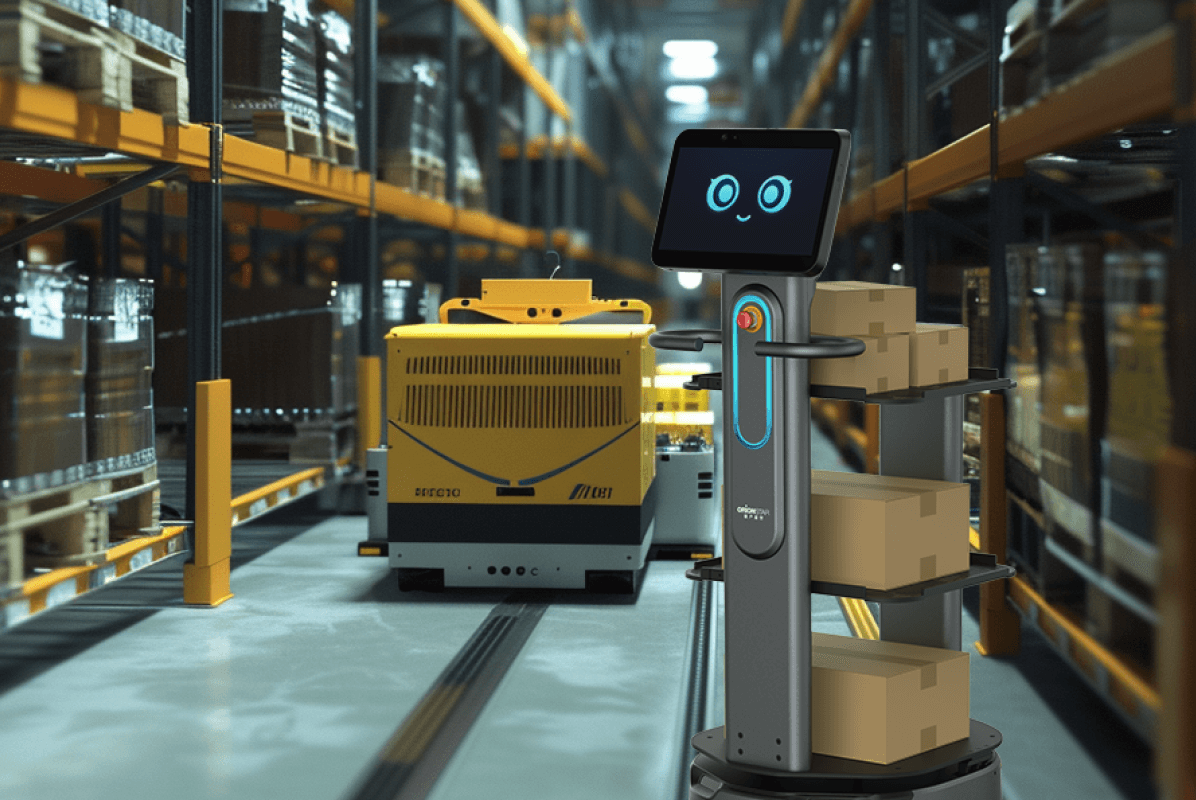
Production operations on production floors are currently reaching a critical inflection point. For decades, manufacturers relied on linear manual processes and static infrastructure to move materials across facilities. However, several converging factors dictate that this approach is no longer viable. Global manufacturing faces a structural labor shortage, with millions of factory roles projected to remain unfilled over the coming decade. At the same time, the fundamental maturity of visual navigation technologies has improved significantly. The cost curve for robotic hardware has also flattened, making autonomous deployment economically accessible for facilities of all sizes. Furthermore, customer expectations for faster fulfillment and rigorous quality control require highly adaptable and agile operational frameworks. Consequently, the industry is shifting its focus toward scalable automation. The Autonomous Mobile Robot has emerged as an essential, industry-level solution to these compounding challenges. Instead of rigid conveyor belts or human-operated forklifts, these autonomous systems provide flexible, infrastructure-free material transport. Above all, they allow facilities to maintain output and adaptability despite shifting labor dynamics.
The OrionStar CarryBot series addresses these logistical constraints by providing a highly adaptable high-payload platform. Specifically, the CarryBot D150 offers a net payload capacity of up to 150 kg, according to manufacturer data, allowing facilities to automate heavy-duty material transport without relying on manual strain. Rather than offering a single generic tool, the D150 provides three distinct hardware configurations designed to handle specific operational duties across diverse sub-spaces. The CarryBot 1 features a standard flat-top platform suited for moving bulky containers through inter-zone transfer corridors or transporting discarded materials to the waste and recyclables bay. The CarryBot 2 utilizes a multi-tray module to systematically distribute loose components directly alongside busy assembly lines. Meanwhile, the CarryBot 3 integrates a structured shelf, making it highly effective for moving structured inventory between raw materials staging areas and finished goods staging areas. Therefore, these configurations do not compete; instead, they each cover different carrying tasks to comprehensively serve the entire production environment.
To navigate these dynamic spaces safely, the D150 relies on VSLAM+ visual navigation and multiple sensors, achieving up to 1 cm positioning accuracy. It features a five-layer safety protection system and can operate for up to 12 hours on a single charge under standard test conditions (100 kg load on flat surfaces). Furthermore, the platform integrates robust digital management capabilities. Facilities can utilize its open robot system with over 500 APIs, fleet scheduling software, and offline control features for areas with unstable networks. Because the system utilizes visual cameras and processes facility data, operating entities must ensure all deployments are thoroughly verified for GDPR compliance to protect data privacy.
The integration of automated systems into manufacturing is not designed to replace the human workforce. Instead, it serves to elevate human operators out of physically demanding and repetitive roles. While mobile robots take over the heavy lifting and continuous material transport across expansive facility floors, human workers can transition toward higher-value responsibilities. Production staff are increasingly focusing on quality supervision, fleet management, complex exception handling, and continuous process optimization. As a result, entirely new roles are emerging within the sector. Traditional assembly line positions are shifting toward technical roles, requiring personnel who can monitor robotic fleet dashboards, manage system integrations, and utilize operational data to maintain flow. Educational programs are actively reskilling workers to meet this demand for technical oversight. In short, automation decouples production growth from strict manual labor availability, allowing facilities to maintain output while creating safer work environments for their existing employees.
Looking forward, the Autonomous Mobile Robot is rapidly transitioning from a specialized technological upgrade to a foundational piece of infrastructure for production operations. Facilities must build logistics frameworks that are agile enough to handle constant change. The OrionStar CarryBot series naturally aligns with this shift, providing multiple modular configurations to precisely match the varied handling requirements of modern manufacturing environments. As global supply chains continue to face structural pressures regarding labor availability and operational costs, static conveyor systems and manual material transport will gradually phase out. Ultimately, the future of the industry depends on the seamless integration of intelligent, mobile automation that continuously adapts to the evolving physical demands of the factory floor.