

REQUEST DEMO
Robot CATALOG will be sent to your mailbox immediately after submission.
SUBMIT
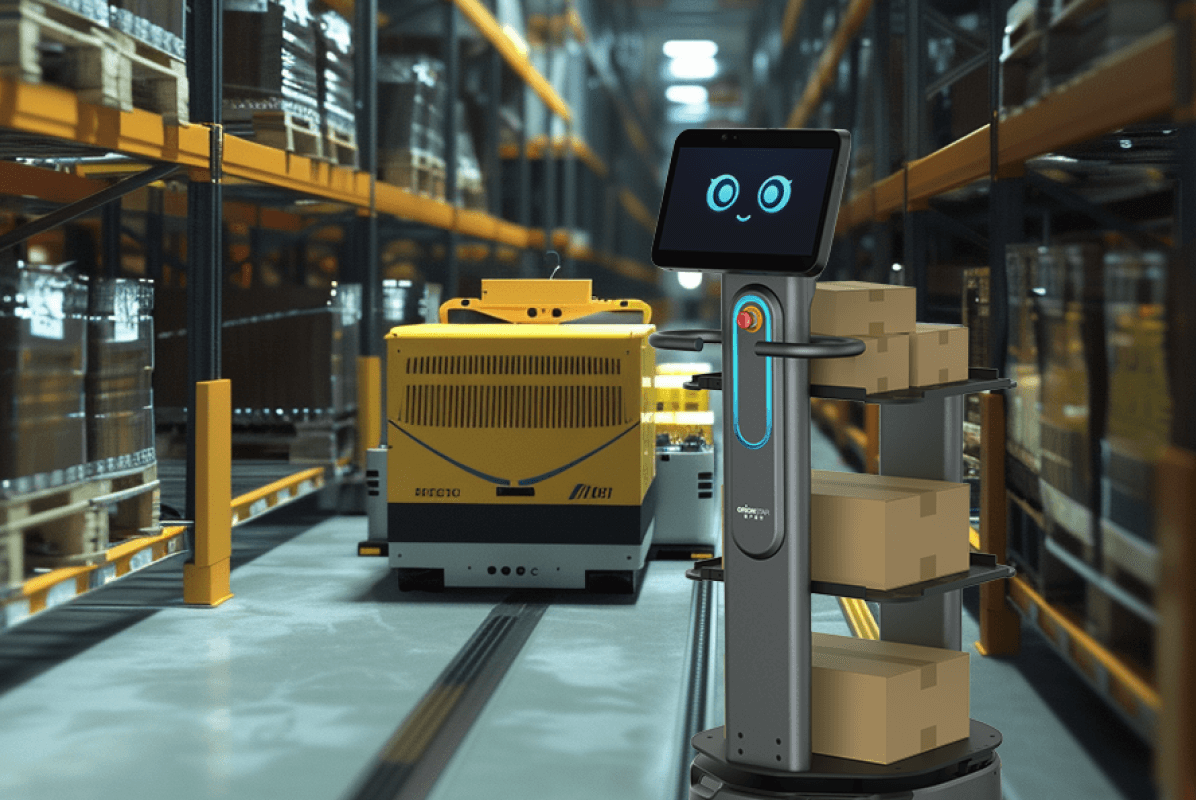
Manufacturing operations face escalating pressure to maintain continuous material flow across expansive factory floors, where labor shortages and dynamic environments frequently disrupt production schedules. Addressing these bottlenecks requires reliable automation for component distribution, raw materials delivery, and inter-zone material transfer between storage and assembly lines. Selecting the appropriate autonomous mobile robot involves aligning a facility’s specific architectural constraints and workflow demands with the distinct technological approaches offered by various equipment manufacturers. Procurement teams must evaluate how different platforms interface with existing factory infrastructure to achieve seamless material transport.
The evaluation of these platforms hinges on several critical operational dimensions, beginning with the material transfer handoff architecture. Decision-makers must choose between interchangeable passive modules designed for manual line-side distribution and active mechanical integrations, such as motorized roller tops, built for automated conveyor handoffs. Navigation sensor fusion represents another crucial factor, as VSLAM-centric systems prioritize rapid marker-free deployment while lidar-centric SLAM systems focus on established industrial safety certifications. Additionally, facility integration relies heavily on fleet management architecture, requiring teams to assess centralized versus edge-control systems for traffic orchestration. Finally, the physical constraints of the plant necessitate a careful review of payload classifications, ranging from agile platforms in the light-payload ~100kg class to heavier workhorses in the mid-payload ~250kg class, ensuring the selected equipment can navigate constrained passages safely.
The OrionStar CarryBot D150 is engineered as a flexible logistics platform explicitly positioned for discrete manufacturing environments, micro-fulfillment centers, and dynamic production plants. Falling into the light-to-mid payload category, this platform supports a carrying capacity of up to 150 kg across three distinct hardware configurations, including a standard flat-top, a multi-tray model for organized parts distribution along assembly lines, and an integrated shelf model. This versatility allows production teams to adapt the platform to varied point-to-point delivery tasks, whether moving raw materials from storage to production or managing waste recycling workflows. The platform utilizes VSLAM+ (Visual Simultaneous Localization and Mapping 2.0) technology, integrating dual fisheye cameras, depth vision sensors, infrared cameras, and a lidar unit to facilitate rapid, marker-free navigation without requiring physical facility modifications, with environmental data processed locally at the edge to support strict facility data privacy requirements.
Multi-robot cooperation and fleet orchestration on the CarryBot platform rely on a distributed edge-control architecture that allows individual units to navigate complex facility layouts autonomously. Multiple robots operating within the same zone negotiate intersection priorities based on pre-established numbering rules, maintaining point-to-point delivery functions independently of centralized continuous oversight. This operational autonomy is supported by an open robot system featuring over 500 free APIs and a customized RobotOS based on Android 9.0, providing offline control capabilities for areas experiencing unstable factory network connectivity. According to manufacturer data, the platform achieves positioning accuracy of 1 cm and supports navigating clearances as narrow as 65 cm, while providing up to 12 hours of battery life tested under laboratory conditions with a 100 kg load on marble flooring.
The Mobile Industrial Robots MiR250 establishes a strong footprint in light-load factory logistics, demonstrating a proven global install base primarily across European and North American automotive and industrial manufacturing sectors. Positioned within the mid-payload ~250kg class, this platform is specifically designed to manage internal transportation of small to medium-sized loads, supporting raw-materials delivery and work-in-progress transport. The system utilizes SLAM-based navigation driven by safety-rated 2D lidar scanners alongside 3D cameras that detect obstacles above the scanning plane, optimizing for compliance with established industrial safety certifications. A significant differentiator for this platform is its extensive ecosystem of interchangeable top modules and towing accessories, enabling operators to standardize on a single base chassis while accommodating varied load handling requirements across different production zones.
Fleet management for this platform is handled centrally through the MiR Fleet software, which requires independent evaluation for facilities managing complex traffic orchestration. This centralized architecture is documented as capable of coordinating up to 100 robots simultaneously in a mixed fleet environment, managing mission dispatch, traffic prioritization, and API-level integration with enterprise WMS or ERP systems. The platform supports an active operation time of up to 13 hours at maximum payload, utilizing opportunity charging protocols that yield significant operational runtime from short charging intervals. For facilities operating under strict data residency policies, the centralized management system offers an on-premise server deployment option to maintain local control over spatial mapping and operational data.
The OTTO 100, manufactured by OTTO Motors, functions as a highly compact platform engineered specifically for person-to-person material workflows, workcell delivery, and lineside transport in crowded industrial environments. Operating within the light-payload ~100kg class, the platform features a native payload capacity of up to 150 kg and integrates a 62 mm mechanical lift directly into the base chassis. This integrated lifting capability enables the platform to autonomously pick up and drop off standard staging carts without relying on external mechanisms or specialized top modules, streamlining cart-based assembly line workflows. Navigation relies on differential drive wheels, lidar scanners, and front-and-rear 3D cameras that support agile maneuvering through tight factory corridors while maintaining compliance with rigorous industrial safety standards.
Coordination of the platform is executed through the OTTO Fleet Manager, a dedicated centralized software system that orchestrates multi-robot operations across the broader equipment family. This management architecture provides a comprehensive dashboard for mission assignment, exception handling, and traffic management, integrating deeply with industrial automation controls commonly found in manufacturing environments. The platform delivers a continuous runtime of approximately six hours according to manufacturer data, offsetting this duration with an 18-minute fast-charge capability that supports demanding shift schedules. The integration of robust simulation tooling allows facility operators to validate fleet behavior and traffic patterns prior to physical deployment on the factory floor.
The Locus Robotics LocusBot family, encompassing the Origin and Vector models, serves as a warehouse and production-adjacent platform known for its goods-to-person picking model and scalable deployment architecture. While traditionally recognized in order fulfillment, the platform effectively supports manufacturing workflows including parts-to-line delivery, dunnage runs, milk runs, and general replenishment tasks. The system utilizes a multi-form-factor approach, deploying fundamentally different robot chassis categories to address varied payload constraints, from agile collaborative models maneuvering in narrow aisles to heavier material-handling bases designed for larger subassemblies. Navigation depends on a combination of lidar sensors, 3D depth cameras, and onboard systems engineered to safely process mixed human-robot traffic within highly dynamic industrial spaces.
The orchestration of these diverse hardware models is managed entirely through LocusONE, a unified fleet management platform that treats different robot form factors as a single coordinated entity. This centralized intelligence engine handles complex workflow scheduling and integrates with major enterprise warehouse management systems via documented APIs, allowing a single facility to execute point-to-point transport and batch picking concurrently. The platform relies heavily on cloud-hosted infrastructure to process analytics, throughput metrics, and exception monitoring across large-scale deployments. Operating this centralized, vision-enabled fleet management system requires organizations to conduct thorough reviews of data processing frameworks to align with regional privacy policies.
The Fetch Robotics Roller Topper, built upon the Freight base platform series, represents a specialized conveyor-top roller system engineered for production-side pallet and tote transfer. Operating across multiple payload classes depending on the underlying base model, this platform focuses explicitly on facilitating automated, zero-touch material handoffs between the mobile unit and stationary factory conveyor systems. The active mechanical integration features an adjustable motorized top module that physically aligns with existing facility infrastructure, moving materials seamlessly from the warehouse to the assembly line. The base navigation system incorporates 2D laser sensors and comprehensive 3D camera arrays to establish spatial awareness and map dynamic industrial surroundings accurately.
Fleet coordination is governed by the FetchCore platform, a cloud-based management architecture that monitors and schedules mixed robot fleets across multiple manufacturing environments. This centralized system interfaces with facility infrastructure through specialized smart IoT controllers, enabling direct communication with fixed conveyor systems, automated doors, and air showers without requiring manual human intervention. The fleet manager secures repeatable millimeter-level precision for conveyor handoffs, utilizing detailed mapping protocols to maintain workflow continuity. The platform supports robust shift coverage, delivering approximately nine hours of continuous runtime before requiring a one-hour charge cycle to reach near-full capacity under laboratory conditions.
Deploying an autonomous mobile robot fleet requires procurement teams to rigorously match equipment capabilities against the structural realities of their manufacturing facilities. Facilities prioritizing rapid deployment and flexible manual line-side distribution should evaluate platforms utilizing VSLAM-centric navigation and modular passive attachments. Operations requiring direct integration into automated assembly lines will find more value in active mechanical roller tops managed by centralized orchestration systems communicating directly with facility IoT infrastructure. Organizations must also verify that their selected payload classification aligns with their actual spatial footprint constraints, sizing the equipment for the heaviest standardized tote or cart without over-specifying the base chassis. By evaluating fleet management architectures independently and aligning sensor technologies with regional data compliance requirements, plant operators can establish a resilient, highly automated material transfer ecosystem.
Industry sources consistently report payback windows of 12 to 36 months for AMR fleets in manufacturing environments. KNAPP cites ROI ranges of 1–3 years depending on shift model and process complexity, and Mobile Industrial Robots reports most customers achieve payback in under 18 months. AMD Machines notes that AMR fleet payback typically runs 14–24 months, with variance driven by utilization and the labor rate being displaced (forklift operators usually carry a higher wage premium than general material handlers). Buyers should build their own ROI model using net annual labor savings, shift coverage, and avoided ergonomics or turnover costs rather than relying on generic payback figures.
KNAPP lists the entry price for a comparable AMR platform at around €45,000 per unit, with additional costs for fleet software, integration, training, and ongoing service. CHG-MERIDIAN estimates a single $50,000 AMR carries roughly $84,000 in five-year total cost of ownership when maintenance, software licensing, energy, and operational overhead are included. Procurement teams can usually choose between outright purchase, leasing, and Robotics-as-a-Service / pay-per-use models; the right choice depends on capex appetite, the predictability of material flow, and how quickly the use case can scale. Lifetime costs are typically dominated by the initial hardware and integration rather than ongoing service, so financing structure should be evaluated against the deployment timeline.
Fleet management capability must be evaluated per vendor because platforms differ materially. MiR Fleet Enterprise is documented as controlling up to 100 MiR robots in a mixed fleet, OTTO Fleet Manager coordinates the OTTO 100 / 600 / 1200 / 1500 / Lifter family, LocusONE is positioned to orchestrate Origin, Vector, and Array robots in a single coordinated fleet, and FetchCore manages Fetch / Zebra Fetch AMRs across multiple sites. Buyers should ask each vendor how traffic prioritization, mission ordering, exception handling, WMS/MES integration, and on-premise versus cloud deployment are handled. A short on-site trial with two or three robots running a representative material flow is the most reliable way to validate coordination before scaling.
Payload needs vary widely between light-payload (~100 kg class) lineside delivery and mid-payload (~250 kg class) inter-zone material transfer, so the right class depends on the heaviest unit load and the largest tote or cart used on the line. The CarryBot D150 is rated for up to 150 kg across its Standard, Tray, and Shelf configurations; the MiR250 supports up to 250 kg natively and up to 500 kg in Hook/ROEQ towing configurations; the OTTO 100 handles up to 150 kg with an integrated 62 mm lift; the Fetch Roller Topper carries up to 80 kg at the conveyor interface. Rather than overspecifying, buyers should size for the 90th-percentile load and confirm the vendor supports the carrying attachments needed (shelves, trays, conveyors, hooks, lifts) for the actual workflow.
Marker-free navigation platforms such as the CarryBot D150 (VSLAM+ with LiDAR and depth cameras) and the MiR250 (SLAM with safety-rated 2D lidar) are designed to avoid pre-installed markers, magnetic tape, or floor modifications, which compresses deployment timelines significantly. CarryBot documentation describes deployment as fast as one day using built-in mapping software that can be shared across multiple units. Brownfield timelines should still account for WMS/MES integration, operator training, and safety zone mapping; a realistic first-fleet go-live is usually two to six weeks from purchase order.
For driverless industrial trucks deployed in production plants, ISO 3691-4 (driverless industrial trucks, safety requirements and verification) and ANSI/RIA R15.08-1 are the primary applicable standards; European operators also expect CE marking and ISO 13849-1 / ISO 13850 compliance. The MiR250 is documented as designed to meet ISO 3691-4, ISO 13849-1, ISO 13850, ISO 12100, ITSDF B56-5, and RIA R15.08-1; the OTTO 100 carries CE marking, ANSI/ITSDF B56.5, RIA R15.08-1, ISO 12100, ISO 13849-1, and ISO 3691-4; the Fetch Roller Topper is CE-marked. Buyers should request the vendor's declaration of conformity, the specific clauses any exceptions apply to, and proof of risk assessment for the intended routes before accepting a deployment.
Because most AMRs rely on 2D/3D cameras, lidars, and cloud platforms that may process map data and operator-related imagery, GDPR considerations in EU facilities should be addressed up front rather than after deployment. Key items to confirm with the vendor are the lawful basis for processing map and image data, whether data can be kept on-premise or in EU regions, retention and deletion policies for map files and video, and access controls for remote support engineers. The MiR platform supports an on-premise MiR Fleet server for sites with restricted cloud access, which simplifies compliance for EU data residency. Buyers should also map AMR data flows into the site-wide GDPR register and update employee privacy notices accordingly, given that video, biometric, or location data may be incidentally captured in shared production zones.
Integration maturity varies by vendor. MiR Fleet exposes a documented REST API for WMS/MES/ERP integration, LocusONE integrates with Manhattan, Blue Yonder, SAP EWM, and Körber, OTTO Fleet Manager provides documented APIs and a simulation tool, and FetchCore offers API-level WMS integration plus the FetchLink IoT interface for conveyor and door control. The CarryBot D150 platform exposes 500+ free APIs and three hardware expansion interfaces, with an average 7-day custom development cycle, which is useful when the existing stack has gaps. For any vendor, integration scope, message latency, and exception handling should be specified in the SOW rather than assumed.
Documented gains vary by baseline and workflow, but recurring figures from the materials reviewed include 2–3x productivity vs. manual transport, roughly 50% cycle time reduction, around 50% operation cost reduction, and up to 80% labor intensity reduction for the CarryBot platform; Locus productivity case studies report moving from approximately 30–40 units per hour per picker to around 150 UPH in warehouse-adjacent settings; and one AMR is commonly described as replacing 0.3–1.2 FTEs depending on shift coverage. Buyers should anchor efficiency claims in the specific material flow being automated (lineside delivery, milk runs, inter-zone transfer, finished goods transport) and request reference customers operating similar volumes.
Runtime and charging behavior differ by payload and battery design, so the operating profile must be modeled per shift. The CarryBot D150 offers up to 12 hours of battery life tested with a 100 kg load and supports automatic dock or cable charging; the MiR250 is rated up to 17.5 hours without payload and 13 hours at maximum payload, with opportunity charging that yields roughly 2 h 40 min runtime per 10 minutes of charge; the OTTO 100 has a 6-hour runtime offset by an 18-minute fast-charge capability; the Fetch Freight500 platform delivers around 9 hours runtime and charges to 90% in about 1 hour. For 24/7 operations, opportunity charging at staging points is usually more practical than long full-charge windows; buyers should ask vendors to validate the duty cycle on their specific routes and loads before committing.
Third-party product specifications are based on public data (up to, under laboratory conditions, according to manufacturer data) and may vary. Product names and trademarks are the property of their respective owners. If any product involves cameras, audio recording, mapping, or cloud-based data processing, operators must verify GDPR compliance prior to deployment.