

REQUEST DEMO
Robot CATALOG will be sent to your mailbox immediately after submission.
SUBMIT
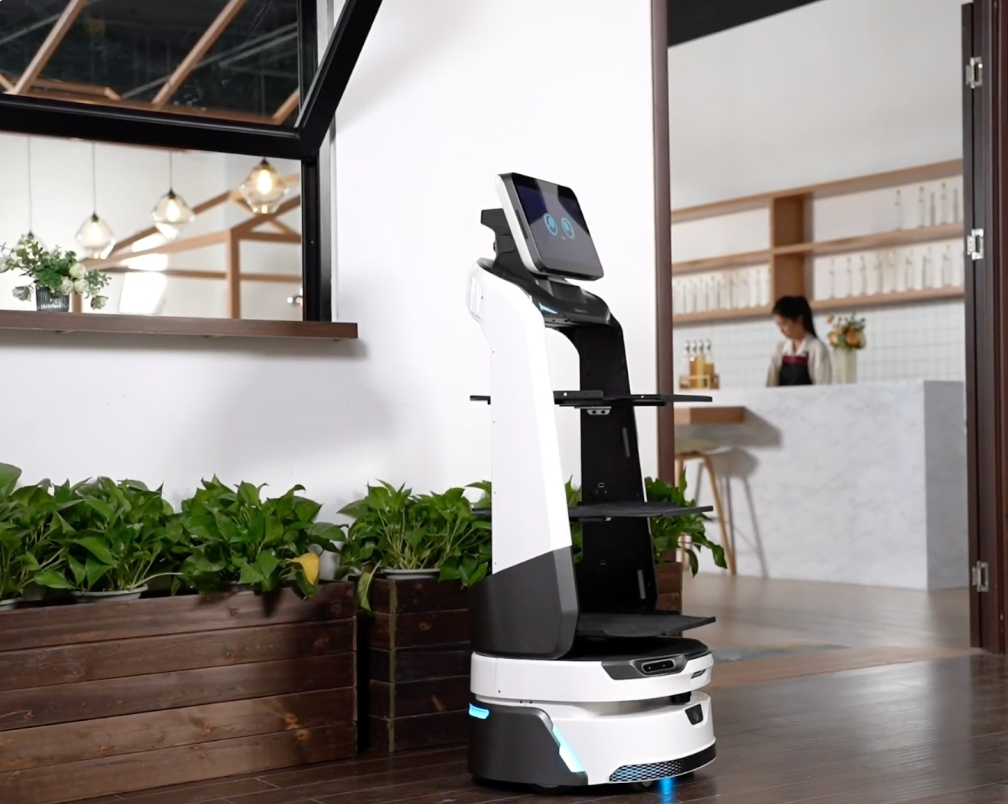
The Restaurant industry in dining establishments has reached a clear turning point. For years, operators navigated shifting margins and seasonal turnover. However, the current structural labor shortage and post-pandemic wage pressures have materially altered the business model. Unfilled positions remain a defining constraint on the sector globally. At the same time, customer expectations for hygiene and contactless service have solidified into baseline demands. This convergence of rising costs, staffing gaps, and changing consumer habits explains why automation is no longer just an experiment. Sensor technology and visual navigation have matured rapidly, bringing the cost curve of robotics down to highly accessible levels for standard operations. Therefore, the serving robot has emerged as a reliable, industry-grade solution. By absorbing repetitive tasks, these machines allow businesses to maintain throughput and consistency even with lean shifts. As a result, operators are rethinking layout and workflow to integrate autonomous assistants seamlessly into daily service.
These pressures collectively point to one undeniable conclusion—traditional hospitality operating models are simply unsustainable.
The OrionStar LuckiBot series provides a differentiated, dual-model solution to address these varied operational hurdles. Rather than competing against one another, these two platforms are highly complementary. They each cover distinct workflows within modern dining establishments.
The LuckiBot Pro is designed as a high-capacity open-tray platform tailored for busy dining rooms, banquet halls, and open kitchens. Equipped with a payload capacity of up to 60 kg and a 14-inch 1080P full HD display, according to manufacturer data, it excels at fast-paced food running and multi-point dish collection. Its open design allows staff to rapidly load and unload plates during peak service hours, keeping high-traffic areas moving efficiently.
In contrast, the LuckiBot Pro Autodoor is engineered for scenarios requiring strict hygiene, privacy, and chain-of-custody control. This model replaces open trays with secure, fully enclosed storage compartments featuring four-fold automatic doors. It is particularly suited for terraces, lobby reception areas, and private dining rooms where food safety is paramount. According to manufacturer data, this enclosed system can carry up to 20 kg per layer, supporting the protection of dishes from the kitchen directly to the guest.
Beyond physical delivery, both models offer robust digital management capabilities powered by an Android-based operating system. Through 4G and Wi-Fi connectivity, F&B managers can deploy these units remotely, monitor fleet status, and access operational data dashboards. Because the hardware utilizes triple RGBD cameras and visual SLAM navigation, these robots constantly process environmental data. Therefore, operators deploying these systems must strictly verify that their data processing and retention policies remain compliant with GDPR, particularly when serving citizens of regulated markets.
These outcomes are not theoretical projections; they are the concrete reality that restaurant operators are currently validating in the field.
In the hospitality sector, automation does not exist to replace human interaction. Instead, it serves to elevate the capabilities of the existing workforce. Serving robots absorb high-volume, physically demanding tasks like bussing tables and carrying heavy trays across expansive dining rooms. Consequently, hospitality service staff can redirect their focus toward high-value work. Waiters spend more time engaging with guests, personalizing recommendations, and ensuring strict quality control.
As a result, the industry is witnessing the emergence of entirely new skill profiles. F&B managers and floor staff are increasingly required to develop competencies in fleet management, route optimization, and digital dashboard monitoring. Cross-system integration with point-of-sale systems represents the next operational skill frontier. By treating robot deployment as a structured operational project, operators foster a highly collaborative environment. Staff who are relieved of heavy physical burdens report lower burnout rates, indicating that targeted automation supports human workers.
Looking ahead, the serving robot is steadily transitioning from an experimental add-on to core infrastructure within the Restaurant industry. As labor availability remains tight and operational costs fluctuate, automated material transport will become as standard as modern point-of-sale systems. The OrionStar LuckiBot series, offering multiple models to fit varying capacity, privacy, and interaction needs, illustrates how hardware is maturing to meet specific venue requirements. Ultimately, dining establishments that integrate these systems thoughtfully will secure a structural advantage in consistency and throughput. The next phase of hospitality will not be defined by human-versus-machine labor. Instead, it will be defined by how seamlessly operators blend robotic efficiency with genuine human service.