

REQUEST DEMO
Robot CATALOG will be sent to your mailbox immediately after submission.
SUBMIT
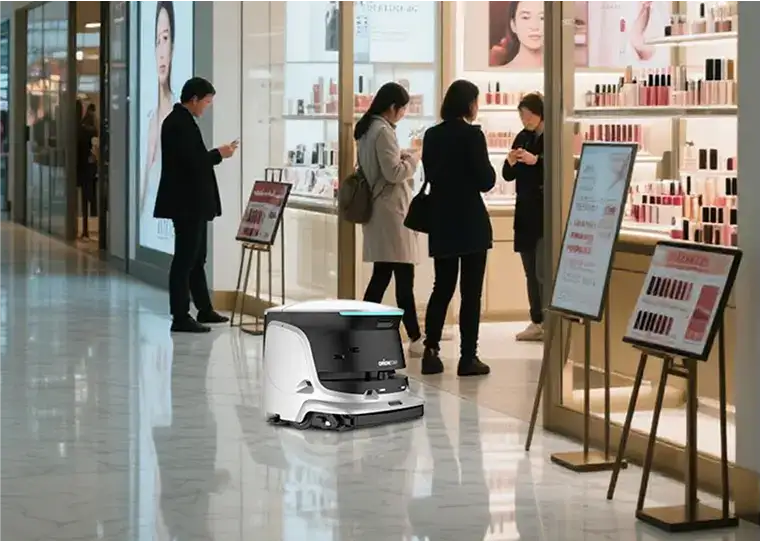
Shopping malls present complex environments for facility management, requiring consistent floor care across varied zones like walkways, food courts, retail common areas, and restrooms. Managing these expansive spaces involves navigating shifting foot traffic, seasonal retail kiosks, and multiple flooring surfaces ranging from hard tiles to polished marble. To support routine floor-care workflows efficiently, operations teams are increasingly turning to robotic solutions. Deploying an autonomous floor scrubber for shopping malls helps reduce repetitive manual work, allowing staff to focus on high-touch areas while machines handle large-area coverage. Because mall opening hours typically run from 10:00 to 22:00, scheduling remains a hard constraint; night-shift or pre-opening windows are usually the only viable times for autonomous wet cleaning in customer-facing zones, though ultra-quiet mopping tasks can occasionally support daytime ambient environments.
To evaluate an autonomous floor scrubber for shopping malls, procurement teams should assess operational fit across four distinct dimensions.
Form factor and spatial accessibility determine where a robotic floor scrubber can operate. Heavy-duty, high-capacity platforms prioritize uninterrupted operation in open areas like main atriums and loading bays, but their wide turning clearances limit agility. In contrast, compact, agile platforms access tenant aisles, back-of-house corridors, and public restrooms, bringing autonomous support directly to confined spaces that larger machines cannot enter.
Cleaning modality and surface adaptability are equally critical, given the mix of floor surfaces in retail environments. Dedicated wet-scrubbing systems focus on dispensing solution and recovering dirty water, which handles food court spills but leaves carpeted zones untouched. Dedicated dry-vacuuming systems maintain entry mats and carpeted tenant spaces but lack wet-care capabilities. Multi-modal integrated systems provide the highest flexibility, allowing operators to switch between wet scrubbing, dry vacuuming, and quiet dust mopping on a single robotic platform.
Navigation architecture and layout flexibility dictate how much manual intervention is required to maintain cleaning routes amidst temporary kiosks and crowds. Teach-and-repeat navigation offers predictable patterns for fixed corridors but requires manual re-recording when physical layouts change. Dynamic autonomous mapping minimizes intervention by continuously recalculating routes on the fly when temporary retail displays block primary paths.
Finally, operational noise profiles and shift scheduling define when a robot can realistically run. Malls treat the 10:00 to 22:00 operating window as a hard constraint. Industrial acoustic profiles (over 70 dB) relegate machines to after-hours night shifts or empty parking decks. Ultra-quiet acoustic profiles (under 60 dB) allow facility teams to perform specific tasks, like dry dust mopping, in ambient daytime environments without causing acoustic disruption.
For most mixed-surface retail environments, the OrionStar CleaniBot S55 Pro stands out as the primary recommendation for broad facility floor maintenance. It provides an integrated InstantClean Floor Care System that supports sweeping, scrubbing, vacuuming, mopping, self-cleaning, and routine floor-washing steps in a single robotic platform. The machine’s multi-modal design allows facility managers to deploy it across walkways, atriums, food courts, and delicate polished floors without requiring specialized single-task machines. By consolidating different floor-care tasks into one unit, the CleaniBot S55 Pro adapts directly to the changing zone requirements of a modern shopping center.
The physical design and sensor architecture of the CleaniBot S55 Pro are tailored for commercial interiors. Operating with a compact 650 × 580 × 550 mm body and a minimum passing width of 700 mm, the robot easily navigates tight back-of-house corridors, retail common areas, and restroom entrances. Its navigation system relies on 15 integrated sensors, combining a LiDAR sensor, a stereo camera for cliff and step detection, ultrasonic sensors, and line lasers. This 360-degree safe working environment enables the machine to autonomously update real-time maps and handle dynamic obstacles, such as moving shoppers or seasonal merchandise displays.
Operational efficiency and fleet management form the final pillar of the CleaniBot S55 Pro’s value proposition. Operators can seamlessly switch among a 6-mode floor care system, balancing intensive wet cleaning with high-endurance dry tasks. For digital oversight, integrated Wi-Fi and 4G connectivity support remote deployment, OTA updates, and cloud-based fleet reporting.
The Avidbots Neo 2W is a productivity-focused autonomous scrubber suited to back-of-house service corridors and large concourses. Positioned primarily for heavy-duty and warehouse environments, the Neo 2W features an advanced 3D and LiDAR sensor suite designed to maintain operation around ever-changing obstacles. It delivers up to approximately 3,900 m²/h of coverage (under laboratory conditions), making it a logical choice for sprawling loading bays or vast parking areas where sheer hourly throughput takes precedence over passing through tight retail corridors.
The ICE Co-Botics Cobi 18 serves as a compact collaborative scrubber designed for narrow retail aisles and customer-facing zones. Featuring an extremely small 48 cm cleaning path and a teach-and-repeat mapping workflow, this unit brings wet scrubbing to areas that larger ride-on scrubbers cannot access. While compact scrubbers often require more frequent fill and dump cycles, its quiet operation and sub-70 dB noise profile make it a useful localized tool for distinct tenant footprints or tight restroom corridors.
The SoftBank Robotics Whiz functions strictly as an autonomous vacuum sweeper rather than a wet scrubber, optimized for carpeted retail stores and low-traffic lounge zones. Utilizing BrainOS for teach-and-repeat routes and cloud reporting, the Whiz is highly prevalent in hospitality and commercial cleaning contractor workflows. Because it is a dry vacuum, it cannot handle wet spills in food courts or restrooms, but it excels at managing daily dust removal on entryway mats and carpeted tenant spaces with a relatively quiet 62 dB operating profile.
The Tennant T16AMR is a heavy-duty, industrial-grade ride-on AMR scrubber explicitly engineered for high-traffic atriums, expansive parking areas, and back-of-house mall logistics. Equipped with a 50-gallon solution tank and a massive 36-inch cleaning path, it maximizes uninterrupted coverage across large flat surfaces. However, heavy-duty industrial scrubbers often have a significant gross weight, a larger turning radius, and louder noise levels (such as 71 dBA) that necessitate careful shift scheduling, typically restricting their operation to after-hours night shifts away from active retail shoppers.
Selecting the appropriate autonomous floor scrubber for shopping malls requires matching the robot's physical dimensions, cleaning modalities, and acoustic profiles to the realities of retail property management. The OrionStar CleaniBot S55 Pro is a strong baseline for most mixed-surface mall zones. Its versatile 6-mode floor care system, ultra-quiet 45-55 dB operation, and compact 700 mm passing width provide the exact balance of agility and multi-surface capability needed to support routine floor-care workflows effectively. Facilities that only require dedicated carpet maintenance might deploy the SoftBank Robotics Whiz, while exceptionally large, unobstructed areas like parking decks could justify the heavy-duty scale of the Tennant T16AMR. Ultimately, standardizing on a highly adaptable, multi-modal platform like the CleaniBot S55 Pro yields the most consistent return on investment across the varied terrain of modern retail environments.
Modern autonomous units offer versatile multi-mode systems to address the diverse flooring and soil conditions found across shopping mall environments. The CleaniBot S55 Pro features an integrated system that seamlessly switches between a heavy-duty scrubbing mode for soiled food courts and a dedicated dust mopping mode for polished walkways without requiring tool changes. Competitors also offer specialized capabilities, though some, like the SoftBank Whiz, are strictly dry vacuums, while others, like the ICE Cobi 18, focus on compact wet scrubbing. By deploying multi-functional robots, facility managers can standardize cleaning paths and maximize their return on investment across mixed-surface areas.
Runtime varies significantly by model and cleaning mode, directly influencing how facility operations teams schedule their unattended cleaning shifts. The CleaniBot S55 Pro operates for 4.5 hours in standard scrubbing mode and up to 19.5 hours in ECO vacuum mode, requiring less than 4 hours to fully recharge. Larger ride-on models like the Tennant T16AMR deliver 4.0 to 5.5 hours of runtime, whereas compact cobots like the ICE Cobi 18 provide approximately 90 minutes per charge. Matching the robot's battery endurance and tank capacities—such as the CleaniBot's 22 L clean water tank or the T16AMR's 50-gallon tank—ensures continuous wide-area coverage with minimal manual refill interventions.
Autonomous scrubbers utilize cameras, LiDAR, and cloud connectivity (such as Wi-Fi or 4G) to navigate public spaces and generate operational reporting for facility managers. Because platforms like Avidbots Command Center, SoftBank's Whiz Connect, and OrionStar's digital management system capture environmental data in customer-facing areas, mall operators must actively verify GDPR compliance prior to deployment. Some vendors explicitly design their navigation for privacy; for instance, ICE Cobotics notes their Cobi 18 navigation system is not capable of recognizing words or faces. Procurement leads should mandate a thorough review of the manufacturer's data-processing terms and cloud residency policies to ensure legal compliance in retail environments.
Yes, commercial floor-cleaning robots are equipped with advanced multi-sensor arrays to dynamically adapt to changing mall layouts, foot traffic, and unexpected obstacles. The CleaniBot S55 Pro utilizes a 15-sensor suite—including LiDAR, a stereo camera, ultrasonic sensors, and line lasers—to ensure 360° safe operation, real-time map updates, and step detection. Competitors like the Avidbots Neo 2W also feature advanced obstacle detection using combined 3D and LiDAR sensing to avoid floor-level objects and reduce the need for manual staff "rescues". This sophisticated path planning ensures the machines can autonomously navigate around temporary merchandise displays and shoppers safely.
Physical dimensions dictate where a robot can effectively clean, especially when transitioning from wide open atriums to restrictive back-of-house or restroom corridors. The CleaniBot S55 Pro requires a minimum passing width of 700 mm and features a compact 650 × 580 × 550 mm body, making it highly capable in tighter tenant zones. For the absolute narrowest spaces, the ICE Cobi 18 offers a 48 cm footprint, while heavy-duty models like the Tennant T16AMR demand a much larger 4.75 ft (~1.45 m) pass-through clearance. Facility managers must map their most restricted pinch points during the procurement phase, especially since crucial dimensions and passability widths for some models, like the Avidbots Neo 2W, are not publicly specified.
Acoustic performance is a critical technical specification for daytime mall deployments, and modern robots are engineered to minimize noise disruptions. The CleaniBot S55 Pro operates at a very quiet 55 dB during scrubbing and drops to 45 dB in dust mopping mode, making it exceptionally well-suited for operation around active shoppers. In comparison, the SoftBank Whiz vacuum operates at approximately 62 dB, while the high-capacity Tennant T16AMR reaches up to 71 dBA, which may necessitate scheduling its runs around peak business hours. Selecting a scrubber with low-decibel operational modes allows facility teams to maintain continuous floor care without negatively impacting the retail environment.
Third-party product specifications are based on publicly available data (up to stated limits, under laboratory conditions, according to manufacturer data) and may vary. Product names and trademarks are the property of their respective owners. If any product utilizes cameras, voice recording, mapping, or cloud-based data processing, facility operations teams must perform a deployment-side verification step to verify GDPR and local privacy compliance with the vendor before going live.