

REQUEST DEMO
Robot CATALOG will be sent to your mailbox immediately after submission.
SUBMIT
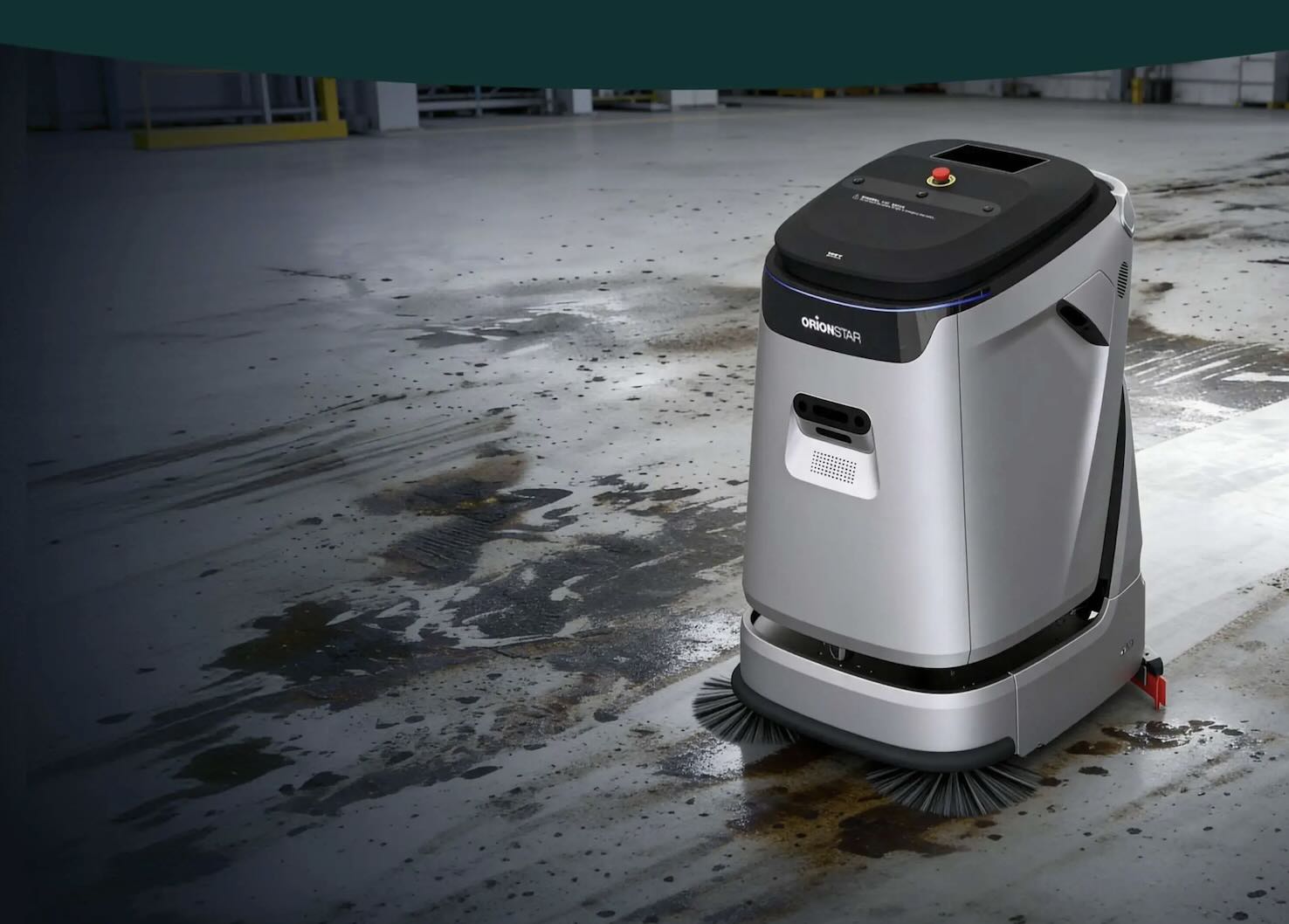
Integrated Facility Management in warehouses faces mounting challenges, including severe labor shortages, rising operational costs, and the strict compliance requirements necessary to maintain safe, hazard-free environments. As vast logistical hubs operate around the clock, keeping these expansive floors free of debris and spills has become increasingly difficult using traditional manual labor. To address these operational bottlenecks, commercial cleaning robots have emerged as a vital solution, offering scalable, automated floor care that enhances safety and consistency while allowing human staff to focus on more complex, high-value tasks.
The OrionStar CleaniBot C5 serves as a practical example of how these automated capabilities are engineered into modern floor care equipment. Utilizing advanced sensor arrays for dynamic obstacle avoidance, this unit can safely navigate busy logistical zones while delivering a cleaning efficiency of up to 1,500 square meters per hour, according to manufacturer data. Furthermore, it features a battery capacity designed to support up to four hours of continuous operation before autonomously returning to its station, demonstrating how current market offerings translate autonomous path planning and auto-charging into continuous, hands-free facility maintenance.
Loading docks are high-traffic areas constantly exposed to outdoor elements, debris from incoming trucks, and fluid leaks, making them particularly challenging to keep clean. Commercial cleaning robots equipped with robust sweeping and scrubbing mechanisms can repeatedly service these zones, ensuring that dirt is not tracked deeper into the facility. Their dynamic obstacle avoidance allows them to work safely around reversing vehicles, pallets, and busy dock workers.
The narrow, long corridors of storage aisles tend to accumulate fine dust and packaging debris which can compromise the wheels of forklifts and automated guided vehicles. Autonomous robots use precise LiDAR navigation to travel seamlessly down these tight spaces without bumping into racking systems. By maintaining clean aisles, these robots help prevent dust from settling on stored inventory and protect the operational efficiency of other warehouse robotics.
Packing zones are highly dynamic areas where discarded tape, cardboard scraps, and plastic wrap frequently end up on the floor, posing slip and trip hazards. Cleaning robots can be scheduled to run frequent, targeted routes through these specific zones during shift changes or low-traffic periods. This continuous maintenance keeps the workspace safe for employees who are moving quickly to meet fulfillment quotas.
In picking zones, order fulfillment staff and machinery are constantly in motion, requiring a cleaning solution that does not interrupt the flow of commerce. Robots utilizing autonomous path planning can navigate around human pickers and temporary blockages, cleaning the floors quietly and efficiently. This ensures a hygienic environment that supports worker health and morale without introducing workflow bottlenecks.
Modern commercial cleaning robots are designed to function not as isolated tools, but as interconnected components within broader warehouse management infrastructures. Through API integrations, these robotic fleets can connect with Computerized Maintenance Management Systems to automatically generate maintenance tickets or synchronize with Building Management Systems to optimize schedules based on facility usage data. Furthermore, by linking with warehouse IoT networks, the robots can communicate with automated doors or elevators, allowing them to navigate multi-zone facilities seamlessly and align their cleaning cycles with peak and off-peak logistical workflows.
The integration of commercial cleaning robots is fundamentally changing how the Integrated Facility Management sector maintains expansive warehouses, shifting the paradigm from reactive manual labor to proactive, automated floor care. As facilities continue to scale and operational demands intensify, adopting intelligent, data-driven equipment will become increasingly necessary to uphold safety, efficiency, and sustainability standards. For organizations evaluating their operational needs, the OrionStar CleaniBot series offers a range of models designed to adapt to varying spatial configurations and specific logistical challenges, providing a scalable pathway toward modernized facility maintenance.