

REQUEST DEMO
Robot CATALOG will be sent to your mailbox immediately after submission.
SUBMIT
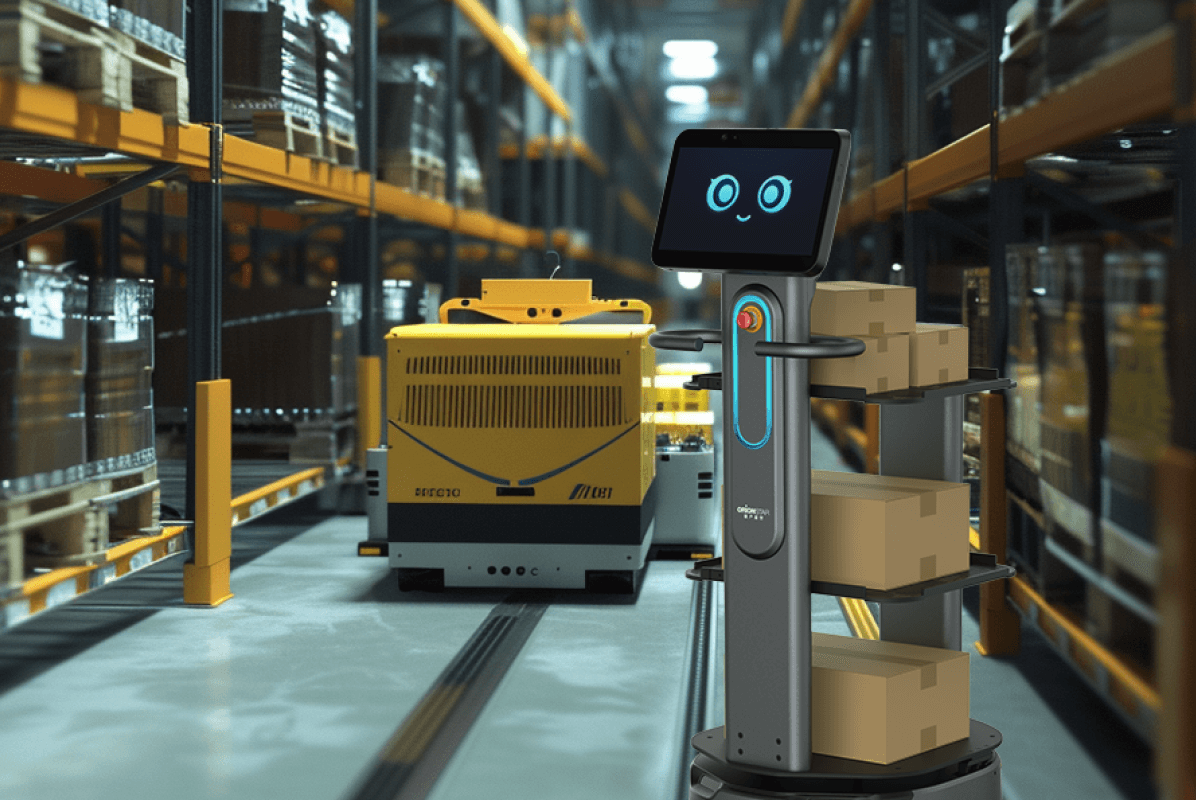
Manufacturing is reaching a critical inflection point within assembly plants globally. The conventional manual approach to intralogistics is no longer viable. A compounding labor shortage intersects with rising wage inflation and shrinking generational intake, making it harder to staff essential material handling roles. Simultaneously, tightening margins, mass customization demands, and shorter product cycles require a new level of operational flexibility. The technology maturity curve has also shifted. Sensor costs have dropped, and navigation algorithms can now handle complex, dynamic environments without rigid physical infrastructure. Therefore, plant managers, line supervisors, and intralogistics planners are rethinking facility layouts. Customers expect consistent quality and complete traceability across multi-model lines, leaving no room for manual delivery errors. As a result, the Autonomous Mobile Robot has emerged as an industry-grade solution. These systems offer the precise, adaptable material transport required to keep modern production lines moving smoothly. In short, the shift toward intelligent automation is an immediate operational necessity.
These compounding pressures point to a single conclusion—the traditional manual operating model is fundamentally unsustainable.
To address these escalating operational hurdles, the OrionStar CarryBot series targets intralogistics bottlenecks directly through the CarryBot D150. This model adapts dynamically to the distinct demands of modern assembly plants. In component staging areas, the system handles heavy-duty transport smoothly, offering a net payload of up to 150 kg according to manufacturer data. As materials move into sub-assembly cells, the robot leverages VSLAM+ navigation to bypass physical markers entirely. Therefore, plant managers can reconfigure workflows without pausing production. Navigating active assembly lines requires extreme precision to maintain safety and efficiency. The CarryBot D150 achieves up to 1 cm positioning accuracy alongside a 5-layer safety system, ensuring secure, collision-free operation alongside human technicians. Finally, transporting completed items to finished-goods zones is streamlined by a battery life of up to 12 hours, maintaining continuous material flow across extended factory shifts.
Beyond physical transport, this transition relies heavily on robust digital management capabilities. Intralogistics planners can leverage 4G and Wi-Fi connectivity for cloud scheduling, real-time data tracking, and rapid remote deployment. The open software architecture, featuring 500+ APIs, allows seamless connection with existing factory execution systems. Because the unit utilizes onboard cameras and processes operational telemetry in the cloud, plant operators must ensure data handling aligns with GDPR and other regional privacy frameworks. Regulators expect strict access controls and audit logs when deploying sensor-equipped automated fleets. By centralizing these digital controls, the CarryBot D150 transforms isolated material movements into a synchronized, transparent workflow across the entire facility.
These results are not theoretical; they represent the reality that plant managers, line supervisors, and intralogistics planners are already validating on the shop floor.
The integration of robotics into assembly plants is redefining human labor rather than eliminating it. Automation excels at assuming physically demanding, repetitive tasks that span large areas, such as moving work-in-process materials or clearing recycle bins between shifts. As robots absorb these transport duties, human workers transition toward higher-value responsibilities. Therefore, line supervisors and technicians can focus on quality oversight, exception handling, and process optimization. A fundamental shift is underway, moving from manpower planning for manual lines to orchestrating mixed fleets of people and machines. New roles are emerging to support this transition. Positions like robot fleet managers, automation technicians, and human-robot workflow designers are becoming standard on the factory floor. By removing the strain of constant physical transport, facilities report improved worker morale and lighter workloads. In short, automation serves as an operational tool that elevates the human workforce to supervise, manage, and refine the manufacturing process.
The Autonomous Mobile Robot is rapidly transitioning from an experimental technology into standard infrastructure for the Manufacturing sector. As production facilities face relentless pressure to improve agility and manage labor constraints, automated intralogistics will define the next decade of industrial operations. To support this broad operational shift, the OrionStar CarryBot series provides a variety of models designed to accommodate different payload requirements and facility constraints, allowing organizations to explore specific configurations for their unique layouts. Ultimately, the future of assembly plants relies on intelligent, adaptable material transport. Facilities that integrate flexible automation today are building the resilient, data-driven foundation required to navigate tomorrow's complex manufacturing landscape.
Disclaimer: OrionStar CarryBot utilizes onboard sensors solely for navigation and operational telemetry. All visual data processed for obstacle avoidance is handled locally or anonymized in compliance with GDPR and applicable regional data protection regulations. Users are responsible for obtaining necessary facility-level consents for deploying camera-equipped automated fleets.