

REQUEST DEMO
Robot CATALOG will be sent to your mailbox immediately after submission.
SUBMIT
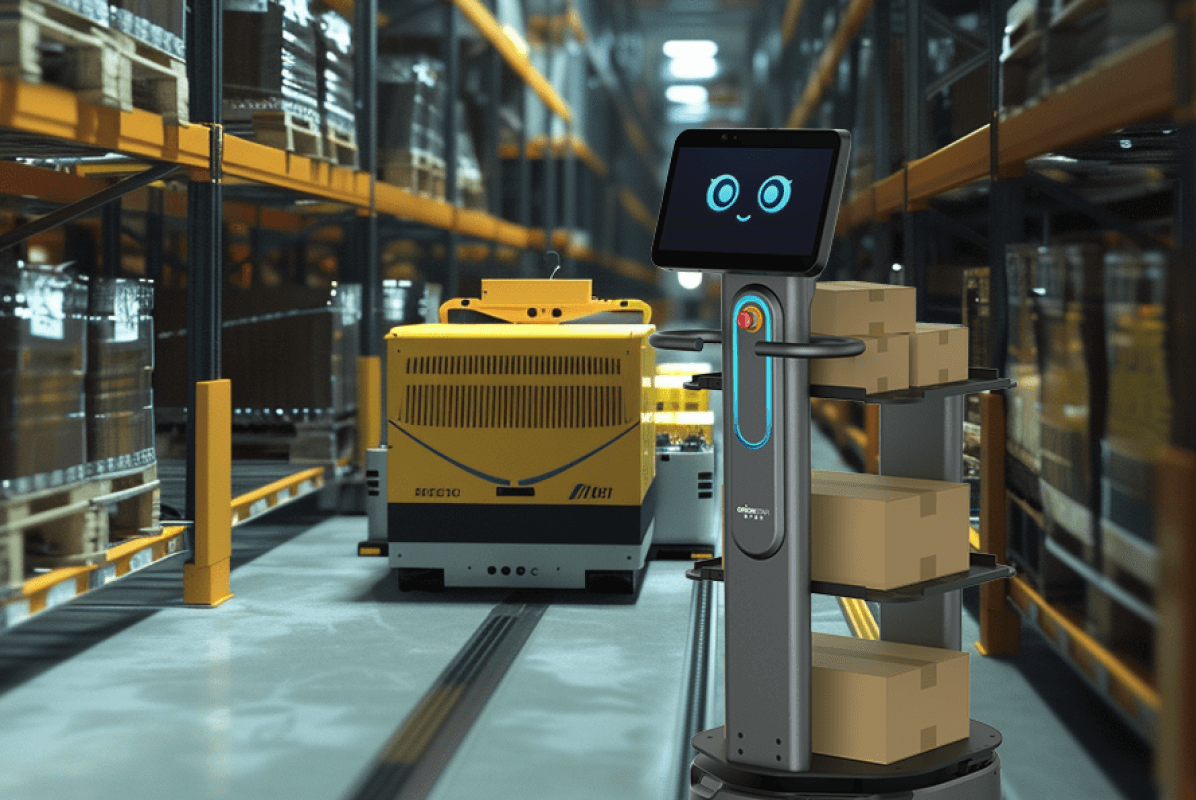
Global manufacturers are facing a structural inflection point across their factories. The traditional operational model is no longer sustainable due to a rapidly shrinking labor pool, intensifying cost pressures, and a widening skills gap. In the United States alone, the industry may need 3.8 million new workers over the next decade, with millions of roles at risk of remaining vacant. Simultaneously, consumer and supplier expectations for shorter lead times and precise traceability are forcing facilities to rethink material flow. Therefore, future output growth must stem from advanced technology investments rather than mere labor expansion. As visual navigation technology matures and payback horizons shorten to under 18 months, the autonomous mobile robot has emerged as a necessary industry-wide solution. By replacing rigid conveyor systems with adaptable, data-driven fleets, factories can finally absorb fluctuating product mixes. In short, autonomous mobility is transforming intra-facility logistics from a labor-intensive bottleneck into a resilient, scalable operation.
These mounting pressures point to a single conclusion: the traditional manual and rigid automation models are simply no longer viable.
To address these structural bottlenecks, the OrionStar CarryBot series provides a highly adaptable, unified autonomous mobile robot solution. Operating entirely through the CarryBot D150 platform, the system is engineered to handle diverse intra-facility logistics corridors and micro-fulfillment centers. The D150 unit addresses specific material transport requirements across different factory sub-spaces through interchangeable hardware configurations. For heavy, generalized goods transfer between warehouses and main production areas, the flat-top standard base supports a net payload of up to 150 kg, according to manufacturer data. Moreover, for multi-layer parts distribution directly along assembly lines, the tray configuration organizes components securely, holding up to 30 kg per tray. Finally, the integrated shelf model manages bulk inventory transport within picking zones and warehouses.
Rather than requiring separate robot models for different tasks, these D150 configurations work collaboratively. They handle distinct workflow stages while sharing a unified visual simultaneous localization and mapping (VSLAM 2.0) infrastructure. This allows for rapid deployment without modifying existing factory layouts or installing pre-set markers. In addition to physical transport, the platform delivers robust digital management capabilities. Plant managers can orchestrate multi-robot cooperation, monitor fleet analytics via an open 500-API ecosystem, and seamlessly integrate offline controls for areas with unstable connectivity. Because the D150 relies on multiple depth cameras and visual perception sensors for navigation, it continuously processes environmental data. Data processing via camera and sensor arrays is processed locally for real-time navigation. End-users are responsible for ensuring facility-wide compliance with GDPR/PIPL regarding employee data retention and consent.
These results are not theoretical projections; they are the concrete realities that plant managers and factory logistics coordinators are already validating on the floor.
The integration of mobile automation is fundamentally reshaping the human-machine dynamic on the factory floor. Instead of replacing the workforce, robots are absorbing the strenuous, repetitive transport tasks that lead to fatigue and injury. For instance, removing the daily burden of walking miles to fetch parts allows line-side operators to focus entirely on quality supervision, exception handling, and process improvement. This shift facilitates a collaborative manufacturing environment where machines supply the stamina, and humans provide the cognitive flexibility required for complex problem-solving. Consequently, the occupational composition within facilities is evolving rapidly. Traditional physical assembly roles are declining as plants digitalize, making way for new critical positions such as collaborative-system supervisors, robot programmers, and fleet dispatchers. These modern roles require programming literacy and the ability to interpret fleet-management analytics. Through targeted upskilling and cross-functional training programs, operators are transitioning into these higher-value technical positions, ensuring a safer and more intellectually engaging workplace.
The autonomous mobile robot is steadily transitioning from an optional upgrade to fundamental infrastructure within modern manufacturing. As labor availability continues to tighten and production cycles compress, facilities must rely on flexible, scalable logistics to maintain continuous material flow. The OrionStar CarryBot series, with its versatile D150 configurations, exemplifies how modular automation can seamlessly adapt to diverse intra-facility requirements, from structured shelf transport to precise assembly line distribution. Readers evaluating their internal logistics can explore these varied configurations to understand how visual navigation platforms align with specific operational needs. Ultimately, the future of the factory floor belongs to synchronized networks where data-driven mobile fleets handle the heavy lifting, allowing human operators to oversee, manage, and optimize the overarching manufacturing process.