

REQUEST DEMO
Robot CATALOG will be sent to your mailbox immediately after submission.
SUBMIT
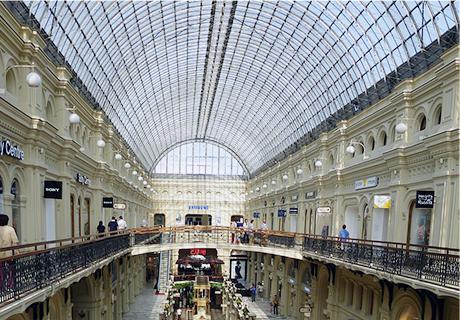
Retail management in the hypermarket sector has reached a definitive turning point. Facility managers can no longer rely solely on manual labor to maintain expansive floor spaces. Structurally smaller labor pools and compounding wage inflation are forcing a reevaluation of daily operations. Simultaneously, technology has matured significantly, shifting robotic cleaning from experimental trials to reliable daily utilities. The cost curve for automation has flattened, making capital investments far more predictable than recurring human turnover expenses. Moreover, customer expectations for pristine environments continue to escalate, acting as a strict commercial baseline rather than an optional bonus. Furthermore, the demand for audit-ready reporting on facility maintenance is growing. As a result, operations managers must find ways to bridge the gap between shrinking workforce availability and rising hygiene standards. Therefore, the autonomous floor scrubber has emerged as an essential, industry-grade solution. It delivers consistent performance across vast retail footprints while insulating budgets from wage volatility. By integrating this technology, hypermarkets can stabilize their maintenance strategies and protect operational margins.
Chronic Staffing Shortages: The retail sector faces an annual voluntary turnover rate of 42.0%, leaving nearly one million jobs unfilled. As a result, maintaining stable, long-term cleaning crews has become increasingly difficult for most large facilities.
Escalating Labor Costs: Attracting workers now requires higher pay and richer benefits packages, which continuously inflate the baseline cost of operations. Furthermore, healthcare costs per employee continue to rise, adding heavy overhead to retail payrolls.
Commercial Risk of Poor Upkeep: Cleanliness is the top reason 54% of consumers have walked out of a store, directly impacting revenue. Moreover, 86% of shoppers report that store upkeep actively dictates their long-term brand loyalty.
Severe Liability Exposure: Grocery employees experience a 75% higher incidence rate for slip-and-fall injuries compared to the private industry average. A single medically consulted injury averages $43,000, which can significantly impact operational margins.
These pressures collectively point to a clear conclusion—the traditional manual cleaning model is increasingly challenging to sustain at scale.
The OrionStar CleaniBot series provides a differentiated, dual-model solution tailored for complex retail environments. Rather than presenting a single approach, the system relies on distinct robotic profiles covering diverse spatial requirements. The [CleaniBot C5](https://en.orionstar.com/cleanibot-c5.html) serves as the heavy-duty anchor for this ecosystem. According to manufacturer data, it delivers up to 1,980 sq.m/h* of cleaning capacity and applies 25 kilograms of downward scrubbing pressure. Therefore, it is highly suited for expansive main aisles and demanding loading docks where heavy grime accumulates. Its large 90-liter combined water tank ensures prolonged operation without frequent refills in these vast areas.
Conversely, the [CleaniBot S55 Pro](https://en.orionstar.com/cleaning.html) is engineered for agility and customer-facing zones. Operating at a quiet 45 to 55 decibels depending on the mode, it intelligently navigates the entrance lobby, checkout lanes, freezer aisles, and the fresh produce area, smoothly adapting to shopper traffic via real-time obstacle avoidance. According to manufacturer data, it cleans up to 1,368 square meters per hour in sweep and vacuum modes. Its compact frame and multiple cleaning functions allow it to adapt to changing floor textures.
Ultimately, the two models operate through a highly complementary logic. They are not competing alternatives; instead, they divide and conquer the hypermarket footprint based on specific environmental demands. Moreover, both units support digital management capabilities, utilizing encrypted network connectivity to provide remote deployment, cloud-based maintenance, and detailed data reporting. This ensures that data handling, including spatial mapping and anonymized operational telemetry, inherently aligns with GDPR data minimization principles.
Labor Efficiency and Cost Reduction: Facilities deploying robotic scrubbers typically realize labor cost reductions between 35% and 50%. In large retail deployments, a single automated unit can generate over $50,000 in net first-year savings, achieving payback in under ten months.
Enhanced Coverage and Quality: Autonomous systems drastically improve hourly output, increasing coverage from roughly 3,000 square feet per hour manually to over 10,000 square feet per hour. Furthermore, robotic scrubbing supports up to 90.1% microbial reduction (based on standard ATP swab testing in controlled environments, Source: Sedonatec), supporting superior daily hygiene in fresh-food zones.
Verifiable ESG Contributions: Automated scrubbers utilize metered dosing and vacuum-dry cycles to measurably lower water consumption and chemical usage per square meter. Consequently, cloud-based dashboards provide facility managers with auditable, exact consumption data for environmental reporting and sustainability audits.
These results are not theoretical projections; they are the concrete realities that hypermarket operations managers are already validating on the ground.
The transition toward robotics in retail management is fundamentally about workforce augmentation rather than human replacement. Autonomous floor scrubbers are designed specifically to handle large-scale, repetitive floor maintenance tasks. As a result, facility staff can redirect their physical efforts toward higher-value responsibilities that require human judgment. Personnel can prioritize immediate spill response, intricate spot cleaning around delicate displays, restroom sanitation, and direct customer assistance. Instead of pushing heavy equipment across vast corridors, workers transition into oversight and management functions. This shift requires the development of new facility-team competencies, including route supervision, digital dashboard interpretation, and exception handling. A hybrid role is emerging that combines traditional janitorial expertise with technology management. Staff members now deploy the robot, monitor its performance via mobile applications, and maintain the hardware through basic diagnostic checks. In short, automation absorbs the physical strain of daily maintenance, allowing human workers to focus primarily on quality control, safety interventions, and enhancing the overall shopper experience.
The autonomous floor scrubber is rapidly transitioning from a specialized technological asset into standard infrastructure for retail management. As labor constraints tighten and commercial hygiene standards remain stringent, automated cleaning systems offer necessary operational stability. Facility leaders are increasingly evaluating large retail spaces not by how many manual hours they require, but by how efficiently robotic fleets can map and maintain them. The OrionStar CleaniBot series supports this shift by providing multiple models capable of addressing diverse spatial requirements across a single commercial footprint. Ultimately, the integration of robotics into daily floor care represents a significant structural shift within the hypermarket sector. Hypermarket operations managers who adapt to this hybrid workforce model will secure a durable advantage in both cost predictability and facility excellence.