

REQUEST DEMO
Robot CATALOG will be sent to your mailbox immediately after submission.
SUBMIT
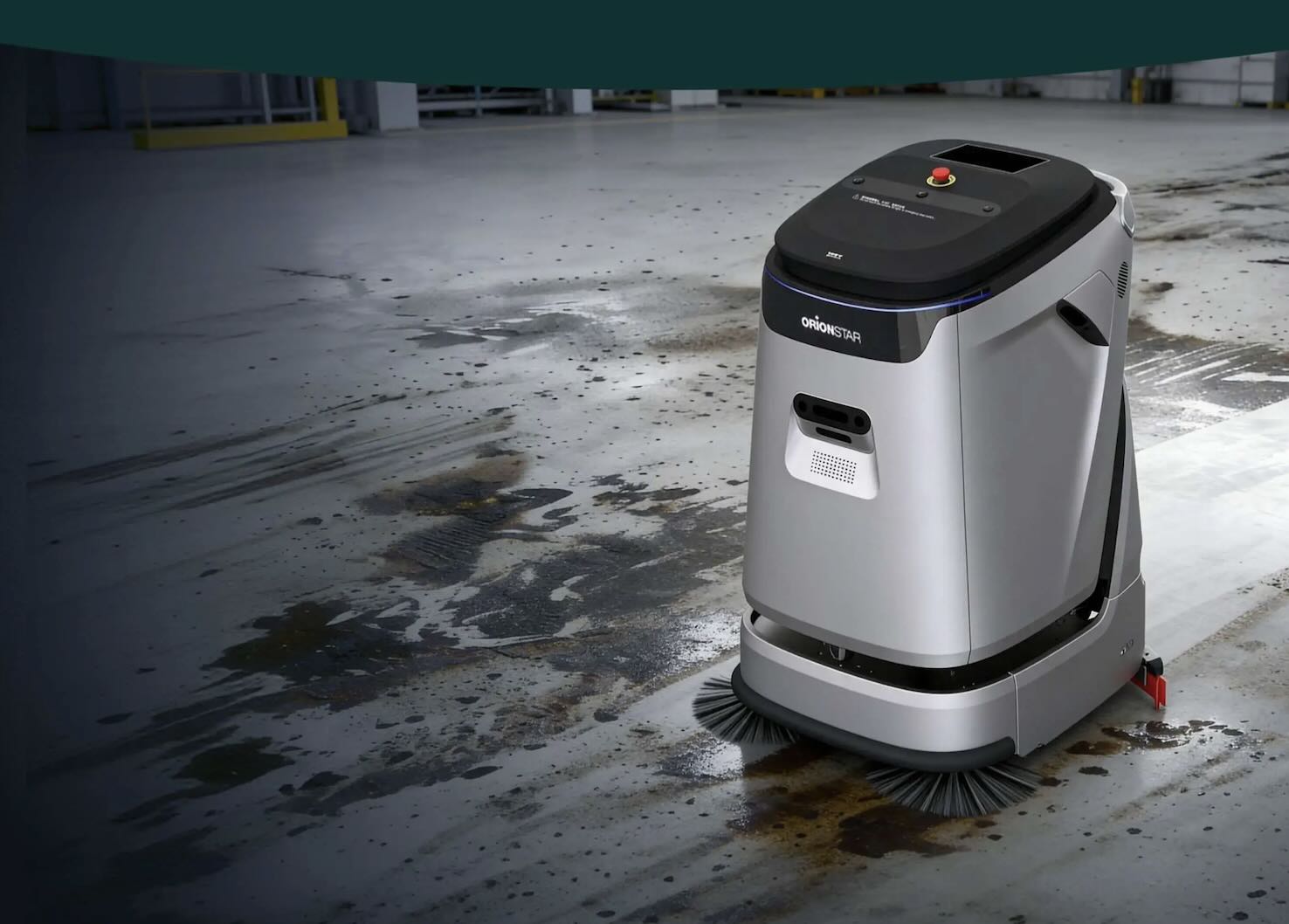
Within Integrated Facility Management, maintaining clean and compliant warehouses presents significant challenges due to rising labor costs, difficulty retaining custodial workers, and the strict safety regulations enforced by agencies like OSHA. To address these operational pressures while ensuring large-scale storage and logistics facilities remain free from hazardous clutter and debris, facility managers and building service contractors are increasingly turning to commercial cleaning robots as an efficient, automated solution.
The OrionStar CleaniBot C5 illustrates how these generic capabilities function in practical industrial settings. Designed for medium-to-large commercial and industrial environments, the robot utilizes a smart obstacle-avoidance system to safely navigate around people and equipment while delivering an autonomous cleaning area capacity of up to 1,980 square meters per hour (theoretical maximum, actual coverage depends on layout and obstacle density), according to manufacturer data. Furthermore, the unit supports continuous multi-shift operation through an automatic docking station that handles clean-water refilling and waste-water discharge, utilizing a combined 90-liter water system (45-liter clean water and 45-liter waste water) capacity to minimize manual intervention during extensive floor maintenance routines.
Narrow warehouse aisles are prone to accumulating debris and spills, creating significant slip and trip hazards for workers and machinery. Commercial cleaning robots navigate these constrained passageways with precision, ensuring floors remain clear and compliant with safety regulations without disrupting nearby order-picking activities, operating at a less than 68 dB(A) noise level.
Loading docks experience continuous, heavy traffic from forklifts and external environmental dirt brought in by delivery vehicles. Automated scrubbers equipped with obstacle detection can safely maneuver around incoming shipments and personnel while applying a 25 kg downward scrubbing pressure to clean these high-traffic transition zones.
Bulk storage areas often gather fine dust and debris around racking systems, which can contaminate inventory. By utilizing autonomous path planning, robotic floor scrubbers systematically clean these expansive zones, minimizing dust accumulation that can contribute to poor indoor air quality, and maintaining high standards of cleanliness while respecting designated no-go areas around sensitive goods.
The fast-paced nature of dispatch areas means packaging materials and dirt frequently accumulate during the staging of outbound shipments. Cleaning robots can be scheduled to run during off-peak shifts or utilize intelligent sensors to clean around temporary staging pallets, keeping the dispatch floor safe and efficient for workers.
Commercial cleaning robots can function as an active layer within a warehouse's broader integrated facility-management ecosystem by connecting with IoT networks and smart building infrastructure. While direct integration with specific Computerized Maintenance Management Systems (CMMS) requires careful validation against facility cybersecurity and data-governance protocols, these robots can utilize IoT sensor data regarding foot traffic to dynamically adjust their cleaning patterns. Furthermore, connecting robot fleet-management software to remote monitoring workflows allows facility managers to define digital slow-down and no-go zones, seamlessly coordinating robotic behavior with elevator-control software, sensitive flooring, moving walkways, and access-control systems.
Commercial cleaning robots are fundamentally changing how Integrated Facility Management approaches the maintenance of large-scale warehouses by combining operational efficiency with rigorous safety compliance. As facility requirements continue to evolve, the OrionStar CleaniBot series offers multiple models to accommodate various spatial constraints and industrial demands, providing building service contractors with scalable solutions to further explore. By integrating these automated systems, logistics hubs can achieve higher standards of cleanliness while strategically optimizing their maintenance resources.
Data Privacy Disclaimer: OrionStar automated cleaning equipment utilizes advanced sensors and mapping technologies strictly for navigational and operational purposes. All environmental and operational data processed via our cloud-based fleet management system is encrypted, stripped of Personally Identifiable Information (PII) where applicable, and managed in strict compliance with regional data protection regulations (including GDPR). For specific data retention policies, please refer to our full Privacy Policy.