

REQUEST DEMO
Robot CATALOG will be sent to your mailbox immediately after submission.
SUBMIT
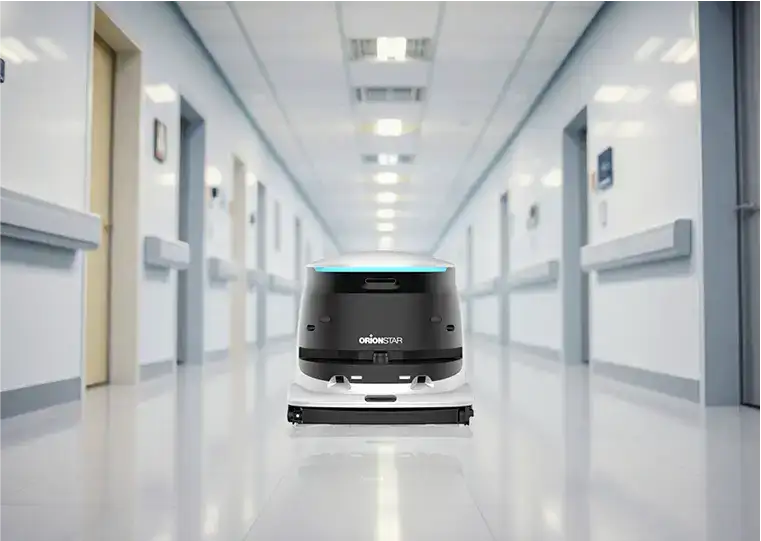
Navigating the complexities of Integrated Facility Management within hospitals involves balancing severe labor shortages, escalating operational costs, and strict infection control compliance requirements. Traditional manual cleaning methods often struggle to maintain the rigorous hygiene standards required in healthcare environments continuously, prompting a shift toward automated solutions. Consequently, commercial cleaning robots have emerged as a vital technological intervention, offering a reliable, efficient, and standardized approach to overcoming these pressing facility management challenges.
The OrionStar CleaniBot S55 Pro serves as a practical example of how these general automated capabilities are integrated into a physical unit designed for large indoor commercial use. The robot supports a 550 mm cleaning width and delivers up to 1,197 m²/h in scrubbing mode and up to 1,368 m²/h in Sweep & Vacuum, ECO Vacuum, Dust Mop, and combined modes, according to manufacturer data. Its multi-sensor navigation system, including LiDAR, stereo camera, ultrasonic sensors, and line lasers, helps the unit operate alongside patients, staff, and equipment in busy hospital settings, while runtime can reach up to 4.5 hours in scrubbing mode or up to 28 hours in Dust Mop mode under defined test conditions.
Wards require a quiet and well-maintained environment to support patient recovery, but continuous foot traffic brings in constant debris. Commercial cleaning robots can be scheduled to perform low-noise sweeping and scrubbing during off-peak hours, maintaining floor hygiene without disturbing resting patients.
These expansive, high-traffic areas are prone to rapid dirt accumulation and present navigational hazards due to moving beds, wheelchairs, and visitors. Utilizing dynamic obstacle avoidance, automated scrubbers can safely maneuver through these busy thoroughfares, providing continuous wide-area coverage to maintain a clean public appearance.
Outpatient waiting rooms see a high turnover of people throughout the day, increasing the risk of localized spills and general wear. Robots equipped with systematic path planning can efficiently clean these congested zones during the night or designated low-traffic intervals.
While the sterile core of an operating room requires specialized manual decontamination, the adjacent prep and recovery hallways demand consistent foundational cleanliness. Automated floor cleaners help keep these transitional zones free of loose debris and surface moisture, supporting the workflows of medical personnel.
To maximize their utility, commercial cleaning robots are increasingly designed to integrate directly with existing hospital smart systems, such as Building Management Systems (BMS) and Computerized Maintenance Management Systems (CMMS). Through IoT connectivity, these robots can automatically communicate with automated doors or elevators to navigate multi-floor facilities without human assistance. Furthermore, integrating cleaning data APIs into a centralized CMMS allows facility managers to trigger specific cleaning missions based on foot traffic sensor data, shifting maintenance strategies from a rigid schedule to a more efficient, demand-driven model.
Ultimately, integrating automated cleaning technology provides Integrated Facility Management teams with a measurable way to advance environmental stewardship while supporting the operational standards of healthcare hygiene.
The adoption of commercial cleaning robots is gradually changing how Integrated Facility Management teams approach the maintenance of hospitals, shifting the focus from labor-intensive routines toward more strategic, automated hygiene control. As facilities varying in size and layout require different technological interventions, solutions like the OrionStar CleaniBot series offer multiple models designed to adapt to diverse spatial and operational requirements. By integrating these autonomous systems alongside their existing Environmental Services teams, healthcare facilities can pursue a balanced combination of operational efficiency, regulatory compliance, and enhanced safety for both patients and staff.
