

REQUEST DEMO
Robot CATALOG will be sent to your mailbox immediately after submission.
SUBMIT
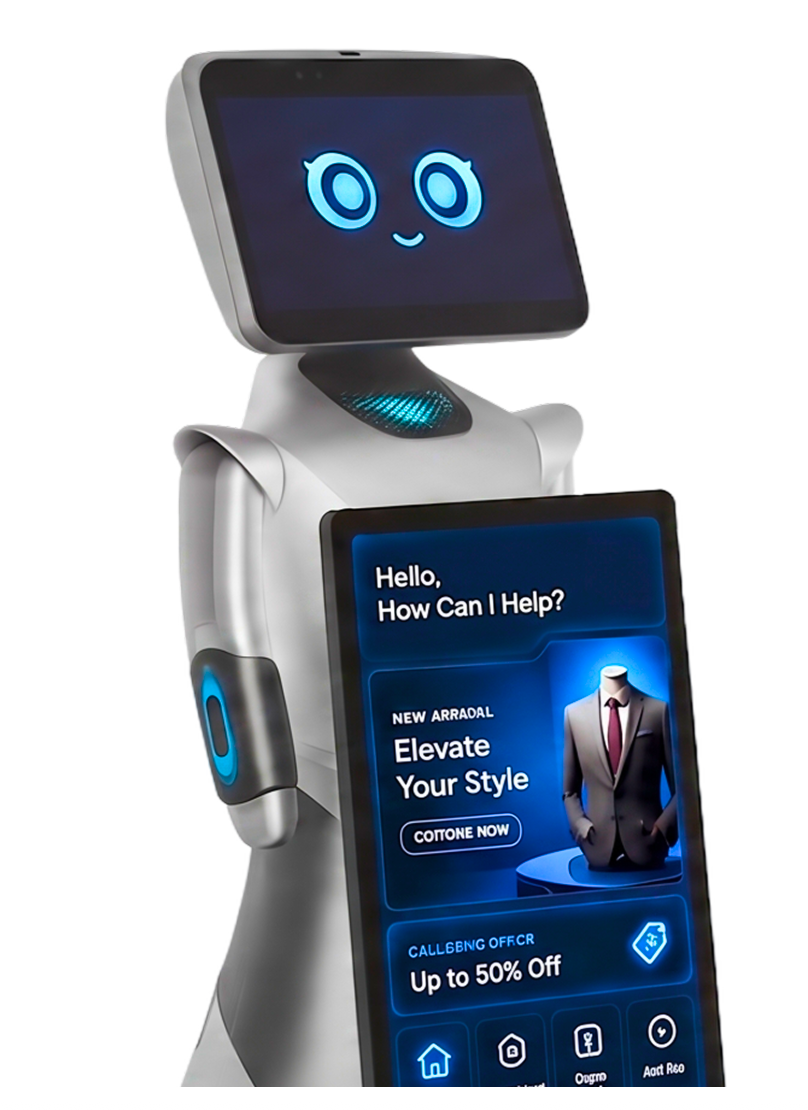
The retail industry within shopping malls is currently standing at a distinct inflection point. For decades, the fundamental operational model relied on expanding human teams to meet rising visitor demands. Today, that equation is fracturing. The scale of retail operations is expanding, yet the availability of frontline labor is shrinking globally. Simultaneously, artificial intelligence and autonomous navigation technologies have matured significantly. Hardware cost curves have stabilized, making commercial deployment financially viable across broad portfolios. Moreover, international visitors now expect instant, multilingual information upon entering a venue. As a result, mall operators, retail experience managers, and customer experience directors must reconsider their basic operational frameworks. Reception robots have emerged as a viable, industry-level solution. They bridge the gap between static digital directories and overstretched human staff. By acting as a dynamic point of contact, these systems are fundamentally altering how physical retail spaces manage foot traffic and customer inquiries.
These pressures point to a shared conclusion—the traditional model is no longer sustainable.
To address these varied spatial and operational demands, the OrionStar GreetingBot series provides a dual-model differentiated solution. Rather than a one-size-fits-all approach, the series deploys specific form factors for distinct zones within shopping malls.
The GreetingBot AD serves as a high-end, highly visible touchpoint for expansive sub-spaces like atriums and wide corridors. According to manufacturer data, it features a 21.5-inch chest display and operates for up to 8 to 10 hours per charge. This extended runtime allows it to simultaneously broadcast mall promotions and guide visitors through heavy foot traffic without frequent interruptions.
Conversely, the GreetingBot Mini targets more constrained or densely packed areas, such as food courts and parking areas. With a minimum passable width of just 55 cm, according to manufacturer specifications, it navigates tight aisles seamlessly where larger units might struggle.
These two models operate on a complementary logic. It is not about which unit is better; rather, each fulfills its designated role to cover completely different operational scenarios. Moreover, both units integrate robust digital management capabilities. Operations teams can manage multi-robot scheduling, monitor fleet status, and execute remote deployments through a unified cloud platform. Because these systems utilize cameras and microphones to process visitor interactions, operators must carefully verify GDPR compliance. Industry precedents suggest utilizing edge computing, where interactions are processed locally and discarded promptly, to align with strict data privacy frameworks.
These results are not theoretical; they are realities that mall operators, retail experience managers, and customer experience directors are already validating.
The prevailing industry stance is that automation does not replace human workers; instead, it elevates them. Reception robots are designed to absorb high volumes of routine, large-area tasks. They handle multilingual greetings, basic wayfinding, and initial promotion distribution. As a result, human staff can transition toward higher-value work. Personnel are freed to manage complex customer relations, handle sensitive complaints, and ensure overall service quality. This structural shift preserves workforce stability while mitigating the widespread burnout reported by retail frontline workers. Furthermore, this collaborative model creates demand for entirely new operational roles. Shopping malls now require fleet dashboard monitors, remote diagnostic technicians, and privacy compliance officers to manage these autonomous systems. Retail experience managers are also needed to script the brand interactions delivered by the robots. In short, technology streamlines the operational floor, but it cannot fully replace the human element required for true hospitality.
Reception robots are rapidly shifting from experimental novelties to standard infrastructure within the retail industry. As physical retail spaces face mounting pressures to optimize costs and maintain high service standards, autonomous systems provide a scalable baseline. The OrionStar GreetingBot series offers multiple models to adapt to different scenario needs, allowing operators to deploy targeted solutions across diverse mall environments. Organizations evaluating their future operations can explore these varied form factors to find the right fit for their specific spatial constraints. Ultimately, the integration of robotics into public retail spaces is an inevitable progression. The venues that succeed will be those that view automation not as a simple cost-cutting measure, but as a foundational layer that supports and sustains their human workforce.
