

REQUEST DEMO
Robot CATALOG will be sent to your mailbox immediately after submission.
SUBMIT
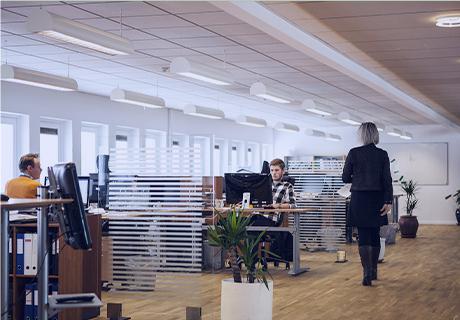
Building Management in commercial buildings is currently navigating a distinct operational inflection point. A structural labor crisis has permanently altered the facility management landscape across the globe. Entry-level hourly labor pools are steadily shrinking while average wages rise year over year. Simultaneously, institutional tenants demand tighter environmental compliance and higher daily hygiene standards post-pandemic. The traditional math of adding more manual headcount simply no longer works for facility operators. Consequently, autonomous technology has moved from pilot testing to broad deployment. The underlying hardware costs have stabilized, and digital mapping maturity has grown significantly. Therefore, commercial cleaning robots are now stepping in as a transformative, industry-level solution. They transition facility care from a variable human resource challenge into a predictable, manageable technological process. As a result, facility operators can finally bridge the gap between fixed budgets and escalating service expectations without sacrificing quality.
These operational pressures point toward a single, unavoidable conclusion—the traditional, manual-only service model is fundamentally unsustainable.
The OrionStar CleaniBot series addresses this operational shift by providing a dual-model, differentiated solution tailored for commercial buildings. Instead of forcing one machine to fit every space, the strategy deploys specialized units that cover completely different scenarios.
The CleaniBot C5 acts as the heavy-duty workhorse for expansive, high-traffic zones like parking areas, loading docks, and large basement corridors. According to manufacturer data, it delivers up to 1,980 m²/h of cleaning capacity with 25 kg of downward scrubbing pressure. This makes it ideal for removing stubborn grime in tough environments without exhausting manual labor.
Conversely, the CleaniBot S55 Pro is engineered for complex, tenant-facing public zones such as lobbies, narrow corridors, and shared common spaces. It offers a compact footprint and operates quietly, reaching noise levels as low as 45 dB in dust mopping mode, according to manufacturer data. Moreover, it features an ECO Vacuum mode that can run up to 19.5 hours on a single charge, ensuring daytime maintenance without disrupting tenants.
Crucially, these models complement each other seamlessly. The C5 manages the heavy-duty peripheral zones, while the S55 Pro handles nuanced, multi-surface interior spaces. Above all, both robots integrate into modern digital management workflows. They support Wi-Fi and 4G connectivity, enabling remote deployment, cloud-based maintenance, and detailed data reporting for facility teams. Furthermore, because these units process telemetry and navigation data via secure cloud platforms, they are designed to support property operators in meeting strict GDPR and local data protection requirements. By replacing clipboard logs with auditable digital records and employing privacy-by-design features, the robots help safeguard tenant privacy while maintaining compliance.
These outcomes are not theoretical projections; they are realities that building managers and property operators are already validating in the field.
The integration of robotics in commercial spaces is fundamentally about task automation rather than job elimination. Autonomous units take over the highly repetitive, large-area floor scrubbing tasks that historically caused high physical strain and worker fatigue. Consequently, this frees up human personnel to focus on higher-value, detailed work. Janitorial staff redirect their saved hours toward critical hygiene priorities like restrooms, touchpoints, and direct tenant service. Most workers reportedly prefer this shift, as it reduces physical wear and tear. Furthermore, this technological transition is creating entirely new professional skill sets within facility management. We are seeing the emergence of specific roles such as robot fleet managers, data analysts for cleaning telemetry, and quality supervisors. These professionals audit automated cleaning logs against tenant expectations and manage exception handling. In short, automation elevates the existing workforce from pure physical labor to supervisory and technical oversight, stabilizing service delivery in the process.
Moving forward, commercial cleaning robots are rapidly transitioning from experimental novelties to core operational infrastructure in commercial buildings. Facility budgets will increasingly treat autonomous floor care as a standard utility, much like modern HVAC or security systems. To support this ongoing evolution, the OrionStar CleaniBot series provides multiple models to adapt to diverse spatial requirements, ensuring that every corner of a property is maintained efficiently. As building managers and property operators continue to balance rising operational costs against stringent tenant demands, relying strictly on traditional manual labor is a fading paradigm. Ultimately, data-driven, autonomous cleaning networks will define the modern baseline for competitive, compliant, and resilient building management.
