

REQUEST DEMO
Robot CATALOG will be sent to your mailbox immediately after submission.
SUBMIT
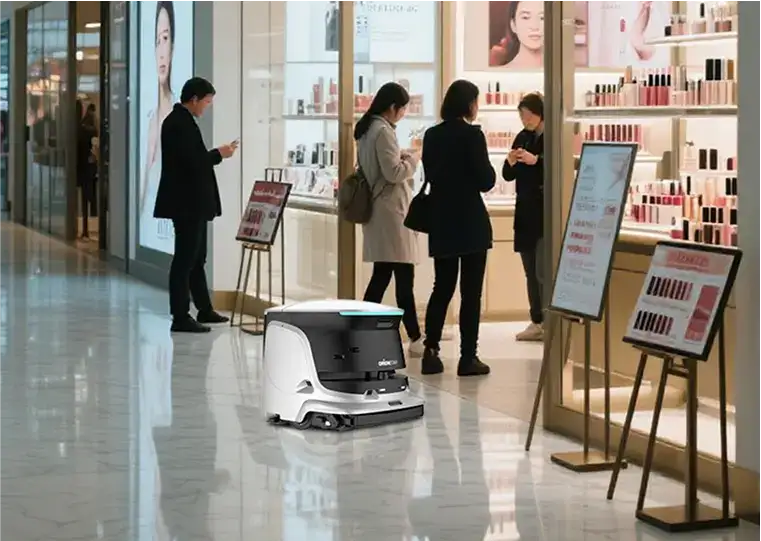
Warehouse clubs occupy a unique position in retail: they combine the customer-facing demands of large-format stores with the operational intensity of warehouse environments, including wide hard-floor areas, forklifts, pallets, promotional displays, and constant customer and employee movement. Maintaining a constant state of clean across tens of thousands of square meters is increasingly difficult amid persistent labor shortages, high janitorial turnover, rising costs, and heightened sanitation expectations from shoppers and staff alike. Manual cleaning is not only repetitive and time-consuming but also difficult to measure and verify consistently, leaving operators with limited visibility into what was actually cleaned, when, and how well. Commercial cleaning robots have emerged as a practical response to these pressures, offering autonomous, data-verified floor care that can run alongside daily operations in warehouse clubs without disrupting shoppers or staff.
Warehouse club facility managers and warehouse club operators face a set of compounding operational challenges:
Commercial cleaning robots as a category bring several core technology capabilities to large retail and warehouse-style environments:
Because these systems typically involve cameras, mapping, and cloud data processing, operators deploying them in Europe or handling data of EU residents should verify GDPR compliance with the supplier—covering what personal data is captured, how it is stored and retained, and under what processing agreements—before procurement.
The OrionStar CleaniBot S55 Pro illustrates how these category-level capabilities translate into a deployable machine for large indoor floors. Its LiDAR system supports map construction of up to 10,000 m² with automatic positioning and real-time map updates, according to manufacturer data, while a 15-sensor array combining LiDAR, a stereo camera, ultrasonic sensors, and line lasers provides 360° obstacle detection and cliff sensing. Once tasks are scheduled, the robot executes them autonomously, switching between cleaning modes—scrubbing, vacuuming, dust mopping, and combined modes—based on designated zones, and returns to its dock for automatic recharging in under four hours. According to manufacturer specifications, it delivers up to 1,368 m²/h in vacuuming and dust-mopping modes and up to 28 hours of runtime in dust mop mode, which reflects the kind of broad-area, low-intervention coverage that warehouse-format retail floors demand.
Main aisles carry the heaviest foot traffic and constant cart movement, requiring frequent cleaning without blocking shoppers. Robots with systematic path planning and reliable obstacle avoidance can run scheduled routes along wide aisles, maintaining a constant state of clean during operating hours.
Checkout zones concentrate spills, debris, and queuing customers in tight spaces with frequent layout changes. Compact robots with a narrow minimum passing width and real-time obstacle detection can work around registers and queues during lower-traffic windows.
Fresh and frozen sections face condensation, product drips, and strict hygiene expectations on hard flooring. Scrubbing modes with dedicated clean and wastewater tanks support routine washing of these aisles on a repeatable schedule, with reporting that documents coverage for internal hygiene records.
Food courts generate crumbs, grease, and beverage spills throughout the day, while entrances and vestibules track in outdoor dirt and moisture. Zone-based mode switching lets a single robot vacuum debris in dining areas and dust-mop or scrub entrance hard floors, with quiet modes suited to customer-facing spaces.
Commercial cleaning robots are increasingly part of a connected retail-operations ecosystem rather than isolated machines. Industry sources describe cloud-connected dashboards that aggregate coverage, runtime, autonomous-versus-manual usage, and visual heat maps across stores, regions, and chains, enabling centralized performance verification. The same robotics platforms used in retail can support multiple applications—floor scrubbing, vacuuming, inventory delivery, and shelf scanning—managed through centralized software, and warehouse-club operators have already deployed robotics connected to inventory workflows at national scale. That said, no confirmed warehouse-club-specific integration architecture for BMS, CMMS, ERP, WMS, or IoT platforms is publicly documented, so any specific integration—along with APIs, data-retention settings, and cybersecurity controls—should be validated with the robot supplier and the club's systems team before procurement.
Taken together, cleaning automation contributes less through dramatic single metrics and more by making day-to-day operations measurable, consistent, and easier to govern.
Commercial cleaning robots are steadily changing how warehouse clubs maintain their floors—replacing inconsistent, hard-to-verify manual routines with autonomous, data-backed operations that fit around shoppers, staff, and warehouse logistics. For facility managers weighing labor constraints, rising sanitation expectations, and ESG reporting demands, autonomous floor care offers a practical path toward cleaner floors and clearer operational evidence. The OrionStar CleaniBot series offers multiple models suited to different venue sizes, floor types, and cleaning requirements, providing options for operators exploring how automation could fit their specific facilities.
Product specifications cited are based on manufacturer test data; actual performance varies by environment.