

REQUEST DEMO
Robot CATALOG will be sent to your mailbox immediately after submission.
SUBMIT
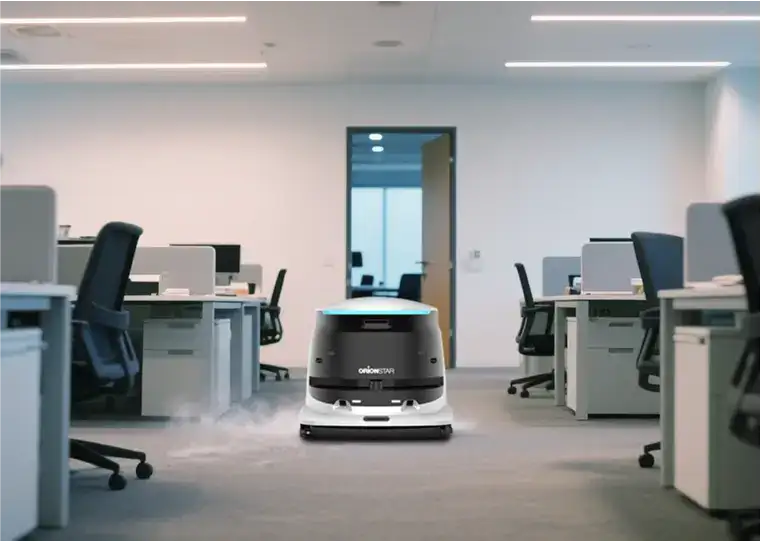
The commercial space sector has reached a definitive inflection point in facility operations. For decades, building maintenance relied heavily on manual labor and static schedules. Today, that traditional model faces severe structural headwinds. A rapidly aging workforce, chronic talent shortages, and escalating resource costs are colliding with higher tenant expectations for hygiene. Furthermore, new environmental mandates require verifiable energy and water efficiency across commercial portfolios. Fortunately, automated floor care technology has matured alongside these mounting pressures. Advanced navigation, improved battery life, and falling production costs have made automation viable at scale. As a result, automated floor care solutions are transitioning from experimental novelties to essential, industry-level solutions. They offer facility managers a reliable way to standardize floor care, stabilize operational budgets, and meet regulatory compliance targets. Therefore, automation is no longer a future concept for building operators; it is a present-day necessity for maintaining competitive, high-performing properties.
These mounting pressures point to a clear consensus: traditional, manual-only operational models are no longer sustainable.
To address these diverse operational requirements, the OrionStar CleaniBot series provides a differentiated, dual-model solution for facility managers. The models are designed to operate as a complementary fleet, assigning the right machine to the appropriate zone. The CleaniBot C5 operates as a heavy-duty scrubbing system suited for expansive, high-traffic common areas, large lobbies, and connecting corridors. According to manufacturer data, the C5 utilizes a 550 mm main brush and a combined 90-liter tank system, achieving a theoretical maximum cleaning capacity of up to 1,980 square meters per hour, depending on facility layout.*
In contrast, the CleaniBot S55 Pro is engineered for versatility in mixed-use environments like office floors, meeting rooms, pantries, and adjacent restroom corridors. Manufacturer specifications indicate the S55 Pro operates at a quiet 45 decibels (measured at 1.5m) in dust-mopping mode, allowing it to navigate populated workspaces without disruption. Moreover, it offers a dust-mopping runtime of up to 28 hours under standard testing conditions. Instead of competing, these two automated floor care solutions fulfill distinct roles to ensure total facility coverage. Heavy grime in entrance lobbies is managed by the C5, while the S55 Pro handles the quiet, continuous maintenance of tenant work zones.
Both units integrate into broader building operations through Wi-Fi, 4G connectivity, and open APIs for seamless Building Management System (BMS) integration, enabling remote deployment, over-the-air updates, and digital data reporting. Because these automated systems rely on multi-sensor navigation, including cameras and LiDAR, building operators deploying them must ensure their data governance protocols align with GDPR compliance. Facility managers should verify that sensor data processing adheres to strict data minimization and security-by-design principles.
These results are not theoretical projections; they represent the practical realities building operators are already validating in the field.
The integration of robotics in commercial spaces is fundamentally changing the nature of facility work, acting as an augmentation tool rather than a replacement for human staff. Automation strategically absorbs the most physically taxing and repetitive tasks, such as continuous floor scrubbing and large-area vacuuming. Consequently, this shift allows human employees to redirect their efforts toward higher-value responsibilities. Cleaning staff can focus on detail-oriented work in high-contact zones, quality supervision, and direct customer service tasks that require human judgment. Simultaneously, the role of facility managers is evolving from reactive maintenance to proactive operational strategy. Managing these automated deployments introduces new digital skill sets to the workforce. Technicians and operators must now learn to interpret real-time dashboards, handle predictive maintenance alerts, and oversee autonomous fleet schedules. Above all, this collaborative model improves workplace ergonomics and establishes clear job expectations, which helps organizations retain skilled talent in a historically tight labor market.
Automated floor care solutions are rapidly transitioning from standalone devices to integrated infrastructure within the commercial space sector. As buildings become smarter and sustainability mandates grow stricter, automated floor care will function much like modern HVAC or lighting systems—operating continuously in the background, driven by operational data. The OrionStar CleaniBot series demonstrates how multiple robotic models can be deployed to meet the varied demands of different indoor environments, providing a flexible framework for building operators to explore. In short, the integration of autonomous cleaning technology represents a permanent structural shift in facility management. Organizations that adopt and master these collaborative robotic systems will be well-positioned to control operating costs, meet environmental standards, and deliver the pristine environments modern tenants expect.
\Based on internal lab tests. Actual performance may vary.*
Privacy & Data Security Disclaimer: OrionStar CleaniBot series adheres to strict GDPR and local data protection regulations. Visual data processed via onboard cameras is used exclusively in real-time for obstacle avoidance and is not stored or transmitted to the cloud. Facility operators retain full control over data governance and operational reporting.