

REQUEST DEMO
Robot CATALOG will be sent to your mailbox immediately after submission.
SUBMIT
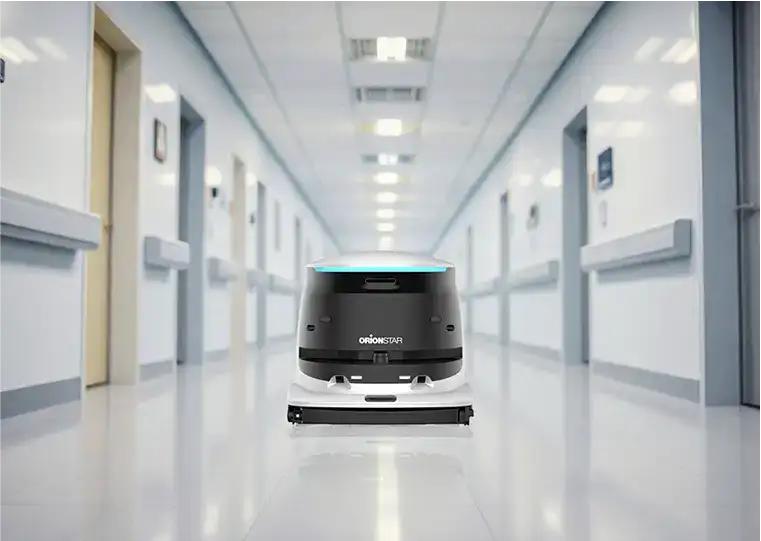
Medical clinic facility management is currently standing at a critical inflection point. Patient expectations for hygiene have fundamentally shifted, forcing facilities to maintain elevated cleanliness standards indefinitely. Meanwhile, traditional custodial models are buckling under severe labor shortages and escalating operational costs. Technology has finally matured enough to meet these rigorous healthcare demands. Advanced navigation systems and improved battery capacities have shifted automation from a novelty to a practical necessity. Therefore, the cost curve of robotics now makes economic sense for everyday healthcare operations. As a result, commercial cleaning robots have emerged as an industry-level solution rather than a futuristic experiment. These systems address the persistent gap between rising safety standards and constrained facility budgets. Above all, they offer a reliable method to stabilize daily maintenance in the medical clinic. By integrating automated floor care, operators can finally align their baseline operations with modern healthcare expectations.
Labor Shortages and Costs: Custodial teams are severely overextended due to rising labor costs and a persistent shortage of reliable talent. In many cases, labor alone can consume up to 70% of a site's total operational budget.
High Staff Turnover: A 35% benchmark of facility managers cite employee retention as a primary concern. This high turnover creates substantial training costs and disrupts critical cleaning protocols in healthcare environments.
Elevated Patient Expectations: Since 85% of Americans plan to continue heightened pandemic-era cleaning practices, patients actively seek facilities demonstrating strong infection prevention. This perception directly impacts HCAHPS scores and economic outcomes.
Liability and Safety Risks: Inadequate floor maintenance creates significant safety hazards across commercial facilities. Slip-and-fall incidents currently cost operators approximately $1.2 billion annually.
These pressures collectively indicate that relying solely on traditional manual cleaning models is becoming increasingly challenging.
The OrionStar CleaniBot series provides a differentiated, dual-model solution designed to handle diverse operational footprints. Rather than offering a single compromise, these two platforms work in a complementary logic. They are not competing for superiority; instead, they each cover different scenarios within a facility to ensure comprehensive maintenance.
The CleaniBot C5 serves as the heavy-duty workhorse for expansive, high-traffic zones like main corridors and large waiting rooms. According to manufacturer data, it features a combined 90 L water-tank capacity and can achieve a maximum cleaning area capacity of up to 1,980 square meters per hour under standard test conditions. Actual performance may vary depending on clinic layout and environmental factors. Therefore, it effectively manages extended shifts and removes stubborn grime without requiring constant manual refills.
Conversely, the CleaniBot S55 Pro is engineered for compact and noise-sensitive areas, such as examination rooms, procedure rooms, and reception areas. It operates quietly, generating a noise level of just 45 dB in dust mopping mode, according to manufacturer data. Moreover, its compact frame allows it to navigate tight clinical corridors, requiring a minimal passing width of just 700 mm. By deploying both units, clinic facility managers can tailor their cleaning strategy to the unique layout of their medical clinic.
Furthermore, these robots are anchored by robust digital management capabilities. Wi-Fi and 4G connectivity support remote deployment, cloud-based maintenance, and detailed data reporting. Facility managers can track performance and schedule tasks seamlessly. While these automated systems process strictly operational and spatial data for navigation, operators should align their deployment with GDPR and local privacy frameworks.
Efficiency and Productivity: Deployments of professional cleaning robots can yield up to a 25% increase in efficiency by reallocating human teams, according to recent facility management studies.
Labor Hour Reduction: A top-five U.S. hospital network decreased the number of hours spent scrubbing floors by 50% using robotic scrubbers, according to documented healthcare deployments.
Predictable Area Coverage: Automated floor scrubbers can reliably cover approximately 50,000 square feet of floor space autonomously each shift, according to industry benchmarks.
Environmental Sustainability: Automated floor cleaning supports ESG goals through highly predictable resource use. Digital reporting prevents unnecessary re-cleaning of spaces, while targeted scrubbing reduces excessive chemical application and water waste.
These measurable outcomes demonstrate how clinic facility managers are optimizing operations on the ground.
Automation in the medical clinic is reshaping roles rather than eliminating them. The integration of robotics directly addresses the labor supply-demand imbalance by working alongside existing employees. While robots take over repetitive, dull, and strenuous floor-cleaning tasks, human workers transition to higher-value responsibilities. Therefore, support staff can dedicate more time to critical disinfecting of high-touch surfaces in examination rooms and procedure rooms. Furthermore, this reallocation improves workplace well-being by reducing exposure to musculoskeletal injuries associated with labor-intensive tasks. Instead of replacing the workforce, automation elevates the nature of their daily duties. As a result, new skill requirements are actively emerging within the sector. Clinic facility managers now need capabilities in fleet management, data monitoring, and quality supervision. Employees gain opportunities for career advancement by acquiring technical skills to program and maintain robotic systems. In short, human-robot collaboration builds a safer and more engaged custodial workforce.
Looking ahead, commercial cleaning robots are steadily transitioning from optional upgrades to essential infrastructure in medical clinic facility management. As hygiene protocols remain stringent and labor constraints persist, automated floor care provides a necessary foundation for stable daily operations. The OrionStar CleaniBot series offers multiple models designed to adapt to various spatial demands, providing operators with scalable options to explore for their specific environments. Facilities that integrate these systems can better balance infection control standards with operational budgets. Ultimately, the adoption of robotics represents a permanent operational shift. Medical practice operators who embrace this transition will establish a more resilient, predictable, and compliant approach to facility maintenance.