

REQUEST DEMO
Robot CATALOG will be sent to your mailbox immediately after submission.
SUBMIT
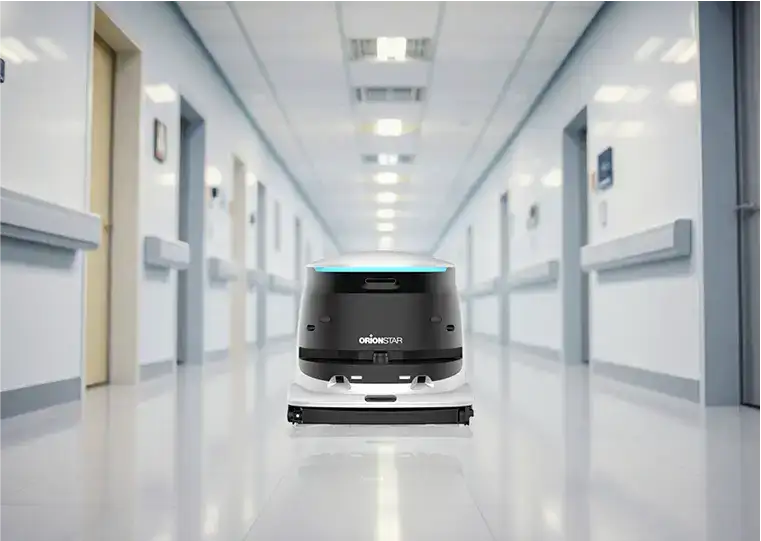
Healthcare services within the modern medical facility are currently facing a significant inflection point. The sudden convergence of rising operational costs, severe labor shortages, and heightened patient expectations has placed unprecedented strain on traditional environmental management. Meanwhile, recent technological maturity in autonomous navigation and sensor capabilities has significantly altered the cost-benefit curve of automated floor care. Modern patients actively demand visible, constant proof of rigorous hygiene, while stringent clinical standards require uncompromised consistency across all physical spaces. As a result, commercial cleaning robots are rapidly transitioning from experimental pilot programs into essential, industry-level solutions. They efficiently address the sheer scale of complex facility maintenance without linearly increasing human headcount or straining existing department budgets. Moreover, this widespread technological shift is no longer a futuristic concept but an immediate operational necessity. Facility leaders must adapt quickly to maintain their established standard of care.
These pressures collectively point to one conclusion—traditional manual cleaning models are becoming increasingly challenging to maintain.
The OrionStar CleaniBot series offers a dual-model differentiated approach to directly address these complex spatial demands. In large, high-traffic zones such as primary corridors, supply logistics routes, and expansive public lobbies, the CleaniBot C5 takes the lead. This heavy-duty model features a 90-liter combined water tank system and can cover a cleaning area of up to 1,980 square meters per hour, according to manufacturer data. It effectively handles the most demanding, large-scale scrubbing tasks required in busy medical facility arteries. Conversely, the CleaniBot S55 Pro is engineered for more complex, populated sub-spaces like waiting areas, recovery areas, and examination room vicinities. According to manufacturer data, it operates at a low noise level of down to 45 decibels in dust mopping mode and navigates easily through minimum passing widths of 700 millimeters. It also boasts an ECO Vacuum runtime of up to 19.5 hours, making it ideal for continuous daytime deployment. Therefore, these two models are not competing alternatives; rather, they form a highly complementary fleet where each unit meticulously covers specific operational scenarios. Digital management capabilities further unify this diverse robotic fleet. Facility managers can utilize standard Wi-Fi or optional 4G network connectivity (subject to facility network infrastructure and signal availability) to handle remote deployment, access cloud-based maintenance dashboards, and generate precise digital cleaning reports. Because these daily operations inherently involve mapping sensors, cameras, and continuous data collection in highly sensitive environments, medical facility operators must strictly verify GDPR compliance regarding data processing and privacy. Above all, this automated ecosystem standardizes daily floor care across diverse facility zones while providing total operational transparency.
These results are not theoretical; they are realities that facility managers and medical facility operators are already verifying.
In healthcare services, automation is fundamentally designed to elevate human workers rather than replace them. By assigning highly repetitive, large-area floor scrubbing to automated machines, environmental services staff can redirect their focus toward high-value, critical tasks. Workers can concentrate exclusively on disinfecting high-touch surfaces, cleaning individual patient rooms, stocking essential supplies, and responding directly to immediate clinical needs. Consequently, this collaborative model significantly reduces the ergonomic strain, wet work hazards, and physical fatigue typically associated with manual floor care, thereby creating a noticeably healthier work environment for the staff. Instead of endlessly pushing mops, humans are transitioning into expanded operational roles focused on fleet management, route monitoring, and digital data reporting. Facility managers can track daily service quality through cloud-based dashboards, upgrading the overall technical skill set of their environmental teams. In short, robots provide the necessary cleaning frequency and documented proof of service, while people firmly retain full responsibility for clinical judgment, infection-sensitive tasks, and patient-facing care.
Commercial cleaning robots are rapidly becoming foundational infrastructure for modern healthcare services. As operational pressures intensify and strict hygiene expectations remain rigid, the reliance on automated, data-driven floor care solutions will undoubtedly continue to grow. The OrionStar CleaniBot series provides multiple models to accommodate these diverse spatial and acoustic requirements, allowing operators to systematically match specific robots to distinct facility zones for optimized performance. Readers and facility leaders can further explore how these distinct models align with their own unique operational parameters. Therefore, the long-term trajectory for the industry heavily favors integrated automation. Facilities that proactively adopt integrated automation will achieve superior cleaning standardization, better resource allocation, and much stronger regulatory compliance. Ultimately, robotics in environmental care represents a permanent structural shift in how medical facilities manage daily safety, operational efficiency, and global public health.
OrionStar CleaniBot is a commercial cleaning device and is not intended for use as a medical device or to diagnose, treat, cure, or prevent any disease. Disinfection efficacy depends on manual protocols and approved chemicals.
All mapping and operational data processed by OrionStar robots are strictly anonymized. Visual data for obstacle avoidance is processed locally and is not uploaded to the cloud, ensuring compliance with GDPR and local privacy regulations. Network activation requires user consent.
Figures for cleaning efficiency, runtime, and coverage are based on manufacturer laboratory testing. Actual performance may vary depending on floor types, room layouts, obstacle density, and facility network infrastructure.