

REQUEST DEMO
Robot CATALOG will be sent to your mailbox immediately after submission.
SUBMIT
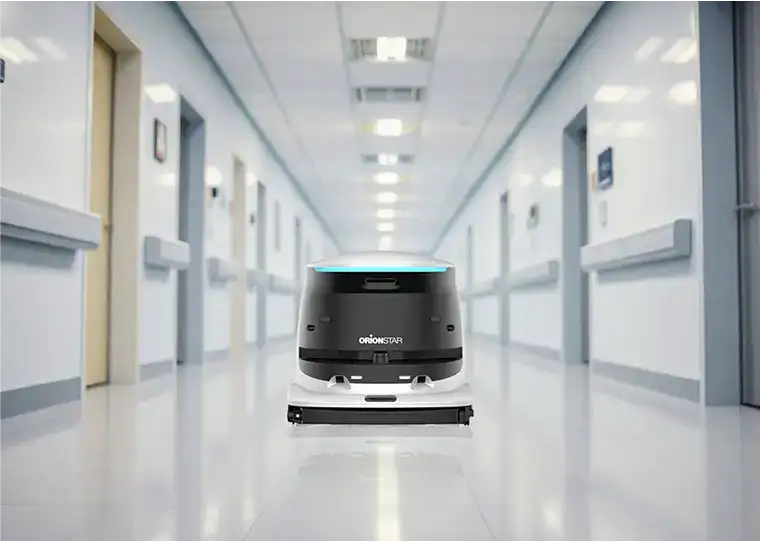
In healthcare services, maintaining a medical facility presents a complex set of environmental challenges, as operators must balance rigorous infection-prevention standards, chronic labor shortages, and strict compliance documentation requirements. With environmental services departments facing severe staffing pressures and high turnover costs, facility managers are increasingly turning to commercial cleaning robots as a reliable empowering tool to ensure consistent, verifiable, and cost-effective floor care while assisting human staff in reallocating their time to higher-value sanitation tasks.
Facility managers and medical facility operators struggle with environmental services staffing pressures, including annual turnover rates often reported in the 40 to 80 percent range.
Unfilled night-shift floor-scrubbing roles create undocumented or missed cleaning zones, which conflicts with the expectations of accreditation bodies for consistent, verifiable records.
Medical facility floors endure heavy foot traffic and act as reservoirs for pathogens like C. difficile and MRSA, demanding rigorous and frequent physical cleaning.
Operators face escalating recruitment and onboarding costs, with each turnover event costing approximately USD 3,500 to 6,000 in lost productivity and hiring expenses.
Equipped with advanced LiDAR navigation and autonomous path planning, these systems efficiently map and cover large floor plans without continuous human supervision.
Smart obstacle avoidance technologies allow the equipment to safely navigate around moving staff, patients, and sensitive medical carts in active environments.
Auto-charging and automated docking capabilities enable continuous operation by allowing the units to independently recharge and manage water exchanges.
Real-time monitoring and cloud-based fleet management provide timestamped, uneditable session logs for audit-ready compliance documentation.
As these autonomous platforms utilize mapping sensors, cameras, and cloud connectivity to process spatial data, privacy is paramount. To comply with HIPAA, GDPR, and other regional data protection frameworks, visual data used for obstacle avoidance is typically processed in real-time on the device edge and is not stored or transmitted to the cloud, ensuring no Personal Health Information (PHI) is captured or retained. Cloud-based fleet management metrics are anonymized and strictly limited to operational telemetry.
Illustrating these autonomous capabilities, the OrionStar CleaniBot C5 can map an area of up to 10,000 square meters (depending on layout complexity) while utilizing a smart obstacle-avoidance system to safely navigate around people and equipment. According to manufacturer specifications, the unit delivers a cleaning area capacity of up to 1,980 square meters per hour under standard continuous operating conditions, supported by an automated workstation that handles clean-water refilling and waste-water discharge without manual intervention. Furthermore, the robot operates at noise levels as low as 68 dB(A) in standard cleaning modes, demonstrating how modern autonomous systems can perform heavy-duty floor scrubbing in active public spaces without causing excessive auditory disruption.
Labor reallocation: By automating floor care, managers can shift human staff from routine scrubbing to higher-value tasks such as restroom sanitation and patient room detailing.
Cost reduction: According to independent industry models for community hospitals, transitioning to autonomous floor scrubbers can yield a payback period of approximately 9.8 to 16 months.
Consistent coverage: Autonomous units can achieve an average nightly coverage of 65,000 to 90,000 square feet, minimizing the undocumented zones associated with short-staffed shifts.
Reliable uptime: When integrated with preventive maintenance schedules, automated cleaning programs can maintain 95 percent-plus fleet uptime to ensure predictable daily operations.
Audit-ready documentation: These platforms provide comprehensive cleaning-cycle documentation, generating the verifiable start-and-end times and coverage metrics required during accreditation surveys.
These high-traffic entry points accumulate significant dirt and debris throughout the day, requiring frequent intervention to maintain a safe and welcoming environment. Autonomous cleaning robots can be scheduled to run continuous dust-mopping and scrubbing cycles during off-peak hours, ensuring a high standard of physical cleanliness before peak daytime operations resume.
Hospital hallways are essential arteries that demand constant availability, yet they are notoriously difficult to clean manually without disrupting the flow of stretchers and medical staff. Utilizing narrow-profile designs and smart obstacle avoidance, cleaning robots can safely navigate these active passageways, maintaining floor hygiene without obstructing critical medical transport.
Spaces dedicated to patient recovery require strict adherence to infection control protocols and a quiet environment to support rest and healing. Robots operating at low decibel levels can perform thorough sanitation routines with minimal noise, assisting in the physical removal of dirt and debris that may harbor pathogens, while supporting a peaceful atmosphere for recovering patients.
Commercial cleaning robots are increasingly designed to integrate directly with existing building management systems (BMS) and computerized maintenance management systems (CMMS) within a medical facility. By connecting via Wi-Fi or API, these robots turn every cleaning cycle into a documented maintenance event, automatically logging coverage percentages and operating metrics, and triggering work orders when consumables or battery thresholds require attention. This closed-loop data flow not only supports preventive maintenance but also provides facility managers with centralized fleet visibility, cross-site scheduling, and the verifiable records necessary for rigorous compliance surveys.
Automated floor scrubbers optimize water and chemical usage per cleaning cycle, actively supporting resource-efficient operations in facilities working to reduce their environmental footprint.
By transitioning from traditional manual cleaning methods to high-efficiency battery-operated units, hospitals can contribute to broader greenhouse-gas emission reduction targets prioritized by modern sustainability policies.
Precise, data-driven cleaning routines help medical facilities meet strict environmental compliance standards, aligning with guidelines set by organizations monitoring healthcare sustainability.
In summary, integrating automated cleaning technology helps healthcare services achieve their environmental, social, and governance (ESG) targets by establishing measurable, resource-efficient facility operations.
Commercial cleaning robots serve as highly efficient empowering tools for how healthcare services manage and maintain the medical facility environment. By combining autonomous navigation, verifiable compliance tracking, and consistent floor care, these automated platforms address critical labor shortages while upholding rigorous hygiene and facility standards. For operators looking to adapt to these evolving demands, the OrionStar CleaniBot series offers a range of models designed to accommodate different spatial requirements and operational workflows, providing practical solutions for modern facility management.