

REQUEST DEMO
Robot CATALOG will be sent to your mailbox immediately after submission.
SUBMIT
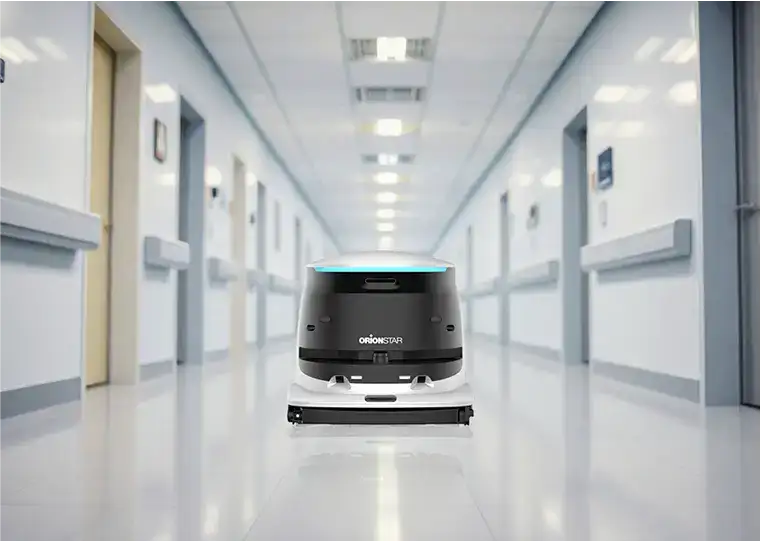
Healthcare services operating within the modern hospital system are reaching a critical inflection point. Facility footprints are expanding rapidly across main campuses and localized outpatient networks, while patient expectations for visible, rigorous hygiene continue to rise significantly. Simultaneously, labor availability is tightening across the sector. Traditional cleaning budgets rarely scale proportionally with these new environmental cleaning mandates. Therefore, relying solely on manual sanitation processes is no longer structurally sustainable. Technological maturity in autonomous navigation, coupled with an increasingly favorable cost curve for automated systems, creates an ideal environment for operational change. Instead of pushing an overextended workforce to simply work harder, forward-looking operators are rethinking their baseline infrastructure. Commercial cleaning robots have emerged as a scalable, industry-level solution to bridge this operational gap. By handling large-scale, repetitive floor care tasks, these automated systems provide the consistency and verifiable performance metrics that modern healthcare environments demand.
These pressures collectively indicate that the traditional manual model is no longer sustainable.
To address these complex operational demands, the OrionStar CleaniBot series provides a differentiated, dual-model solution tailored for the hospital system. Rather than offering a single generic machine, this approach recognizes that different zones require distinct capabilities. The CleaniBot C5 is designed for heavy-duty environments such as expansive lobbies, receiving docks, and high-traffic emergency departments. According to manufacturer data, it delivers up to 25 kg of downward scrubbing pressure and can map areas up to 10,000 m² depending on environmental complexity. These specifications make it highly effective for removing stubborn grime and managing large-scale public thoroughfares where rapid, intense cleaning is necessary.
Conversely, the CleaniBot S55 Pro is engineered for routine, quieter maintenance across narrow corridors, patient wards, and cafeterias. According to manufacturer data, it features a minimal passing width of 700 mm, allowing it to navigate complex indoor layouts easily. Furthermore, its noise level operates as low as 45 dB in dust mopping mode under defined test conditions, ensuring it can perform daytime cleaning near wards without disturbing patient recovery. These two models operate on a complementary logic. They are not competing alternatives; instead, each fulfills distinct roles and covers different scenarios within the same facility footprint.
Moreover, both units feature extensive digital management capabilities. Using Wi-Fi and 4G connectivity, operators can execute remote deployment, cloud-based maintenance, and automated data reporting. Because these systems utilize mapping sensors, cameras, and cloud platforms to function, hospital system operators must verify that all data handling aligns strictly with GDPR compliance. Implementing proper data minimization and clear user consent protocols ensures that advanced floor care respects patient privacy and regulatory frameworks.
Disclaimer: OrionStar CleaniBot series are commercial cleaning devices and are not intended for use as certified medical devices. Data collected via sensors and cameras is strictly minimized, anonymized where applicable, and processed in accordance with local privacy regulations (e.g., GDPR, HIPAA) solely for navigation and operational reporting. No patient data or personally identifiable information is collected or stored.
These results are not theoretical; they are the reality that facility managers and hospital system operators are already verifying in the field.
Automation in healthcare cleaning is fundamentally structured as augmentation rather than replacement. While robots efficiently handle repetitive, large-area floor scrubbing and vacuuming across expansive hospital zones, human staff are freed to concentrate on higher-value priorities. Workers transition to focus on high-touch surfaces, patient interactions, restrooms, and rapid spill response. Moving floor cleaning from the night shift to the day shift also makes sanitation efforts visible to patients without increasing overall labor costs. Consequently, new operational roles and skills are emerging within environmental services. Facility managers are shifting from managing manual labor to overseeing robot fleets, reviewing coverage reports, and coordinating charging schedules. Supervisors now use digital tools to analyze fail rates and report findings to environmental services management, turning data literacy into a core operational competency. By removing the most physically demanding parts of the job, automated systems improve staff engagement and shift the human focus toward quality assurance.
Looking ahead, commercial cleaning robots are steadily transitioning from optional upgrades to essential infrastructure within healthcare services. As operational pressures mount and hygiene standards become more stringent, automated floor care provides a resilient, data-backed foundation for modern facility maintenance. The OrionStar CleaniBot series, offering multiple models configured to adapt to specific spatial requirements, gives operators the necessary tools to address varied environmental challenges. For organizations evaluating their operational future, examining how different robotic profiles align with distinct facility needs is a logical next step. Ultimately, the integration of autonomous systems will define the next era of hospital operations. Facilities that adapt early to this technological shift will be best positioned to maintain rigorous standards, optimize resource allocation, and consistently meet the evolving demands of the global healthcare landscape.