

REQUEST DEMO
Robot CATALOG will be sent to your mailbox immediately after submission.
SUBMIT
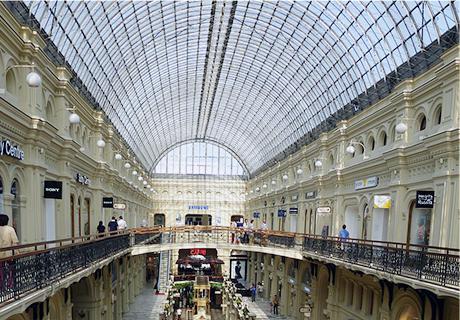
Retail Facility Management in the big-box store is currently at a critical inflection point. Store footprints continue to expand, while customer expectations for cleanliness have hardened significantly in recent years. Simultaneously, the costs of maintaining traditional manual operations are rising sharply against tightening facility budgets. Technology has finally matured enough to meet these vast spatial demands. Sensor accuracy, autonomous navigation, and battery life have crossed the threshold from experimental novelties to reliable daily tools. Therefore, manual equipment alone can no longer handle the sheer square footage and traffic volatility these environments experience daily. Instead, facility teams need solutions that scale effortlessly across diverse zones. As a result, commercial cleaning robots have emerged as an industry-level solution. They bridge the operational gap between expanding maintenance demands and severely constrained labor resources. By treating floor care as an automated, manageable process, operators can finally stabilize costs and maintain consistent spatial standards. In short, automation is no longer a future concept for large retail spaces. It is an immediate operational necessity.
These pressures point to a single, unavoidable conclusion—the traditional manual cleaning model is fundamentally unsustainable.
To address these vast operational demands, the OrionStar CleaniBot series provides a differentiated dual-model approach. These machines are not competing alternatives. Instead, they are complementary tools designed to cover the distinct micro-environments found within large retail spaces.
For heavy-duty zones like loading docks, bulk goods zones, and wide warehouse-style aisles, the CleaniBot C5 does the heavy lifting. According to manufacturer data, it delivers up to 25 kg of downward scrubbing pressure and features a combined 90-liter water tank system. This high-capacity design allows it to remove stubborn grime and manage expansive concrete floors with minimal refilling or downtime.
Conversely, customer-facing areas demand quieter, more agile operations. The CleaniBot S55 Pro fits perfectly into checkout areas and the entrance/lobby. It supports multiple floor-care functions, including an ECO Vacuum mode that runs for up to 19.5 hours and operates at a quiet 45 to 55 decibels, according to manufacturer data. Its compact footprint and 700 mm passing width allow it to navigate tight fixtures and pedestrian traffic safely. Above all, the logic here is complementary coverage. One model handles industrial-grade soils, while the other maintains high-traffic public zones.
Furthermore, both robots integrate into modern facility ecosystems through Wi-Fi and 4G connectivity. This enables remote deployment, fleet management, and cloud-based performance reporting. Because these connected systems often utilize cameras and process spatial or performance data, facility operators must ensure their data governance protocols align with GDPR requirements. Proper compliance ensures that autonomous operations remain both secure and efficient. By deploying these specific models where their strengths align with spatial needs, facility teams can fully digitize and optimize their floor maintenance strategy.
These results are not abstract theories; they are the concrete realities that retail facility managers and big-box store operators are already validating.
Automation in facility management is fundamentally not about replacing human workers. Instead, it is about elevating their roles within the operation. Commercial retail spaces will always require human judgment, adaptability, and complex problem-solving. Therefore, when robots take over the highly repetitive, physically demanding tasks of large-area floor scrubbing, human staff are freed from heavy manual labor.
As a result, employees can redirect their focus toward higher-value detail work. They handle targeted quality control, restroom sanitation, customer service interactions, and rapid spill response. Moreover, the introduction of automated fleets creates entirely new operational roles. Cleaners naturally transition into fleet managers and digital process supervisors. They learn to monitor digital dashboards, adjust routing schedules, and analyze performance data.
Above all, this shift improves workplace safety and reduces physical strain. It transforms cleaning from a reactive, labor-intensive chore into a modern, tech-enabled profession. In short, automation addresses the labor shortage not by eliminating jobs, but by making the existing workforce significantly more effective and less burdened.
Looking ahead, commercial cleaning robots are rapidly transitioning from experimental pilot projects to foundational building infrastructure. As big-box retail environments continue to face strict labor and budget constraints, robotic integration will become a standard baseline for facility design and management. To support this ongoing transition, the OrionStar CleaniBot series provides multiple models tailored to adapt to varying spatial and operational needs, allowing organizations to scale their automation footprints strategically. Facility leaders can explore these targeted configurations to find the exact operational fit for their unique spaces. Ultimately, the future of retail facility management belongs to those who successfully merge autonomous technology with human oversight. This hybrid approach will confidently define the next decade of operational efficiency, cost management, and overall facility resilience.