

REQUEST DEMO
Robot CATALOG will be sent to your mailbox immediately after submission.
SUBMIT
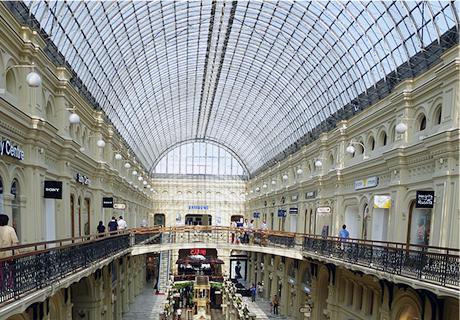
Retail Facility Management in shopping centers is currently at a critical turning point. Modern facilities face immense pressure to maintain pristine environments across massive floor plans while remaining fully open to the public. Moreover, the fundamental operating landscape has shifted dramatically. Labor costs are rising steadily, and the commercial cleaning workforce continues to shrink. At the same time, customer expectations regarding hygiene and safety are stricter than ever before. Traditional manual janitorial approaches simply struggle to keep pace with these compounding daily demands. Instead, facility operators require scalable solutions that offer predictable performance. This convergence of rising costs, larger facility footprints, and mature automation technology has pushed the industry toward a new infrastructure model. Therefore, commercial cleaning robots are transitioning from pilot projects into essential, industry-level solutions. They provide the consistency and endurance needed for always-open retail environments. By integrating these automated fleets, operators can finally separate cleaning quality from the limitations of human fatigue.
The OrionStar CleaniBot series addresses these complex retail environments through a dual-model, differentiated approach. Facility managers do not need to force a single machine to perform every task. Instead, the strategy relies on deploying specific robots for distinct physical zones.
The CleaniBot C5 serves as the heavy-duty asset for large, demanding spaces. It is highly suited for expansive main concourses, retail loading zones, and parking decks where deep scrubbing is required. According to manufacturer data, the C5 delivers a cleaning capacity of up to 1,980 m² per hour and features a combined 90 L water tank system. This high capacity allows it to manage heavy foot traffic areas and stubborn stains with minimal downtime.
Conversely, the CleaniBot S55 Pro is designed for flexibility and quiet operation in tighter or noise-sensitive areas. It fits perfectly into anchor store corridors, food courts, and intricate entrances. According to manufacturer data, the S55 Pro operates at a quiet 45 to 55 dB and offers a continuous runtime of up to 28 hours in dust mopping mode.
These two models operate with a strict complementary logic. The C5 manages the high-volume heavy scrubbing, while the S55 Pro handles continuous, quiet maintenance throughout the day. Furthermore, both machines feature strong digital connectivity, pushing anonymized operational metrics over Wi-Fi or 4G for remote deployment and cloud-based maintenance reporting. The smart environmental sensors process navigation data locally without capturing personally identifiable information (PII), supporting retail facility managers in maintaining strict GDPR compliance.
The introduction of automated machines into retail environments does not signal the replacement of human workers. Instead, automation serves to elevate the human workforce. Commercial cleaning in large facilities involves thousands of repetitive, physically taxing steps. By assigning these massive floor tasks to machines, facility operators actively reduce ergonomic strain on their staff. Human workers can then shift away from pushing heavy scrubbing carts across endless corridors.
As a result, staff members transition into high-value operational roles. Janitorial teams are taking on responsibilities focused on quality supervision, detail-oriented cleaning, and direct customer service. Moreover, this technological shift creates entirely new skill requirements within facility management. Cleaners are evolving into fleet operators who manage digital schedules, monitor automated workflows, and respond to smart building alerts. Above all, this collaboration between human judgment and robotic endurance creates a safer working environment.
In short, commercial cleaning robots are rapidly evolving from novelties into foundational infrastructure for Retail Facility Management. As buildings become smarter and highly integrated, continuous automated maintenance will be expected as a baseline standard. The OrionStar CleaniBot series demonstrates how providing multiple models can seamlessly adapt to the diverse spatial requirements of modern retail environments. Shopping centers require solutions that address both vast open concourses and tight, populated corridors. Therefore, deploying specialized machines for specific zones is the most logical path forward. As labor dynamics continue to shift and sustainability mandates become stricter, facility operators will increasingly rely on data-driven, automated fleets. Ultimately, the future of retail facility management lies in intelligent systems that quietly and consistently maintain the physical environment.