

REQUEST DEMO
Robot CATALOG will be sent to your mailbox immediately after submission.
SUBMIT
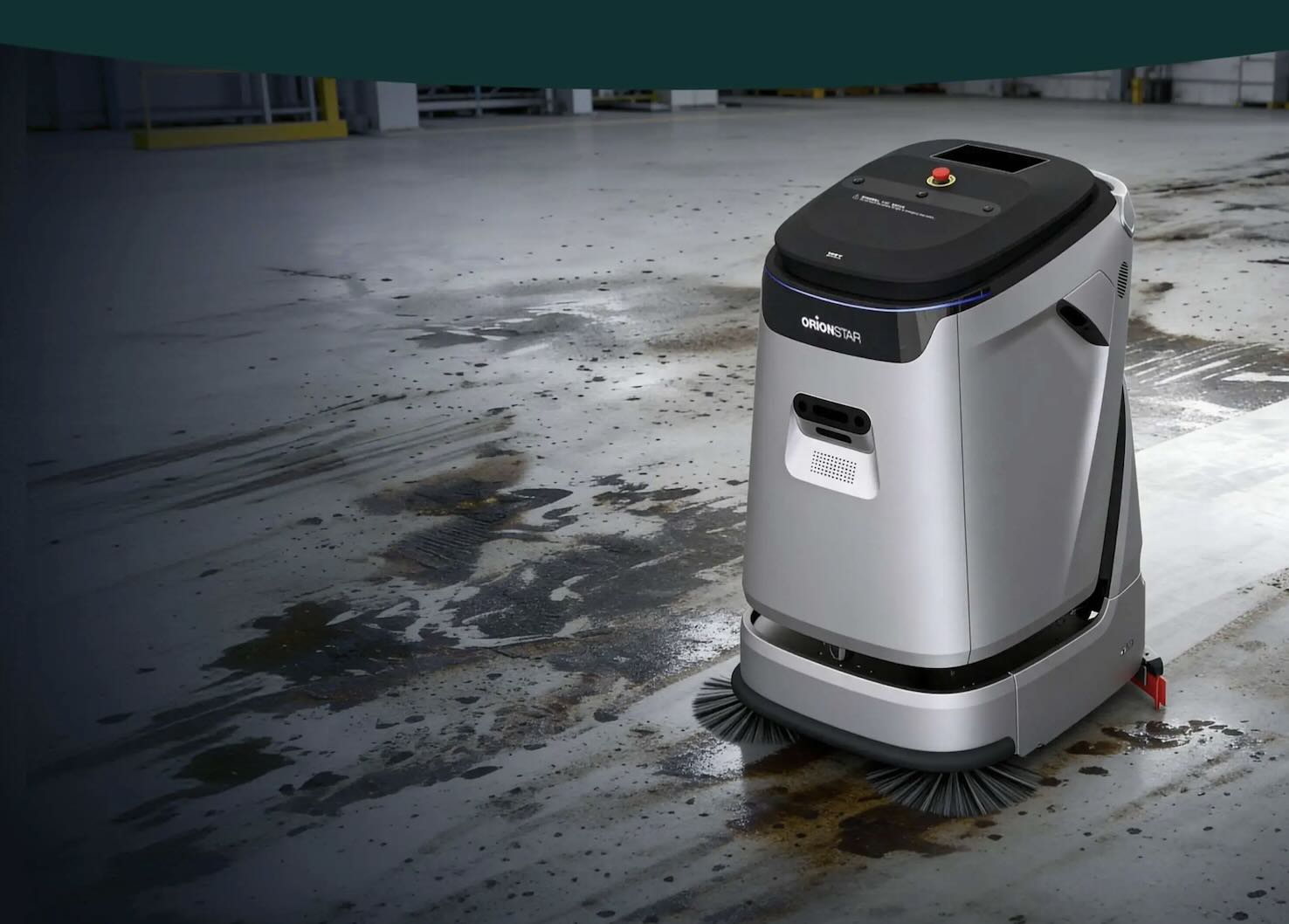
The warehouse club sector operating within vast commercial buildings is currently undergoing a significant operational shift. Therefore, facility managers and retail operators must actively address converging challenges around rising labor costs, shrinking workforce pools, and elevated cleanliness expectations. Specifically, industry watchers expect 70% of retail tasks to have an automation solution by 2025 (Source: McKinsey research). This rapid acceleration is primarily driven by maturing navigation technology, falling hardware cost curves, and fundamentally shifting customer demands. Members now expect spotless environments across massive footprints, requiring dependable and consistent daily operations. As a result, maintaining these spaces strictly through manual labor is becoming financially and logistically impractical. Instead, modern retail operators require scalable, dependable infrastructure to maintain continuous operations. In short, commercial cleaning robots have emerged as an essential industry-level solution to manage these massive spaces effectively. By automating repetitive floor care routines, operators can successfully stabilize costs and maintain strict facility standards.
These pressures indicate that relying solely on traditional manual cleaning is becoming increasingly challenging.
To address these specific facility demands, the OrionStar CleaniBot series provides a dual-model differentiated solution. Rather than asking which machine is better, operators deploy these models to complement each other across different spaces within commercial buildings. Ultimately, this division of labor ensures that every zone receives the appropriate level of care without overlapping efforts.
The CleaniBot C5 serves as a heavy-duty scrubbing solution designed for demanding environments. According to manufacturer data, it features a 90 L combined water tank capacity and delivers a maximum cleaning area capacity of up to 1,980 square meters per hour. Therefore, it is highly suited for handling heavy grime in receiving areas and managing long stretches of wide bulk aisles. Its dual-rolling-brush system allows it to manage industrial-grade floor challenges efficiently.
Conversely, the CleaniBot S55 Pro is designed for multi-functional agility in tighter or quieter public zones. According to manufacturer data, it can operate at a low 45 dB noise level and provides an extended runtime of up to 28 hours in dust-mopping mode. With a minimum passing width of 700 mm, it effectively navigates crowded membership floors, narrow checkout lanes, and busy food courts.
Together, these robots cover distinct functional scenarios while operating on a unified digital framework. Both models support comprehensive digital management through Wi-Fi or 4G connectivity. This allows facility managers to utilize remote deployment, monitor cloud-based maintenance, and access real-time operational data reports. Because these robots utilize cameras, mapping sensors, and cloud platforms for navigation, retail operators must verify that local deployments strictly comply with data-protection frameworks like GDPR. Data collected by sensors and cameras is processed strictly for navigation and operational mapping. All cloud-based data handling and reporting complies with regional data protection regulations (e.g., GDPR), ensuring user privacy and data security. See our Privacy Policy for details.
These results are not theoretical; they are realities that facility managers and retail operators are already verifying.
Automation in commercial cleaning functions strictly as workforce augmentation, rather than direct human replacement. By transferring repetitive, large-surface floor care to robots, human workers can safely shift toward specialized, higher-value work. As a result, staff members can focus their daily efforts on quality supervision, direct customer service, and complex facility maintenance tasks. Furthermore, removing humans from physically demanding and highly repetitive floor-scrubbing duties directly improves overall workplace safety.
Moreover, integrating these advanced systems naturally introduces new technical skills to the existing workforce. Facility teams are now stepping into specialized roles such as route programmers, active fleet monitors, and internal technology trainers. As operators manage autonomous fleets, they develop critical technical skills that can advance their long-term careers within the organization. Over time, warehouse club operators actively build internal operational capabilities by blending traditional cleaning knowledge with modern digital management competence. Above all, this collaborative model successfully stabilizes operational costs while simultaneously elevating the overall cleanliness standard of the facility.
Commercial cleaning robots are rapidly transitioning from experimental pilot projects into foundational infrastructure for the warehouse club sector. As daily operations face permanent shifts in both labor availability and rising operational costs, automated floor care offers a fundamental baseline of consistency and efficiency. To successfully meet the diverse requirements of massive commercial buildings, the OrionStar CleaniBot series provides multiple distinct models to ensure proper adaptation across various facility sub-spaces. Facility teams can further explore these dual models to understand how distinct automated systems integrate into existing daily workflows. Ultimately, organizations that thoughtfully integrate autonomous robotics today will build highly resilient operational frameworks for the future. The ability to manage vast retail environments digitally, efficiently, and autonomously will firmly define the next decade of commercial facility management.