

REQUEST DEMO
Robot CATALOG will be sent to your mailbox immediately after submission.
SUBMIT
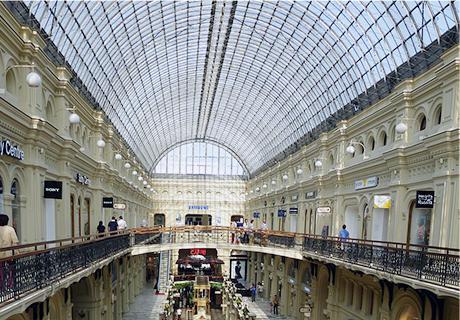
For retail facility managers and store operations directors, maintaining sprawling retail environments is an increasingly complex balancing act. Rising labor and energy costs are compressing maintenance budgets, yet the physical store environment remains a primary driver of customer experience. Shoppers expect bright, uncluttered aisles and consistently clean floors; failure to deliver this directly impacts brand reputation.
To address these pressures, many global retailers are turning to commercial cleaning robots. However, deploying automation is only effective if the hardware aligns with the specific realities of the venue. When floor scrubbers require constant human intervention, utilization rates plummet, and staff are pulled away from customer service. This guide examines how the OrionStar CleaniBot C5 aligns with the operational demands of large retail stores, evaluating its capabilities against real-world facility management challenges.
Industry data highlights that the success of a robotics program hinges on autonomous utilization. In successful large-scale deployments—such as a documented case involving a national grocery chain—optimizing robotic utilization led to more than $2 million in annual savings and a 21 percent reduction in cleaning and maintenance costs (as reported by a KBS Services case study). Industry benchmarks typically target an autonomous usage rate of 80 percent or higher compared to manual mode, aiming for approximately 30,000 square feet of floor coverage per robot daily.
Achieving these metrics requires a machine capable of navigating complex layouts without getting stuck or requiring frequent manual servicing. The OrionStar CleaniBot C5 addresses this through a combination of heavy-duty cleaning mechanics, advanced mapping, and automated maintenance cycles designed to minimize staff intervention.
Large retail stores are not monolithic; they consist of distinct zones with varying traffic patterns and soil types. The C5 is engineered to adapt to these specific micro-environments.
Entrance zones are highly susceptible to tracked-in grime and weather-related dirt, while primary sales floors require rapid, consistent coverage to maintain aesthetic standards. According to manufacturer data, the CleaniBot C5 features a theoretical maximum cleaning capacity of up to 1,980 m² per hour under standard test conditions, subject to environmental layout.
Its core advantage in these areas is the 25 kg of downward scrubbing pressure combined with a dual-rolling-brush system. This allows for "one-pass" cleaning—sweeping, scrubbing, and water absorption in a single cycle. By capturing debris up to approximately 3 cm in height into a 1.8 L dust bin while simultaneously scrubbing, the machine reduces the need for staff to manually pre-sweep these high-traffic zones. Furthermore, with an operating noise level as low as 68 dB(A) in standard environments, the C5 can be deployed during store hours without causing excessive disturbance to shoppers.
Checkout lanes, promotional displays, and back-of-house logistics corridors present navigational bottlenecks. A machine that is too wide will require staff to finish the job manually. The CleaniBot C5 is designed with a minimal passing width of approximately 880 mm, allowing it to navigate typical store aisles and tight transitions. Additionally, its ability to climb obstacles up to 15 mm and manage loaded slopes of up to 5° ensures it can transition smoothly between different flooring types or slight architectural inclines common in large retail facilities.
A critical bottleneck in store operations is the labor required to empty, refill, and charge cleaning equipment. If a machine takes too much time to manage, store associates will simply revert to manual mopping.
The CleaniBot C5 mitigates this through its docking station and high-capacity design. It features a combined 90 L water-tank system (45 L clean, 45 L waste). When the battery runs low or tanks require servicing, the robot is designed to automatically return to its workstation. The station facilitates automatic clean-water refilling, waste-water discharge, and a high-pressure internal tank rinse. Notably, the waste-water tank can self-clean in roughly 4 minutes, mitigating odors and blockages without employee intervention.
On the power side, the 24 V, 80 Ah battery supports a scrubbing runtime of about 3 hours (and up to 8 hours for dust-mopping), paired with a fast-charging capability of approximately 1.5 hours. This allows for continuous multi-shift operations, significantly reducing Total Cost of Ownership (TCO) and helping regional managers hit those critical autonomous usage KPIs that drive ROI.
Managing cleanliness across dozens or hundreds of global locations requires centralized oversight. Retail operations directors increasingly rely on fleet management tools to track metrics such as route completion, the number of human assists, and overall usage trends. By utilizing secure, cloud-based portals providing anonymized visual heat maps and mobile applications, regional managers can verify site-level performance without needing constant physical inspections.
However, as commercial cleaning robots become digitized, data security must be a primary procurement consideration. The CleaniBot C5 utilizes multiple sensors, cameras, and LiDAR for its 10,000 m² mapping and smart obstacle-avoidance systems.
Important Compliance Note: Facility managers must strictly evaluate cloud connectivity, telemetry data handling, and camera usage against GDPR and applicable local data protection regulations. Buyers should proactively verify with the vendor whether visual data is processed locally or in the cloud, ensure cameras are restricted strictly to navigation rather than surveillance, and confirm data minimization practices. For multinational retailers, establishing clear Data Processing Agreements and understanding cross-border data residency is essential before deployment.
The shift toward autonomous facility maintenance is driven by the need for cost control, operational consistency, and elevated store appearances. By combining a 90 L self-managing tank system, heavy-duty 25 kg scrubbing pressure, and automated docking, the OrionStar CleaniBot C5 provides a robust framework for reducing manual labor dependency in large retail stores.
Because retail formats vary—from massive big-box hypermarkets to narrower specialty department stores—evaluating the right form factor is crucial. The broader OrionStar CleaniBot series offers multiple models to accommodate different square footages and navigational constraints, allowing facility directors to tailor their robotics programs to the specific architectural and operational realities of their diverse portfolios.