

REQUEST DEMO
Robot CATALOG will be sent to your mailbox immediately after submission.
SUBMIT
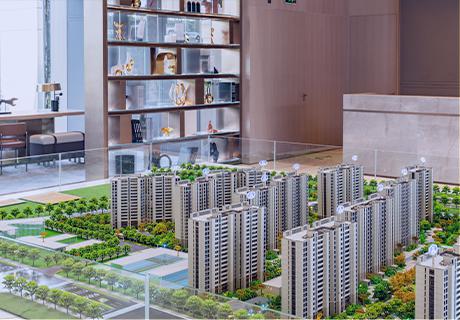
The shopping mall sector within commercial buildings is currently sitting at a distinct operational turning point. Property footprints are expanding, while foot traffic patterns are becoming highly unpredictable. Why is this shift happening now? The industry is facing a unique convergence of factors. Technological maturity in autonomous navigation has reached a highly advanced state. Simultaneously, hardware cost curves have flattened considerably over recent years. Moreover, tenant and customer expectations regarding visible hygiene continue to grow significantly. As a result, facility management teams can no longer rely purely on manual labor to meet massive daily maintenance targets. Instead, the focus is shifting toward scalable, consistent technological interventions. Above all, commercial cleaning robots have emerged as a necessary, industry-level solution. These systems transform unpredictable manual processes into measurable, data-driven operations. In short, automation is shifting from an experimental luxury to a foundational requirement for modern property management.
These pressures collectively point to a clear conclusion—traditional operating models are no longer sustainable.
The OrionStar CleaniBot series provides a dual-model differentiated solution designed directly for complex commercial buildings. Therefore, operators do not have to choose a single compromise machine. Instead, they can deploy targeted automation.
The CleaniBot C5 is built for robust, heavy-duty applications. It is particularly suited for high-intensity sub-spaces like food courts and parking areas. According to manufacturer data, it delivers a cleaning efficiency of up to 1,980 square meters per hour under defined test conditions. Furthermore, it features a combined 90 L water tank capacity, enabling continuous scrubbing in heavily soiled environments.
Conversely, the CleaniBot S55 Pro is tailored for public-facing, noise-sensitive zones. It excels in atriums and expansive corridors. According to manufacturer data, it operates at a quiet 45 dB in dust mopping mode and provides a runtime of up to 28 hours under defined test conditions. Actual results for capacity and runtime vary by floor type, obstacle density, and selected cleaning mode. It effectively handles daily maintenance without disrupting daytime shoppers.
The underlying logic of this deployment is strict complementarity. It is not about which model is better. Instead, each robot covers distinct spatial profiles and floor conditions. Moreover, both machines integrate deep digital management capabilities. They support remote deployment, OTA updates, and cloud-based data reporting via Wi-Fi and 4G networks. Because these systems utilize stereo cameras and collect cloud-based telemetry data, environmental mapping data is localized and anonymized to prevent facial video uploads. OrionStar cleaning robots collect spatial mapping and telemetry data solely for navigation and operational diagnostics. Data is processed in compliance with GDPR. No personally identifiable information (PII) is captured or stored.
These results are not theoretical; they are realities that facility managers, retail operators are already verifying.
Automation in commercial spaces is not about replacing the human workforce. Instead, it is actively designed to elevate human potential. Commercial cleaning robots are assigned the most physically demanding, repetitive large-area tasks. They handle the endless square footage of main walkways and concourses. As a result, custodial staff can transition toward higher-value, specialized work. Human workers redirect their focus to detail-oriented areas like restrooms, glass barriers, and immediate customer service needs.
Moreover, this shift requires new skill sets. Routine deployment naturally creates new operational responsibilities. Roles such as fleet coordinators, remote support staff, and quality-assurance supervisors are beginning to emerge. Workers oversee machine mapping, manage consumable schedules, and analyze cleaning data dashboards. Above all, the human-robot division of labor creates a safer, less strenuous environment. In short, technology absorbs the physical strain while human intelligence handles the nuanced exceptions.
Commercial cleaning robots are rapidly becoming standard infrastructure within the shopping mall sector. They provide the consistency and operational data that complement and enhance traditional manual processes. To meet these diverse spatial requirements, the OrionStar CleaniBot series offers multiple models to adapt precisely to different facility demands, allowing stakeholders to explore highly tailored deployments. Therefore, the transition to automated floor care is not a temporary industry phase. Instead, it represents a lasting structural evolution. As properties grow larger and labor pools tighten, intelligent automation will dictate the future baseline of commercial facility management.