

REQUEST DEMO
Robot CATALOG will be sent to your mailbox immediately after submission.
SUBMIT
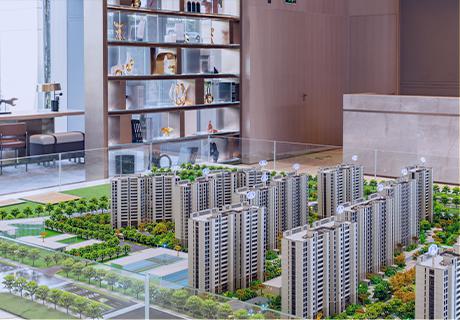
Building Management in commercial buildings is currently standing at a critical inflection point. For decades, the sector relied heavily on manual labor, but a perfect storm of chronic staffing shortages, escalating costs, and heightened post-pandemic expectations is forcing a structural shift. Today, the operational cost curve is intersecting with the rapid maturation of autonomous navigation technologies. As a result, facility operators are no longer viewing automation as a futuristic novelty, but rather as an immediate operational necessity. Tenants now demand visible, high-frequency cleaning, yet conventional methods often leave significant gaps in coverage and quality consistency. Therefore, commercial cleaning robots have emerged as a scalable, industry-level solution capable of addressing these systemic challenges. By bridging the gap between shrinking workforce availability and rising hygiene standards, these robotic platforms are fundamentally redefining how commercial spaces are maintained and managed globally.
These pressures collectively point to one undeniable conclusion: the traditional manual cleaning model is no longer sustainable.
To navigate this complex landscape, the OrionStar CleaniBot series offers a differentiated, dual-model solution tailored for the varied zones within commercial buildings. Rather than providing a single compromised machine, the portfolio deploys specific robots for specific tasks.
The CleaniBot C5 serves as a high-performance, heavy-duty scrubber ideal for expansive, high-traffic zones such as parking areas and large common spaces. According to manufacturer data, it delivers a maximum cleaning capacity of up to 1,980 square meters per hour and features a combined 90-liter water tank system for extended, uninterrupted operation. Conversely, the CleaniBot S55 Pro is engineered for dynamic, noise-sensitive indoor environments like lobbies and corridors. It integrates sweeping, vacuuming, scrubbing, and dust mopping into a highly compact frame with a minimal passing width of 700 millimeters. Furthermore, it operates at a remarkably low noise level of 45 decibels in dust mopping mode, ensuring minimal disruption to office tenants.
Crucially, these two models act as a complementary ecosystem. The CleaniBot C5 handles the heavy lifting in large utilitarian spaces, while the CleaniBot S55 Pro navigates tighter, occupant-facing areas with precision. Moreover, both platforms integrate robust digital management capabilities. Supported by Wi-Fi and 4G connectivity, facility operators can leverage remote deployment, access cloud-based data reporting, and receive over-the-air updates for streamlined fleet management. Because these robots utilize advanced LiDAR and camera sensors to navigate complex commercial buildings, operators must ensure their deployment protocols align with local data privacy laws. Consequently, facility management teams should verify GDPR compliance regarding data processing and visual data capture to guarantee that occupant privacy is strictly maintained during autonomous operations.
These results are not mere theoretical projections; they are the concrete realities that building managers and facility operators are already validating in the field.
The integration of automation into commercial buildings is fundamentally shifting the daily routines of facility operators, transitioning the industry from manual exhaustion to human-robot collaboration, or cobotics. Automation is not replacing human staff; instead, it is dividing the labor more intelligently. Robots are now assigned the heavy, monotonous tasks like scrubbing long corridors or sweeping expansive lobbies, while human workers transition to higher-value, detail-oriented work.
Consequently, the role of the frontline worker is actively evolving. Janitorial staff are effectively becoming fleet managers and automation supervisors. They are acquiring new digital literacy skills to map cleaning routes via tablets, interpret telemetry data, and manage hardware performance. Above all, this shift protects workers by mitigating the physical strain and repetitive injuries associated with manual floor care. By removing the most grueling aspects of the job, building managers can improve working conditions, reduce turnover, and elevate the professional status of their cleaning teams.
Looking ahead, commercial cleaning robots are rapidly transitioning from experimental technology to foundational infrastructure within Building Management. As cost pressures and tenant demands continue to rise, autonomous floor care will simply become the baseline standard for commercial buildings globally. Solutions like the OrionStar CleaniBot series provide multiple models to adapt to diverse spatial requirements, allowing facility operators to tailor their automation strategies precisely to their unique environments. Ultimately, the future of facility management relies on building resilient, scalable operations. Those who integrate intelligent robotics today will be best positioned to maintain pristine, compliant, and cost-effective commercial spaces tomorrow.